SHANLING ONIX SACD/CD TRANSPORT - REVIEW
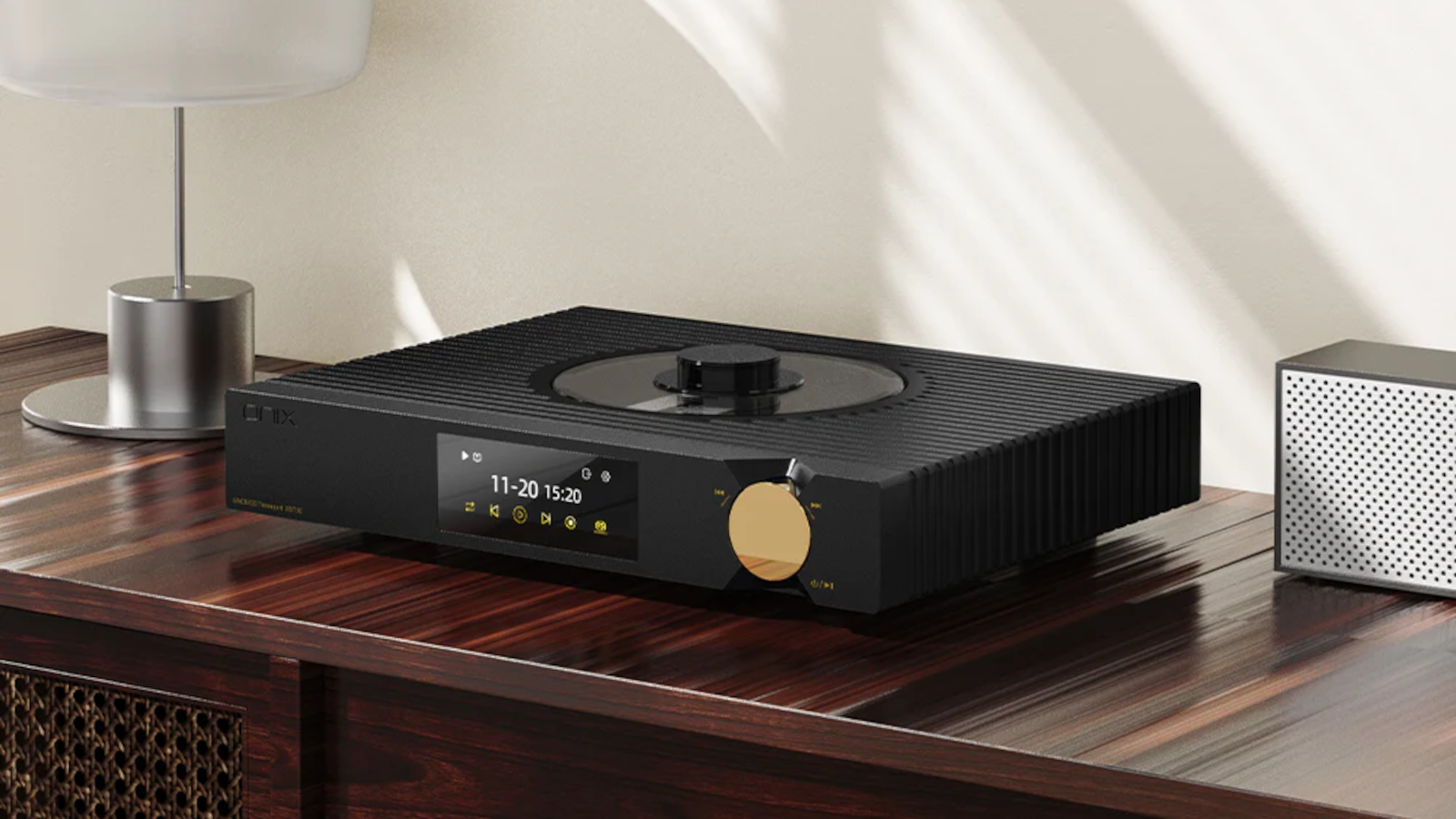
SHANLING ONIX SACD/CD DIGITAL TRANSPORT
It’s a funny thing, that is, when we’ve immersed ourselves in the highly marketed source-of-the-day—streamers—and then return to its predecessor—CD players—and discover rather potent truths, re-found wonders. This would be the second time that such a truth was revealed to me in high-end audio.
I have written about this ‘second time revelation’ in prior reviews of my rediscovery of vinyl after I had deeply immersed myself in the digital arena, when vinyl, it is said had ‘died a thousand deaths’ and was thus obsolete. But it was not true and it would take a young woman, a future girlfriend, long years ago (mid ‘80s) to powerfully, though quite subtly, prove this point. As I wrote, she had just placed a record on what appeared to be a dusty, unkempt might be working Kenner Close and Play (though it wasn’t):
“When she placed the record on the platter, swung the tonearm into position, and dropped the needle, there came a momentary “pop,” and a smirk from me. Then from this dust-covered might-be-working turntable came music as a compelling force and, as I had written earlier, “the music came in waves tactile, sensual, rich” that filled the entire room. And when the warmth of Billie Holiday’s voice made contact as she sang “God Bless the Child” and as the music and her voice wrapped their arms around me, drew me in, I was “stunned-humbled” to stone and momentarily catatonic.”
It is a moment, long years after the fact, that I will never forget. I wrote this for my review of the Grimm Audio MU2, an incredible high-fidelity streaming source, a world above all others. Though, in truth, it and the Baetis Audio Mingo Reference stand toe-to-toe in a great many ways and their competition pales. But here again a medium, thought by some, to be, well, past its better days proved very powerfully and poignantly, via a CD transport, that it was not.
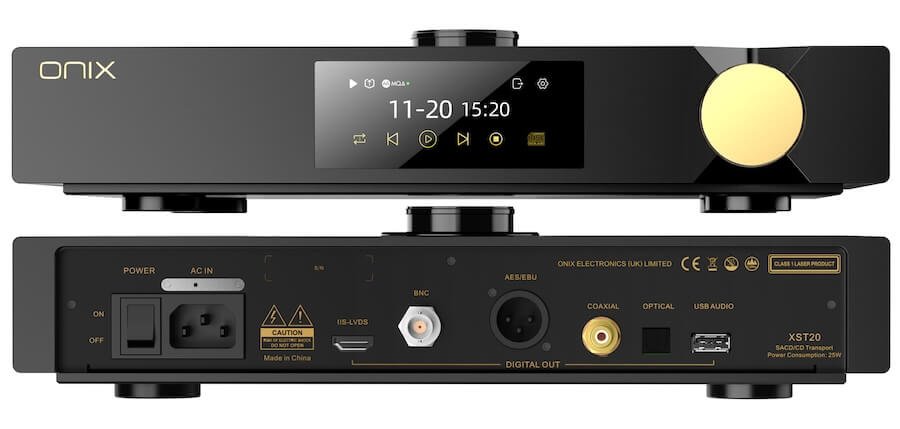
That CD Transport is the Shanling ONIX SACD/CD Transport ($2,099) and the big brother to the Shanling ET3 CD Transport ($899). And with the ONIX came potent truths, ‘re-found wonders’ that its little brother had only hinted at via its portrayals. In fact, the ONIX, if memory serves and as coupled to the Bricasti Design M1SE ($10,000), was the measure of two highly reviewed and truly remarkable CD Players—Accustic Arts Player II and the NEODIO Origine S2 both over $20k.
REFRAIN: Unlike most reviews, this review will be non-sequential, as it will start with how the component actually sounds and not the process of physically “undressing” it and/or laying out its various parts, specifications, etc. Think of this review, then, as a nonlinear movie—Memento, Kill Bill, Arrival, Eternal Sunshine of the Spotless Mind, etc.—that likewise starts at the end and winds its way to the beginning.
The System - Reference Two Channel
Grimm Audio MU2 Streamer/DAC/Preamplifier
Silent Angel Bonn Pro8 Network Switch
Air Tight ATC 5s Preamplifier
Air Tight ATM 1E Amplifier
Atma-Sphere MP-3 Preamplifier
Atma-Sphere S-30 Stereo Amplifier
Atma-Sphere Class D Monoblock Amplifiers
TRAFORMATIC RHAPSODY 300B Single-Ended Integrated
LYRIC Ti 100 Single-Ended Integrated
Devore Audio Orangutan 0/96
Fern & Roby Raven III Speakers
Kubala-Sosna Realization Interconnects, Speaker Cables, Power cords
Grimm Audio SQM Interconnects (XLR, RCA)
Black Cat TRØN Signature AES/EBU Digital Cable
RSX BEYOND, MAX Power-cords
SEISMION Amplifier Stand (powered)
TORUS AUDIO Power conditioner
The Sound
It would take the Shanling ONIX SACD/CD Digital Transport a little over four days of continuous play before it finally settled down, burned-in and, in truth, transformed the listening landscape completely. The ET3 CD had after its burn-in put on a show, as coupled to the Bricasti Design M1SE DAC, that sent many a streamer, regardless of price seeking cover, except for the very best—Grimm Audio MU1, MU2, Baetis Audio Mingo Reference and Revolution X5. Well, the ONIX SACD/CD player raised the bar quite a bit above its sibling and proceeded to instill a bit of knee-knocking fear, if you will, in even the best of the best streamers.
Straight out of the box and with zero hours of settling down/break-in the ONIX was the match of its ET3 brethren. At 50 hours it had surpassed the ET3 by a wide margin. And at 75 hours it had surpassed every streamer, save the Grimm Audio MU2 and the Baetis Audio Mingo Reference, that I had reviewed and several of those streamers were more than 10x its cost! It had made them look, at best, amateurish and, at worse, inept and low-fi in comparison. This was a bit, well, mind-boggling. They—the various streamers—had all been coupled to the Bricasti Design M1SE DAC, which ‘leveled’ the playing field, so to speak. But how is a playing field leveled, when there is a price differential of 10x, between the sources in question?! It’s not. However, at a little over 100 hours the ONIX SACD/CD player stood toe to toe with even the best of the best streamers! Suffice to say, that even the vaunted Accustic Arts Player II and the NEODIO Origine S2 both over $20k may well have had panic attacks in head to head competition against the Shanling ONIX SACD/CD Digital Transport and the Bricasti Design M1SE DAC. Yes, a bit of cognitive dissonance was experienced, but then it slowly faded away, as the comparison began and the notes grew in volume and the proof was, decidedly, in tasting the pudding. And it was incredible!
I have mentioned in an earlier write up and in a previous Editor’s Letter, the various steps or the process that must be undertaken to stream music. For instance, depending on one’s internet service provider (isp), the streaming service provider, the wiring across these various points to one’s home/apartment, and the internal wiring in one’s home/apartment the streamed music travels across miles and miles of wire. This regardless of whether regional servers are in play. And the wire across which the music is streamed, is by no means high-fidelity wire. Can this result in a loss of fidelity? Yes. And given my experience these past few months with CD Transports it is unmistakable even with the best of the best.
The CD Player or CD Transport’s route is short, sweet, simple, and, more often than not, the wire in question is high-fidelity or, at the very least, low-fidelity, which bests the wire in the field hands down. One simply places the disc in the CD/SACD tray, closes the loop—fastens the clamp or closes the tray door—and presses play. Voila!
Storing music on internal servers whether in the streamers themselves or dedicated, high-fidelity storage devices can certainly defeat the logistics of the above. However, versus the ONIX SACD/CD player, in many cases, but not all, even this—internal storage—fell short on the best of the best! More cognitive dissonance rises.
In terms of music replay, the Shanling ONIX SACD/CD Digital Transport was outstanding and incredibly addictive. This rather petite, less than 15 pound, though very nicely appointed SACD/CD Digital Transport was trouncing streaming sources left and right, all multiples of its price. It was as if some guy in the crowd at a jazz concert stood up, began playing his trumpet, and put to great shame the very talented onstage players. Yep, that about sums it. But how does it render the music sound?
There was a commensurate weight and gravitas and three-dimensionality to bass instruments—upright bass, double bass, bass guitar, bass drum, tympani, etc.—that the streamers simply could not match. In regards to bass, it was as if the ONIX was on a higher quantum shelf, but this was not the only area where this was heard.
The bass weight carried up to the midrange and provided the necessary weight there to elicit dimensionality, palpability, drive, texture to voices, that projected them into the room with presence, believability, emotion. And never did this weight obscure, in any way, detail or transparency or resolution, which also served as the ONIX’s trump cards and played they were.
The high-treble resolution of the ONIX was itself superb and on level with its frequency-response components, as it surpassed the vast majority of streamers reviewed and, again, stood toe-to-toe with the best of the best. Cymbals, brushes across drum skins, violins at high-treble plus regions, etc. were rendered with outstanding resolution, transparency, a universe of detail (some previously unheard over decades) and air and ambiance. Incredible!
However, when coupled to the Grimm Audio MU2’s internal DAC, via AES/EBU cabling, the ONIX SACD/CD Digital Transport was truly formidable! It rose to even greater heights and stood alone as, perhaps, the best digital source that I have had the opportunity to listen to, audition, and simply enjoy. How can this be? We have apparently entered into a time where price has never been, well, less relevant in terms of high fidelity.
Across the entire frequency range there was always an engaging naturalness, a rightness to tone/timbre and texture that allowed to a greater degree the projection of the in-room presence of performers, and the easy discernment of their lyrics. Rickie Lee Jones had never been so clear and obscured words across her track, now rang very clear and understandable. There was nuance and air, layering, spacing, and volume—sound staging—which gave dimension and place to the venue and rock-solid separation and layers to performers as well as presence.
Where it fell short of the best of the best streamers—Grimm Audio MU2 and Baetis Audio Mingo Reference—was in overall staging, interestingly enough, with the MU2 leading the pack of three and the Mingo Reference right behind. Though given the incredible abilities of these streamers in staging, the ONIX was but a whiff, a hair’s breadth away. Of course, having access to, literally, millions of tracks is a big plus for the streamers, while allowing an audiophile or music lover the ability to stay fastened to one’s listening chair or couch of choice and to control the show. That said, I really didn’t mind getting up to change the CD, as the overall experience was extraordinary.
What can be said of a CD/SACD transport at a mid-fi price—$2,099—that can outperform both Top-of-the-Line streamers and CD Players without missing a beat and then to be so darn petite and unfazed, while it's hammering away at them. Bravo!
Functionality
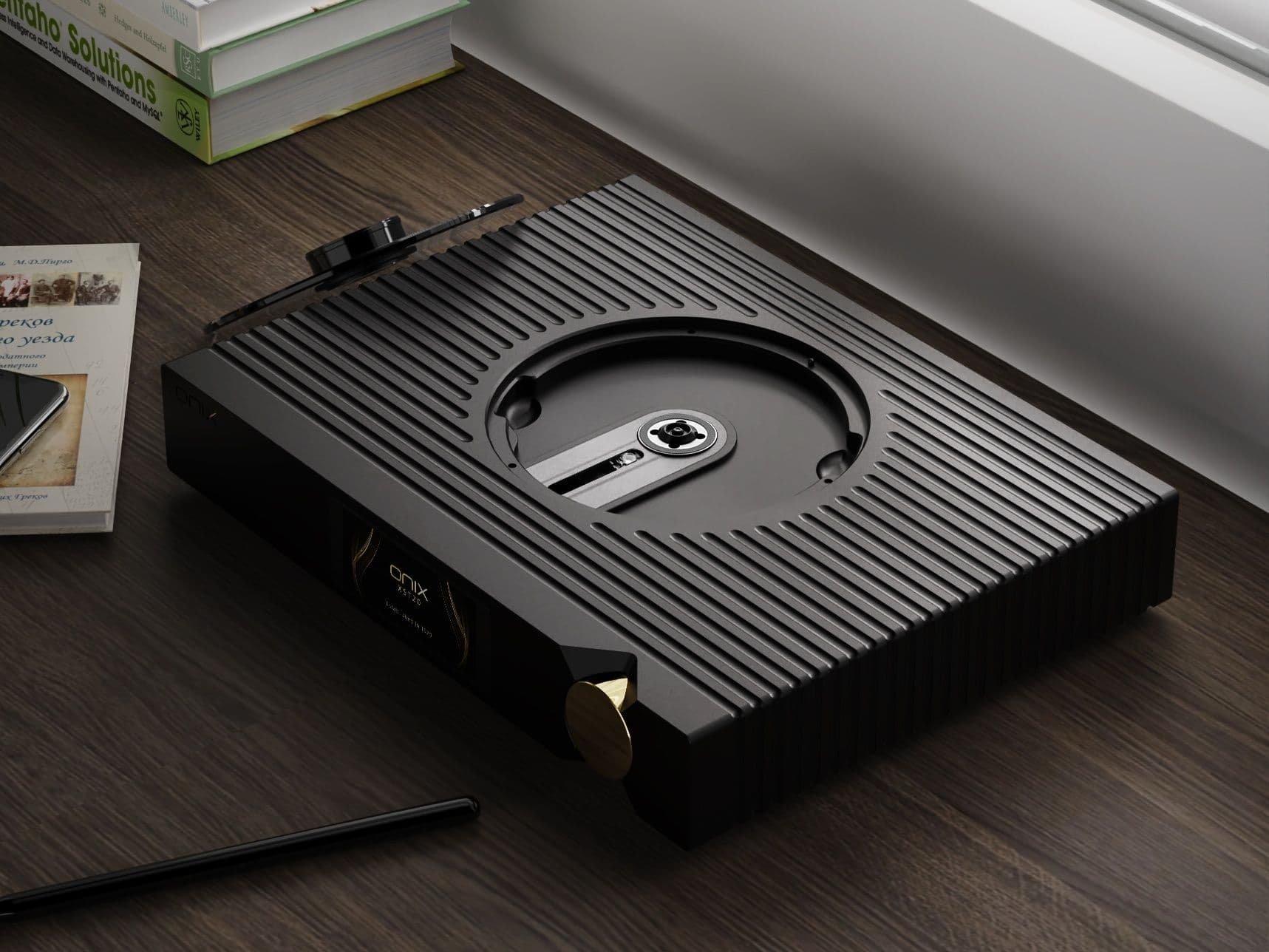
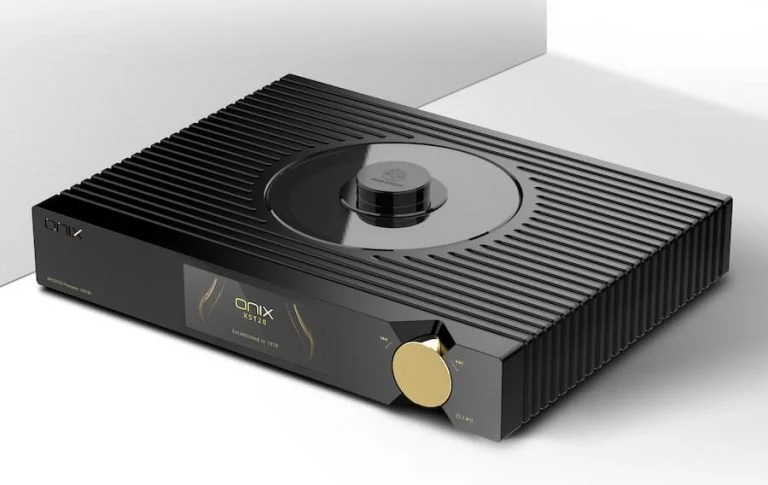
Compact design as EC3 (just 25.5 x 18.8 cm)
CNC Machined Fully Aluminum Chassis
Top-Loader Disc Clamp Design
True DSD SACD Output (Full Resolution Transport)
3.4-Inch Touch Screen
HiFi Grade Power Supply 25AV Toroidal Transformer
Gapless SACD Playback
Universal SACD/CD Support/ Multi-layers SACD Switching
Direct SACD Output to DACS/ True DSD Stream
MQA-CD Support/ Offering 4x Expansion
Built-in 45.1584 MHz Clock
Remote Control included
Conclusions
The Shanling ONIX SACD/CD Digital Transport does not ‘slay’ or ‘kill’ giants—TOTL components—it just pushes them aside, gets to work, and watches as they lumber away most aware of their humiliating defeat. In this respect, the petite, though very well made and appointed $2,099 SACD/CD transport is truly incredible. And it scales beautifully as the abilities of the connected DAC improve. Lastly, the ONIX SACD/CD Digital Transport is a petite, nicely appointed, well made component with formidable technical abilities and engaging musicality.
If you have CDs and a very good DAC and you’d like for your CD playback to be on par with, in truth, better than your streaming setup, you have no further to look than the Shanling ONIX. I believe that most will be very surprised at how this mid-fi priced SACD/CD transport will outperform their much, much more expensive streamers.
The ONIX is an incredibly easy choice for our DIAMOND AWARD and, no doubt, a shoe-in for our BREAKTHROUGH AWARD, as well as a BEST OF THE YEAR AWARD, which comes in our very next issue—November.
Pros: A TOTL SACD/CD Digital Transport for a mid-fi price. Like its sibling, ET3, it scales beautifully, while surpassing or going toe-to-toe with every streamer I have listened to, reviewed, or owned. It is a formidable, petite, nicely appointed, well made component with exceptional technical abilities and musicality.
Cons: Remote control is very directional.
The Specifications
SHANLING ONIX XST20
Power consumption: 15W
Dimensions (W x D x H): 32 x 24 x 7.2cm
Weight: approx. 5.2kg
Screen: 3.4-inch Touch Screen
Disk Drive: HD870
Disc compatibility: CD, Multi-layer SACD, Single-layer SACD, MQA-CD
Output Specifications
Optical/ Coaxial/ BNC/ AES
CD: PCM 44.1kHz
SACD: DSD64 via DoP or D2P
I2S: CD: PCM 44.1kHz / SACD: DSD64 (Native)
USB: CD: PCM 44.1kHz/ (SACD not supported)
The Company
SHANLING
Add: #10, Chiwan 1 Rd, Shekou, Nanshan
District,Shenzhen, Guangdong, China
Postal Code: 518068
E-mail:info@shanling.com
Tel: 86 075526887637
Fax: 86 075526887638
The Contact
Adam Sohmer
Sohmer Associates, LLC; +
1-347-512-0066;
adam@sohmerassoc.com