BOENICKE W5 LOUDSPEAKER - REVIEW
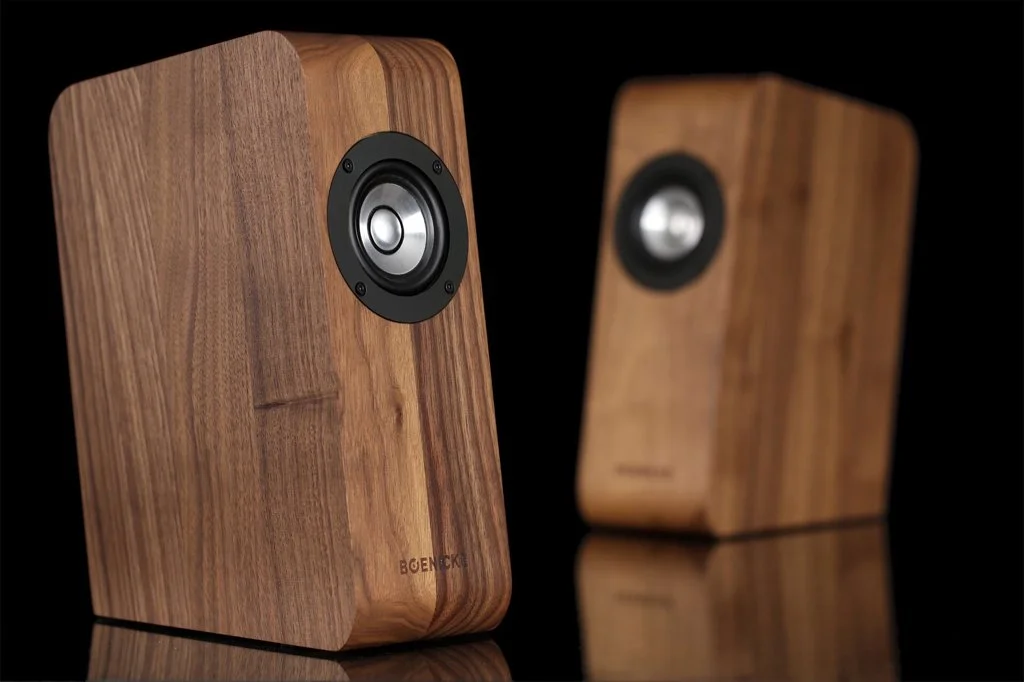
BOENICKE W5 LOUDSPEAKER
A few issues ago, I began a review stating that, “looks can be deceiving.” The subject of that piece was Boenicke Audio’s slim W8 towers. Now, I have a bit more to say on the subject of Boenicke, so let’s dive into yet another example of the old saw that, like me, good things come in small packages. I’m fairly sure my wife would agree…
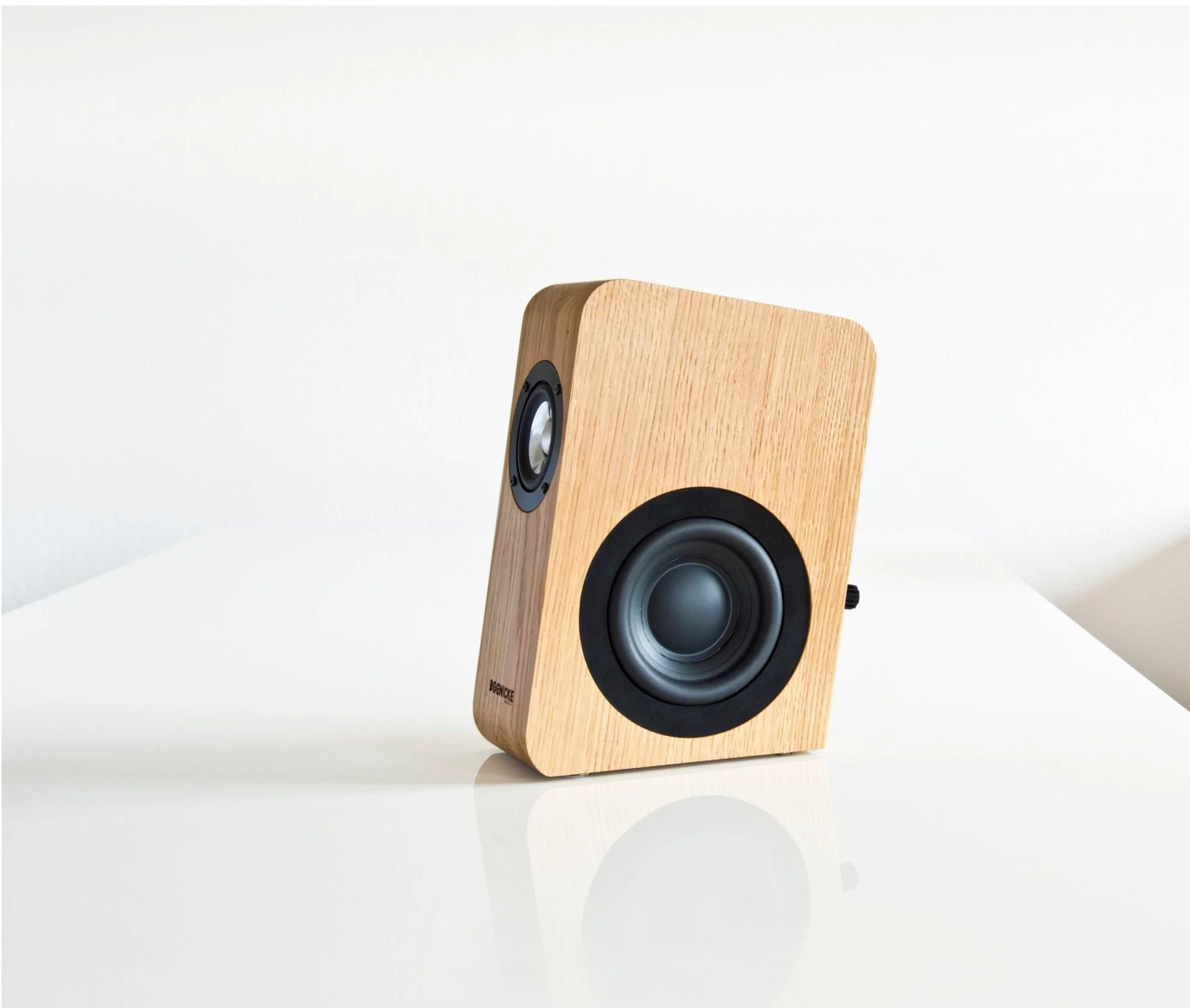
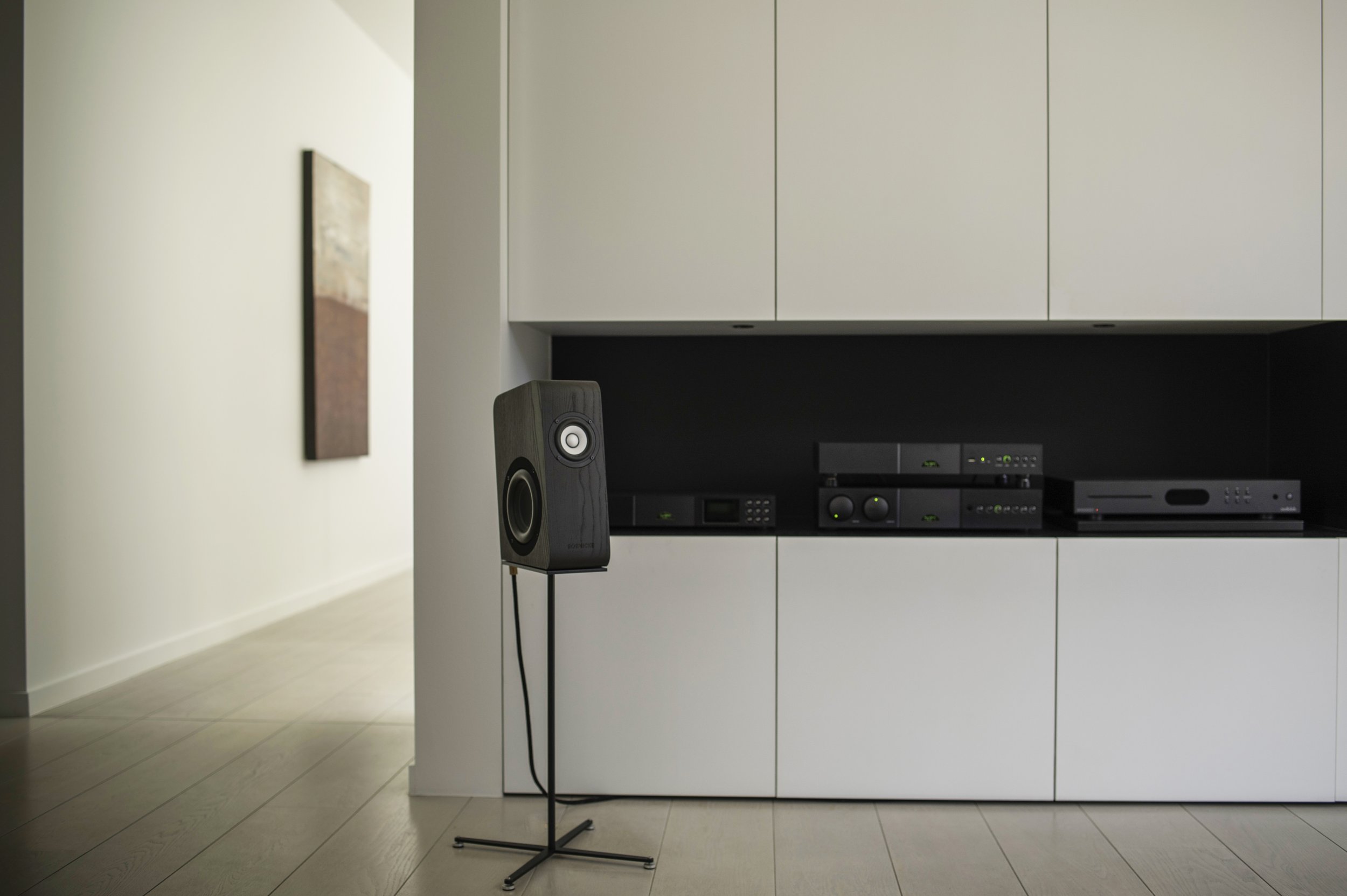
Just when I thought I could comfortably retreat into my preconceived notions regarding cabinet size versus perceived low frequency extension, into my house arrived Sven Boenicke’s first design and his most compact offering. Originally envisioned as a desktop speaker, it’s a bit smaller than his MTM (mid–tweet–mid) center channel model, and sprung feet are available for that use case. They are of a vented design, with the horizontal slot port on the back, so I wouldn’t use them in a classic bookshelf placement. The kit I received did not include the feet but did include the model–specific stands, making the W5 a stand–mounter like very few others. First off, the “stand” is actually a bespoke, form–fitting platform mounted on a thin 18.5" black steel rod, with four thin 6.5" steel arms in a cross providing stability on the floor. The platform rigidly attaches to the underside of the speaker’s solid wood cabinet. As with the W8, the cabinet has a similar 4" width and 8" depth. Where the dimensions of the two models diverge is their height. The W5 is a mere 30" and the wispy wand that is the stand only enhances the petite visual impression. Though you would never know from looking at it, the speaker’s clamshell “box” is constructed of two mirrored CNC–machined halves composed of solid engineered “trees”; walnut, oak, ash, or cherry on special order. Three finishes; oiled, white stain and hipster black, all in a soft matt, round out the appearance options. Around the rear are a single pair of WBT Next Gen binding posts with a tiny tweeter positioned just above. Yes, you read that right, the sole HF transducer is on the back. What’s more, there’s only one driver on that skinny front baffle, a custom 3" widebander that provides the lovely natural midrange.
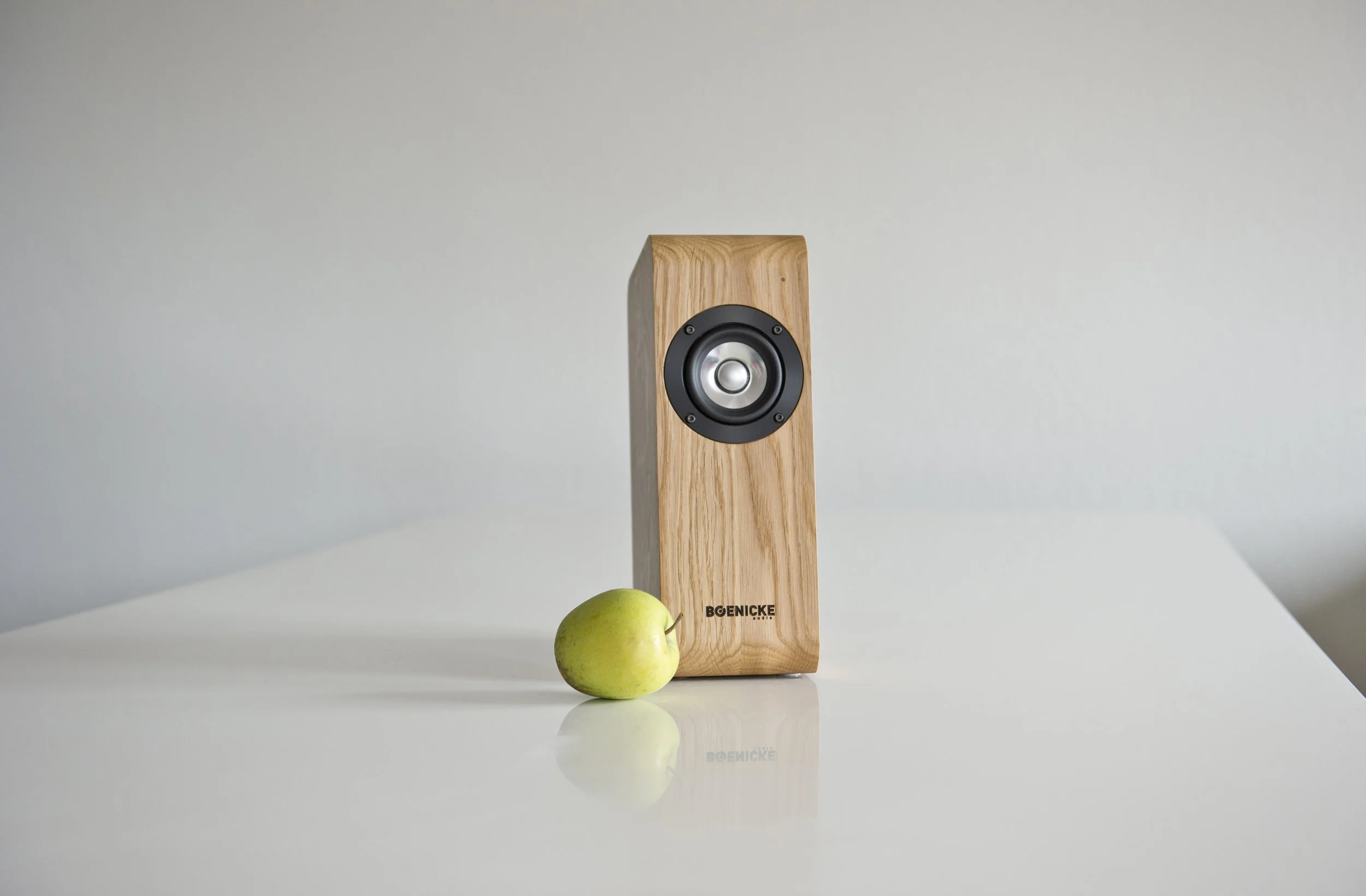
As I mentioned, the W5’s appearance is deceiving. With the stereo running through the small speakers, every single visitor to our manse asked, “…are those ones playing?” while pointing to the taller, all black and visually more imposing Scansonic HD towers that were flanking the W5s. Yup, the W5 plays bigger than it looks. During our e–mail conversations, Sven Boenicke echoed what occurred at my house.“When playing the W5 at any show, as long as there are W8, 11 or 13 in the room as well, it’s not quite easy to convince the audience that not the 8, 11 or 13 are playing - although it’s sufficiently clear we do not offer wireless speakers and the speaker cables are connected to the 5 only…funny, but true.” With a nominal impedance of 4Ω and low sensitivity of “83-86dB/Watt/meter depending on frequency,” they do require hefty power to make them get crazy. Despite their size, that they do so head bangers and Beethoven fanboys need not worry that small size brings small sounds. The key to their outsized low frequency response is the 5" side–mounted woofer, with 16mm or over 0.7 inches of excursion. When I asked Boenicke about adding a subwoofer, he was emphatic. “I would strongly recommend to use them without a sub. Almost no one uses them with subs…In most normal sized and damped rooms i have heard them in, they go down to about 35-40, this of course including room gain.” In my room, I found that they gave me usable output to 39Hz which was as predicted. During setup, I did try my KEF KC62 active microsub simply because I could but, in the course of reviewing them, I neither ran the sub nor felt it necessary.
So, what does this little box deliver? In a word; refined dynamite. I only have heard two Boenicke models so far, but both offer what appears to be a no–nonsense “house sound.” The W5 delivers delightful delicacy and ease, with a midrange righteousness and, thanks to that strategically located tweeter, air for days. The bottom too is clean, precise and on point. Together, the whole is candid yet never clinical.
I ended up placing the speakers in a roughly 6 foot equilateral triangle, well away (4.5 feet) from the back wall. Though these speakers are designed for sitting, they comport themselves reasonably well if you’re situated way above their median axis. That means they serve equally as a “lifestyle” product as they do for us fidelity–forward, sweet spot–situated audiophiles. In addition, many of us long for better audio quality but the Spousal Approval Factor limits choice. Here the W5’s quirky, modern good looks and small size allow them to complement decor rather than dominate a space. Appearance choices aren’t the only variations available. As with all Boenicke speakers, one can choose from the standard model I reviewed, plus two more higher cost, dialed versions that include upgraded crossover components and internal acoustic linearization measures.

When I enlist music to provide sonic wallpaper while I read, I frequently turn to instrumental soundtracks, electronica or dance, whichever suits my mood. At low playback levels, they keep my autonomic foot tapping or head nodding along while my higher functions absorb the words flowing in through Meine Augen. The Daniel Lanois–influenced soundtrack from season six of Peaky Blinders [96k Qobuz, Domino Recording Co 2024] from Anna Calvi and Nick Launay is a ponderous, menacing mix of manipulated sounds and acoustic performance. It caused me to stop my reading, turn it up a touch, and concentrate. In keeping with the drug addled, PTSD–tortured mind of character Arthur Shelby, track 10, Arthur, has a tiny, metallic sound that comes and goes, panning left to right and back. It teases the listener, hiding just on the edge of perception. With a lesser playback chain and more quotidian loudspeakers, one just might miss it.
Boenicke has said that, early on, he knew that he was “really bad at maths,” so he solves problems differently than many manufacturers. His very pragmatic approach grew out of a desire to create loudspeakers that sound like the live performances he records. In a marketing piece, he opines that, “The best possible loudspeaker completely disappears as a technical medium and opens a gate as widely as possible to let you travel in time and space back to the original recording venue.”

Six time Grammy–winning composer, arranger and musician John Leventhal’s That’s All I know About Arkansas from this year’s Rumble Strip [44.1 Qobuz Rumblestrip Records] is an Americana delight; its clean, wideband production is perfectly displayed by Sven Boenicke’s little W5. My colleague Gavin Lurssen mastered this title with his typically gentle hand, preserving the work of Leventhal and co–engineer Jim Price. Pity this album doesn’t seem to be available in HRA versions. This is Leventhal’s first solo album and boy, is it a doozy. Some loudspeakers tend to add their own hard “detail” to playback, but the grit and texture of Leventhal’s vocal with wife and labelmate Rosanne Cash on harmonies, the mellow percussion and the string sounds from guitar and mando were all tastefully conveyed without hype or stridency.

For a stripped down sound check, I turned to Abdullah Ibrahim’s new album, 3 [192k Qobuz Gearbox Records]. With over seventy recordings as band leader, Ibrahim is almost 90, yet he keeps on groovin’. On most of the studio recording, you can hear producer Darrel Sheinman’s almost throwback approach to creating the trio’s soundstage. Ibrahim’s piano occupies left and center, Cleave Guyton Junior’s flute lives center and right, and Noah Jackson’s bass is wide and up front, anchoring the middle. Track five, Mindif, has pianist and composer Ibrahim largely laying back while Guyton and Jackson delicately stroll along. Through the W5, the upright bass is large and in charge, while the flute sweetly carries the melody accented by the keys. All three musicians are right–sized, existing in a balanced and cogent albeit synthetic acoustic space.

Boenicke’s approach to everything he does follows an “…uncompromising devotion to fidelity.” As another proponent of fidelity–first, I can appreciate that outlook. Looking for something big yet subtle to test the little loudspeakers, I settled on a 2022 Chandos recording of Tchaikovsky’s Orchestral Works [Qobuz 96k 2023]. Alpesh Chauhan conducts the BBC Scottish Symphony Orchestra in this extra large composition, and it was here that the W5s finally met their match. Although what came out of the speakers was both smooth and splendid, they were not up to the task of reproducing all the thunderous fundament that the strings, pipes and percussion proffered. A touch of equalization helped considerably, as long as I didn’t turn up the gain past my comfort level.
For those of us who listen to and enjoy pop music, we are all now used to remixes. Late last year, veteran prog rocker Peter Gabriel tried something different…He released i/o [96k Qobuz Real World Productions], which revealed some of the push and pull of music production most of us take for granted. Gabriel gave the same multitrack to “…two of the world’s best mix engineers,” allowing Spike Stent and Tchad Blake free rein to craft what I think is a unique finished product from his raw materials. The result is not only an entertaining package but also an excellent test of any playback system. i/o offers rare insight into the myriad choices that go into the creation of a final deliverable. As one example, Stent’s version (Bright–Side Mix) of The Court is more ambient, with isolated instruments pushed back into the “hall.” Although fundamentally the same, they are the same song after all, the Blake version (Dark–Side Mix) pours on the reverb and echo in the chorus. To even a trained listener with a small speaker system, I tried it on my inexpensive lifestyle setup† in my office, many of these subtleties were difficult to tease apart. With exaSound’s e22 Mk. II DAC and Parasound’s JC 5 pumping out the tunes into each W5 through all Audio Art Cable wiring (review forthcoming), nothing was diminished, nothing was lost. All the drive, impact, presence, and delicacy were preserved, the enveloping artificial soundscape unreeling as the double album progressed.
In a company backgrounder, Boenicke states that “…it is our upright wish and goal to invent, design and manufacture the most honest products possible. That means that…you do not get less than what meets the eye from the outside. But even much more.” The W5 exemplifies that philosophy. Their modern Bauhaus design, willowy stature and form–follows–function construction all speak of honesty, not artifice. Every time I parked my keister to listen, I found myself annoyed if drawn away. There are some other great sounding speakers in this price range, but none I can think of that combine understated style and outsized sound in such a diminutive package. If you’re more interested in impressing your friends with higher fidelity rather than bling and bloat, the W5 may just be the ticket. Please give them a listen.
THE COMPANY
Boenicke Audio
Basel Switzerland
https://boenicke-audio.ch/
W5 Speaker: Standard edition $5,389
SE $8,158
SE+ $11,512
Stands $450
† — B&W 685 driven via LinkPlay’ WiiM Amp through generic copper speaker cabling