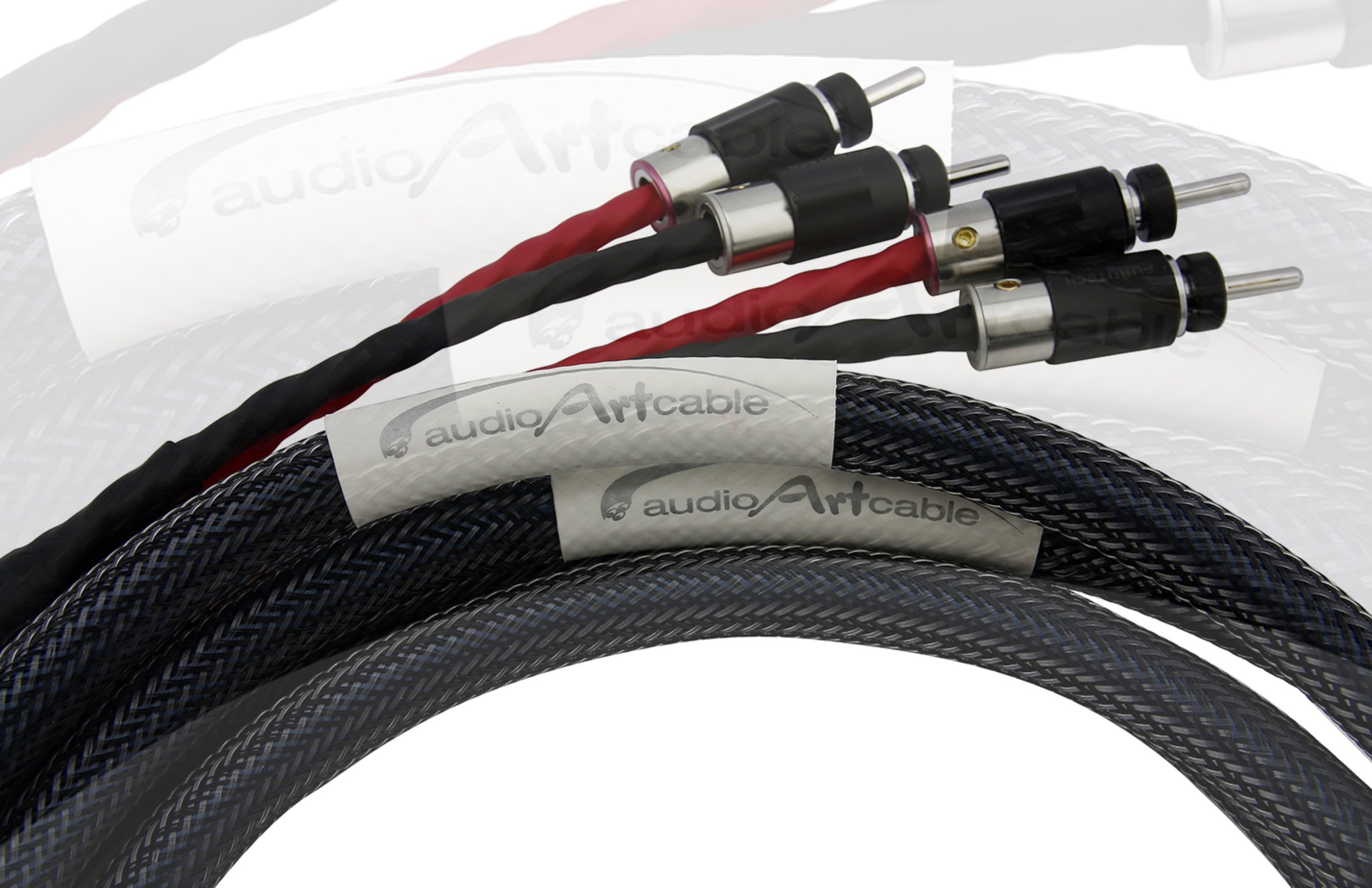
AUDIO ART STATEMENT CABLES:
“Wires” are an interesting aspect of most high end hi–fi systems. Some folks consider them interchangeable, with lowest cost being the most important factor. After all, how important can resistance and capacitance be when cable lengths are often a meter or less? Some budget–driven enthusiasts have compared a wire coat hanger with a dedicated “audio” cable and found no discernible difference. How can that be if cables are that important? Others aren’t really sure what’s going on with these seemingly innocuous components. They hear what their more well heeled compatriots say and, listening to their buddy’s fancier systems, they do notice how great they sound. Was it the big budget interconnects that contributed, or were they just shuttling electricity around without impacting the overall performance? Lastly, there are those like yours truly, who have formed the opinion that every aspect of a highly resolving system matters. As to whether any particular person can hear component differences is a heady combination of gear, room and listening skills. As I have said many, many times; just because you or I can’t hear something, it doesn’t mean it’s not evident to others.
So, why such a wide gulf between one person’s reality and another’s? It comes down to myriad constituents. One factor is that all conductors and insulators are not created equal, and their physical configurations influence the “complex impedance,” the amplitude and phase behavior to AC or alternating current, that which we electrical engineers call music. Our fave metals for audio are silver and copper. Silver has the least resistance to signal flow, with copper coming in a close second. Gold is great for resistance to tarnishing, but it’s not an ideal conductor. Brass, tin, aluminum and other metals, especially as part of a connector, come in a distant third. Digging deeper, we find that metals, on a very small scale, are not uniform. Indeed, the microscopic structures found in metals, the grains or micro–regional boundaries, are somewhat fluid and can be nudged to and fro in response to the aforementioned alternating current. With sufficient time, those micro structures of a conductor will settle or “relax” into their lowest energy state. This is akin to you settling into your favorite listening chair, and not wanting to get up to flip over the record! Once those grain boundaries find their lowest energy configuration, they tend to stay put. Many better quality cable companies, Audio Art included, employ specially cast and drawn high purity copper utilizing a process known as OCC or OHNO Continuous Casting. The combination of low contamination and elongated grains results in fewer boundaries per linear meter. In turn, fewer discontinuities translates into lower hurdles to signal flow. I conjecture that many cable manufacturers include “directional” labels so as to promote the stability of those micro–regional boundaries. If you don’t have labels on your cables, do consider adding some while you’re thinking of it.
Early on, I mentioned capacitance, which is difficult to explain but its action is not. In a simplistic sense, capacitors store charge, acting as high pass filters; they allow higher frequencies to pass on through while attenuating or stopping lower frequencies. Once you combine all those basic factors into real world cables, resistance, capacitance and the induced magnetic fields known as inductance, you then have a far more complex interaction to contend with; that of the receiving device’s input. Ideally, impedances between input and output devices should match, but that is rarely the case. When we talk of speaker wires, we think of that interaction using the label “damping factor.” Try and make sense of the Wikipedia entry for a glimpse at what’s involved.
Given all the myriad factors that come into play with interconnects, I have to assume that those who cannot hear differences with cables either have a system that is simply not able to resolve enough detail, in the catholic sense, or their hearing is not trained to discern small differences. Either way, it’s not whether they’re stupid or their rig is crap, it’s just it’s not something they should worry about. For those of us that can detect changes in sound quality due to cables, it’s an aspect of component systems that we should be aware of.
Rob Fritz is owner, founder and Enchilada Grande of Audio Art Cable. Rob’s cables are also cryogenically treated. I have no knowledge in this area so I turned to my colleague Dr. Doug Stauffer, a materials and metrology expert. He told me that there are many factors involved with thermal treatments. He wouldn’t comment on cables. However, regarding cryo treatment of steels, he mentioned “…changes in grain size and alloying components.” Hmm…
For this review, my rig was boringly basic, at least for me; my exaSound e22 Mk. II DAC being fed from Amarra Luxe and feeding my Parasound JC 5 stereo amp running Class A. Normally, I use a set of Soundstring GEN II Beta 2-22S balanced XLR–to–XLR cables to connect DAC to amplifier and a factory power cable for the amplifier itself. Since I wanted to accentuate differences, I started with heavy yet commodity power cords of the 18 gauge variety. My exaSound has an external “brick”–style power supply so I went with its factory power cable. One cable I did not test was my stock computer–to–USB connection; a Wireworld Starlight 8 USB. It stayed in place the whole time. Loudspeakers for this review were either a set of Vienna Acoustics Haydn SE SIGNATURE standmounters from their Concert Grand series, review forthcoming, or my long term loaner pair of Scansonic MB2.5 B floor standers. So, power cables, balanced analog interconnects, and speaker cables; those are what I concerned myself with for this review. As to speaker cables, I chose my $285 starter audiophile ANTICABLES Level 4.2 FLEX speaker wires with their beefy, solid copper spades and BFA style Z-Plug banana options.
Recognizing the subtleties of the subject matter, I spent most of my critical listening stint going through my OMas_Test public Qobuz playlist, with occasional forays into well trodden territory like Dr. Keith Johnson’s reference–grade Reference Recordings. I also spent a considerable amount of time exploring Qobuz’s never ending, curated “Grand Selection” new releases album list.

Let’s start with Michael Stern conducting the Kansas City Symphony performing Brahms Chorale Preludes, Op. 122 No. 4 from Brahms: Reimagined Orchestrations [Qobuz 176.4k Reference Recordings 2024]. I love this piece for many reasons; its short duration; its extreme fidelity; and its inclusion of percussive metal instruments. This was the first piece I played after switching out all my aforementioned cables for the Signature e cables. I had to turn the playback gain up a touch to feel I was back to nearly where I was before the swap, but not quite. The two big changes? Transient response and soundstage were both diminished. Those lovely chimes at the head were less present and more distant, more reserved. That came along with a reduction in low frequency robustness. I also noticed shrinkage, not in the Seinfeld sense, but close…the venue got smaller, my seat got moved back a bit, and the reverb and spatial clues receded. I tried swapping each of the three cable sets under test and heard small differences each time, but the aggregate swap really brought home my conviction that every piece of the playback puzzle matters. Each in its way contributes to higher resolution…or not.

Next up, something less highbrow; The Mavericks’ Without a Word from Moon & Stars [Qobuz 48k Mono Mundo Recordings 2024]. Mondo guitars and horns, mucho percussion and a reverb–drenched vocal from leading light Raul Malo add up to in–your–face, brash border rock about a special working girl from her john’s perspective. It would have pleased Roy Orbison. Once again, detail suffered. Malo’s voice came across with less texture, the shakers were darker, and that left, hard–panned trumpet lost a smudge of bite. This recording has a healthy dose of artificial reverb, which was also less apparent with my daily driver wires.
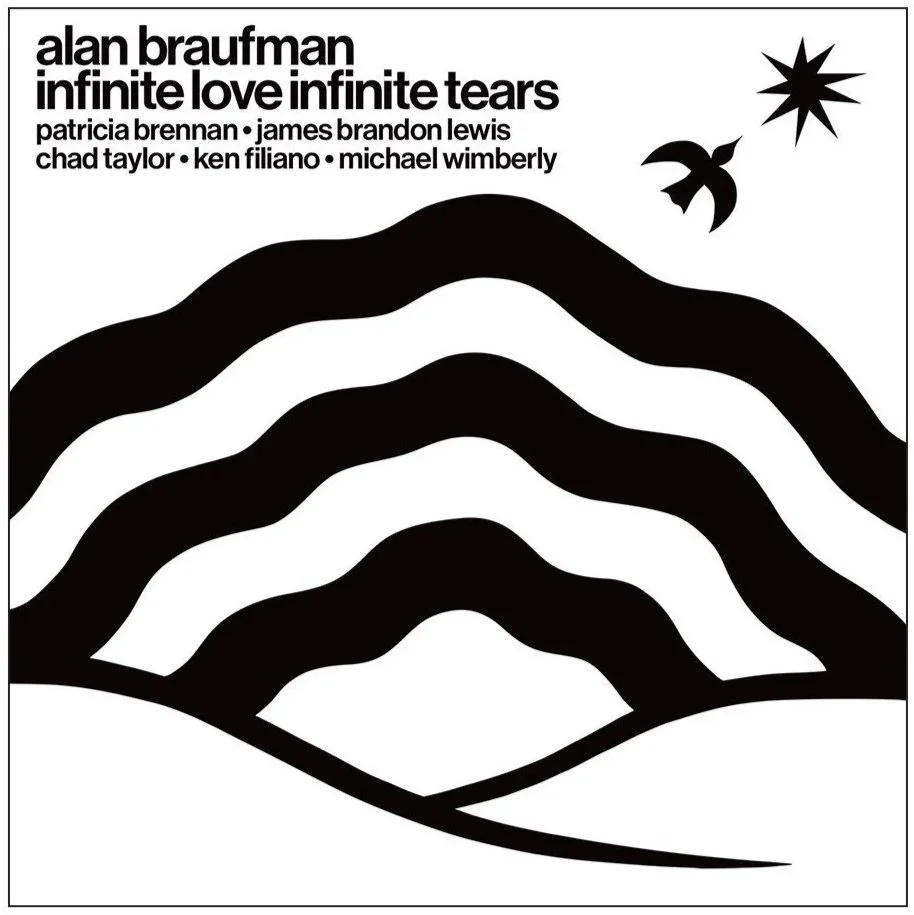
Alto saxophonist Alan Braufman’s Edge of Time from Infinite Love Infinite Tears [Qobuz 96k Valley of Search 2024]. What struck me on first swap was that my default connections sounded like audio, but the Audio Art Cable Statement connects transmuted the sound of this modern sextet to…music! That may sound trite but, with my stock cabling, the piece was enjoyable but not engaging, not quite up to snuff.
I asked Fritz what made his offerings better than the competition, and his reply was refreshingly measured and succinct, like his cables. “With all of the subjectivity involved in this hobby, I try to steer clear of using the word ‘better’ when talking hi-fi. ‘Different’ IMO, becomes a more accurate descriptor for all things performance audio.” He went on to say that Audio Art Cable is different from many other established brands in that, “…we are able to offer a stronger value at each price point…Being a direct to end user business model affords the opportunity to eliminate excessive markups in our pricing. I also believe high performance cable designs can be achieved through practical means; high purity, best-in-class wire, extruded in first class factories, then hand-assembled into a finished audio cable by a true artisan, using best in class, name brand copper connector parts, audiophile grade solders, cryo treatment, quality jacketing materials, and proven burn-in devices (if desired by the customer), are truly all that is required.”
My complaints are relatively minor but may be important to you…For one, the “hand,” in the fabric sense, of the power cables I had in my review collection were stiff, but not in an unbendable way. What I found difficult was their resistance to being twisted more that a half turn. This resistance to twist is crucial from a conductor/insulator geometry perspective, but it was challenging in my setup. Fritz told me he has smaller diameter versions for lower current, lighter weight components, which certainly would have helped. The only other complaint I had was not with the cables per se, but with the design of the expanding bananas on the speaker cables. Lacking any knurling to insure a firm grip, their smooth finish made for difficult tightening.
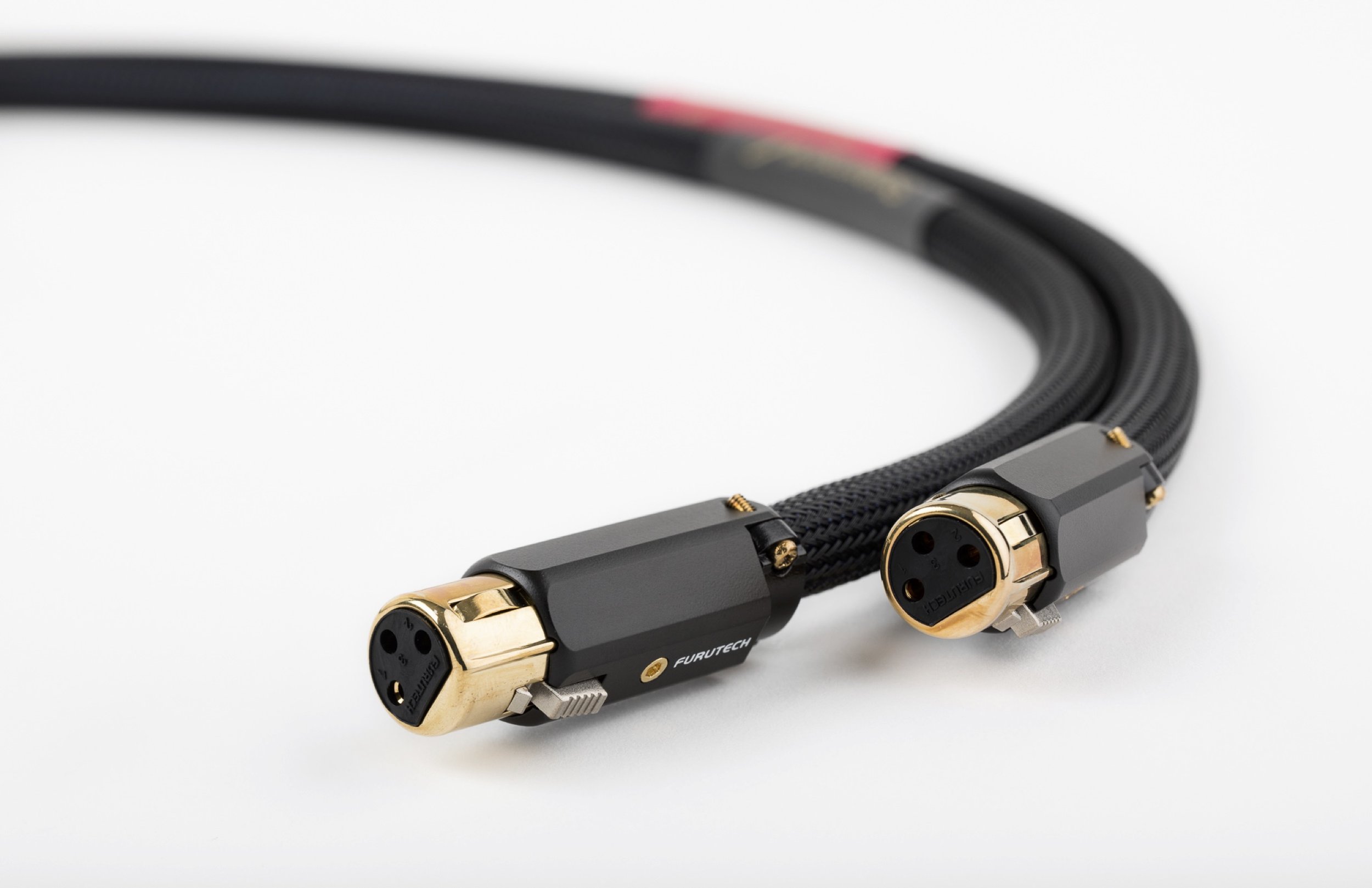
In at least one way, cable evaluations are easier than reviewing a piece of gear. No level matching is required since wires have no gain, only loss or imperfect frequency response due to load interactions. On the other hand, aural interconnect differences should be subtle so evaluating them requires extensive, attentive listening. None of the individual cable pairs made an OMG difference, but taken as a whole, the AAC Statement team definitely brought their A game to bear. In a mid–priced rig, these premium wire sets, at a direct–to–consumer price, would significantly boost the overall performance a good bit. However, in a more esoteric system, the Statement cables would come into their own, elevating an already highly resolving system to a new level of solidity, transparency, and definition. You could spend much more on your wires, but you owe it to yourself to give these a try. Two thumbs up!
THE COMPANY
Audio Art Cable
San Diego CA
www.audioartcable.com
AAC Statement e SC Cryo speaker cable, rhodium banana — $1,520 pair
AAC Statement e IC Cryo interconnect cable, gold XLR — $1,430 pair
AAC Statement e2Plus Cryo AC power cable, 15A US Male IEC — $2,080 each