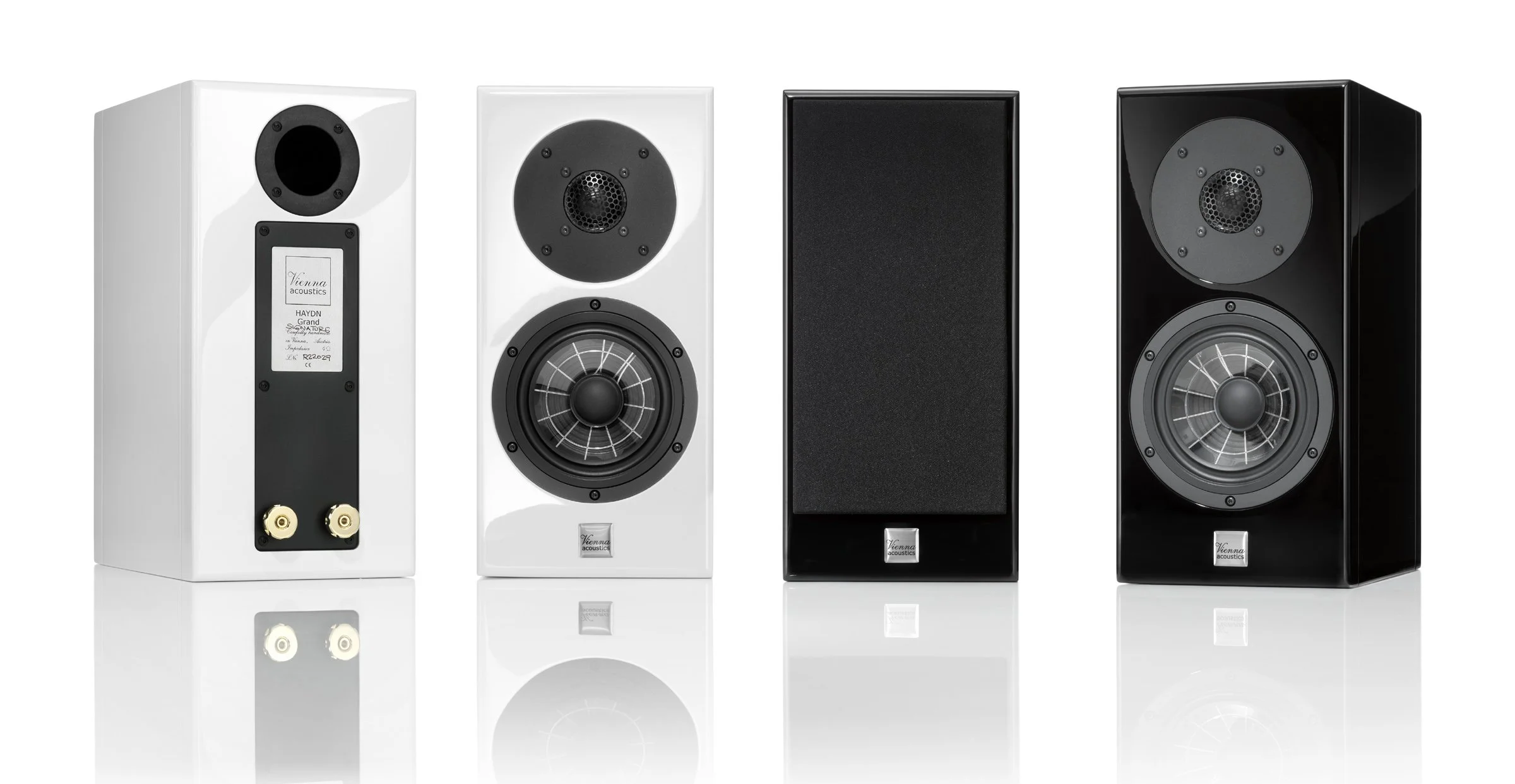
VIENNA ACOUSTICS HAYDEN SIGNATURE
An unassuming carton arrived at my house unannounced and, upon opening, I found a nicely finished pair of black “bookshelves.” Once hooked up to my reference amplifier, to my surprise and delight, I immediately heard something big, lush and eminently enjoyable. Thought I, “Damn, let’s burn these little guys in!”
Edward W. Kellogg and Chester W. Rice were researchers working at General Electric. Next year will be the one hundredth anniversary of their influential published research on the moving-coil direct-radiator loudspeaker. In that same year, Edward Wente at Bell Labs had independently discovered and patented this same principle. There is really nothing new about the Haydn SE Signature in terms of technology. They simply are a highly refined version of Rice and Kellogg’s original invention. For 35 years, Vienna Acoustics loudspeaker manufacturing has been designing and fabricating their products, not too surprisingly, in Vienna Austria. The Haydn SE Signature is the smallest in their Concert Grand series, an entry level version of their The Kiss in the more evolved Klimt series. The Haydn shares a hand–coated silk dome tweeter and “spiderweb rib”–equipped XPP mid/bass unit with several of their other models. Simple rectangular cabinet geometry and mid–level drive complement keeps the cost in the very competitive upper end of “affordable.”
Once I gave them a bit of electro–acoustic exercise, I set them up on my old skool, twin tube Sanus Foundations Steel stands with IsoAcoustics ISOL8R155 between the speaker and stand. Audio Art Cable Statement e SC Cryo cabling connected to my Parasound Halo JC5. Since the Haydn’s are rear ported, a cylindrical one at top, I kept them well away from the rear wall, about 41 inches, and also well away from the side walls (about 3.5 feet) since they are untreated at present. Though small in size, these are not efficient speakers, and will benefit from a bit of beef from your amplifier.
As I was trolling through recent releases on Qobuz, I noticed that low quality recordings were exposed for all their flaws, while high fidelity albums rewarded the listener with clean, proportional treble, a clear and warm midrange with a satisfying heft in the low end. Bass–heavy modern pop delivers the illusion of deep bass without actually going super low. In my room, I noticed the low end start to roll off at around 60Hz. Even so, I experienced quite usable output down to 35Hz but below that was beyond the capabilities of these little gals. Since they are ported, the Haydn SEs are not the last word in tight bass, though they do exhibit minimum subjective low frequency overhang.
While I compose this, it’s a gray, overcast day here in Saint Paul with the end of sunlight fast approaching. In keeping with that mood, an ECM recording seemed a fitting match…Colin Vallon’s Ronce, from his 2024 release Samares [Qobuz 96k], is a contemplative, flowing jazz piece that had me slipping into a deep, moss velvet reverie. The percussion work sparkled without sharpness or bite, while the midrange and upper bass as exemplified by Vallon’s piano work was corporeal and just right without feeling chunky or tubby.
Given the lack of waveguides, the Haydn SEs have generally uniform dispersion. If I stood up from a seated position and approached the speakers so I was well past 40° off axis, I lost only a small amount of treble energy. The overall tonal balance did not change. Horizontally, the treble loss off axis was a bit more pronounced, but still the tonal balance remained reasonable. Parallel to the back wall, I left the Haydns pointing straight ahead as I liked that overall balance and but, in your room, these speakers may benefit from some toe in as it will add a touch of additional upper midrange.
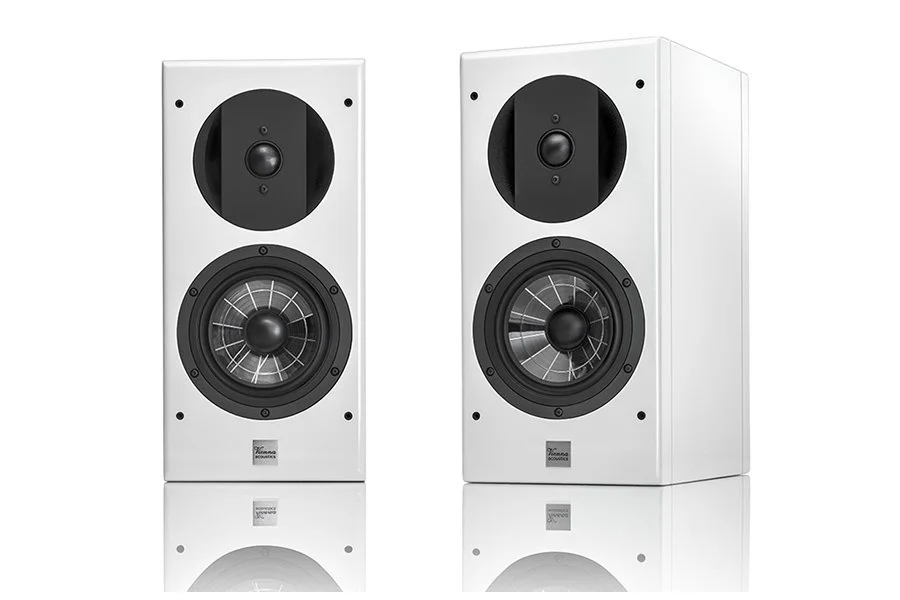
To get an objective sense of where the Haydns sit in the grand scheme of things, let’s look at some specifications…the frequency response is stated as 40Hz – 20kHz, no tolerances given. The impedance is 4Ω and sensitivity is 88.5dB so, again, not just any amp will do although that depends on how loud you typically play your music. V.A.’s recommended amplifier power is 50 to 180 Watts, which most any modern amp design can muster. As to driver array, a Vienna Acoustics 1.1" hand coated silk dome tweeter is complemented by a peekaboo 6" Spider-Cone™ X3P mid–woofer. Yes, the mid/woofer cone is clearly see–through. The rear vented bass reflex alignment employs an impulse–optimized quasi–Butterworth. The crossover, two way of course, is 1st and 2nd order Bessel.The crossover componentry is 1% tolerance MKP capacitors, 0.7% tolerance air core inductors, and inductance–free 1% metal film resistors. These little shiny little gals weigh 22 pounds a piece, and stand 14.2” tall, 6.85" wide, and 10.4” deep. My review pair was finished piano black, but cherry, premium rosewood, and piano white are also available. Magnetic grilles are included.
While writing this review, I discovered a promising series, Jazz Thing, on Challenge Records Double Moon imprint. At present, there are well over one hundred entries in the series, a recent one being Butter Bei Die Fische | JazzThing Next Generation Vol. 105 [Qobuz 44.1k] by Red Hering. The eighth track, Farewell Season, helped me to confirm that the low frequency response I was hearing was not only appropriately scaled but was clearly capable of articulating Dion Nijland’s double bass work. The song starts with a duet between Nijland and piano player Philipp Rüttgers. Band leader and drummer Maximilian Hering and the rest of the crew soon jump in for a laid back and lyrical interplay. The Haydn SEs confirmed that album’s somewhat narrow and shallow soundstage.
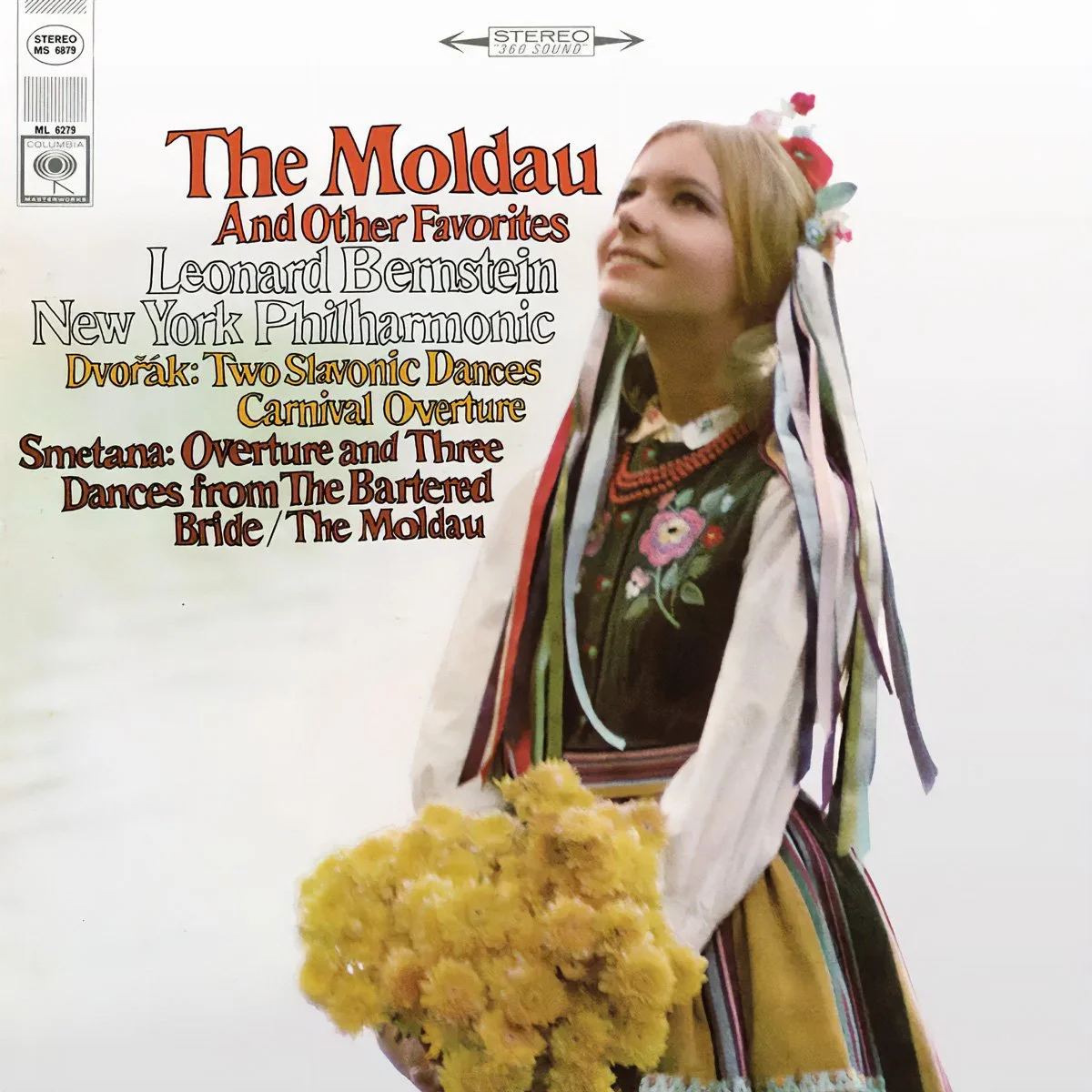
Other songs were not as mono and 2D…Because I love it, I have a collection of “The Moldau,” Smetana’s Vltava from Má Vlast. My playlist includes Ormandy, Stokowski, plus André Cluytens, Ferenc Fricsay and others. One of my faves is Lenny’s 1966 rendition with the New York Phil. The remastered Leonard Bernstein Conducts Dvorák and Smetana [Qobuz Sony Classical 2018] also happens to be a 192k release. This recording showed off the V.A.’s ability to conjure a concert hall in my living room, with all the width, air and dimension one would expect.
As is usually the case, when listening for pleasure not analysis, I dialed up some equalization to dial in the overall feel. It didn’t take much, which indicates to me that this model is quite well behaved right out of the box. As you can see from the plot, about 3dB of shelving at the bottom and a decibel and a half at the top made everything purr–fect. That steep cutoff around 20Hz shaves off any subsonics and, since thEQorange is a linear phase filter, all that equalization incurs not even a smidge of phase rotation.
A fascinating, stripped down piece from Dean & Britta with Sonic Boom, You're All I Want For Christmas is, yes, a seasonal song in keeping with the fresh blanket of snow outside. Thank you, Santa, for reading my wish list…I listened to the album on Qobuz [96k Carpark Records 2024], but a translucent green vinyl version is available for all you needle draggers. This is a vocal–forward Phil Spector–meets–Nashville composition, with percussion, guitars and synth supporting Britta Phillips, who not only headlined but was also the recordist. I love how the reverb–drenched castanets stand in stark contrast to the background atmospherics. The little Haydns manage to deliver a perceived Goldilocks transient response without sounding brittle or harsh. That may be from a gently rolled off high end. They don’t sound dark but, squirting sine waves in while measuring their acoustic output seemed to show they do not extend to 20k without a good bit of loss. As with the low end, I didn’t feel like I was missing anything.
There are very few bookshelf speakers that I can recommend which combine a down to earth price and crowd–pleasing performance. From the first moment I got them situated and playing, I was impressed by the level of sheer musicality they delivered. I’ve heard plenty of two–way, stand–mounted loudspeakers at audio shows, from sub $1000 entry level models to wicked spendy examples. I’ve also had some fairly high tech two–ways in the house, a prime example being KEF’s LS50 Meta. That was a while ago and human audio memory is notoriously poor and plastic but, while that LS50 was clean and more than a bit polite, the Haydn SE Signature had it all over that KEF model in terms of pure sensory gratification. Once of the aspects of these speakers I find interesting is that, although premium crossover components and in–house drivers contribute to their exceptional sound, no exotic science is used, just plain ol’ attention to detail with fine design, careful craftsmanship and lots of critical listening. As I mentioned in the intro, from the first notes those little speakers made me sit up and take notice. Throughout the review period, I never wanted for more. Yes, I did wake up my subwoofer and yes, it did add both weight to the bottom two octaves and improved midrange clarity, but had that piece of gear not been available, I wouldn’t have felt deprived or cheated.
In my home, loudspeakers come and go. Some are remembered fondly, though most are quickly out of mind. The glossy black Haydn SE Signature is a remarkably capable little package that won’t soon be forgotten. Those plucky standmounters did most everything right for me, delivering rich musical magic at a price most seasoned hi–fiers can afford. A fine finish and understated good looks don’t detract from the experience either. Appreciatively, Vienna Acoustics have delivered a winning combination of audio performance, visual æsthetics, and value pricing that impressed me greatly. I’m beating the drum on this one…it’s a real goodie!
THE COMPANY
V.A. Lautsprechermanufaktur GmbH
Weigelsdorf Österreich
https://www.vienna-acoustics.com/
Haydn SE Signature
$3495/pair in black, white or cherry
$3995/pair in premium rosewood