MADISON LOUNGE EDITION STREAMER - REVIEW
Madison Lounge Edition streAMER
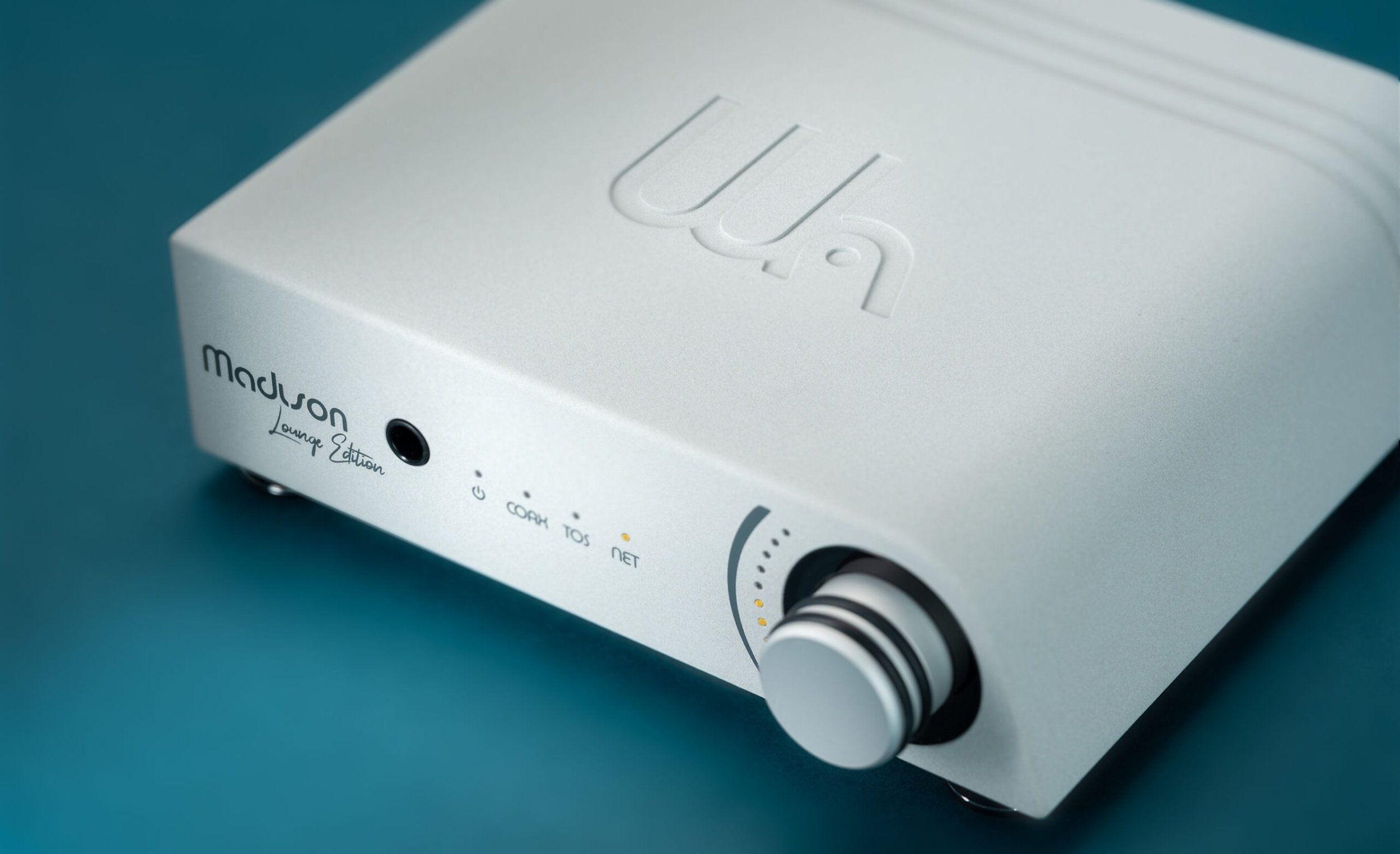
These days, it seems like you can’t swing a pickleball paddle without hitting some new and shiny “streamer.” That’s one of those appliances that brings in music data streaming from a provider’s server, then extracts, buffers and reformats the IP packets into audio data. Finally, it converts those numbers into analog, electrically buffers the analog signal and sends it out to the world. That is a touch more complicated than something like a preamp, and more intricacy allows for more questionable design decisions and implementation compromises. To make a long story shorter; creating a streamer ain’t easy! It requires expertise in a wide range of engineering disciplines, along with the realization that one must judiciously allocate one’s build budget for best effect. Clearly, the folks at Wattson Audio have the mojo needed to craft as fine a streamer as I have been lucky enough to experience.
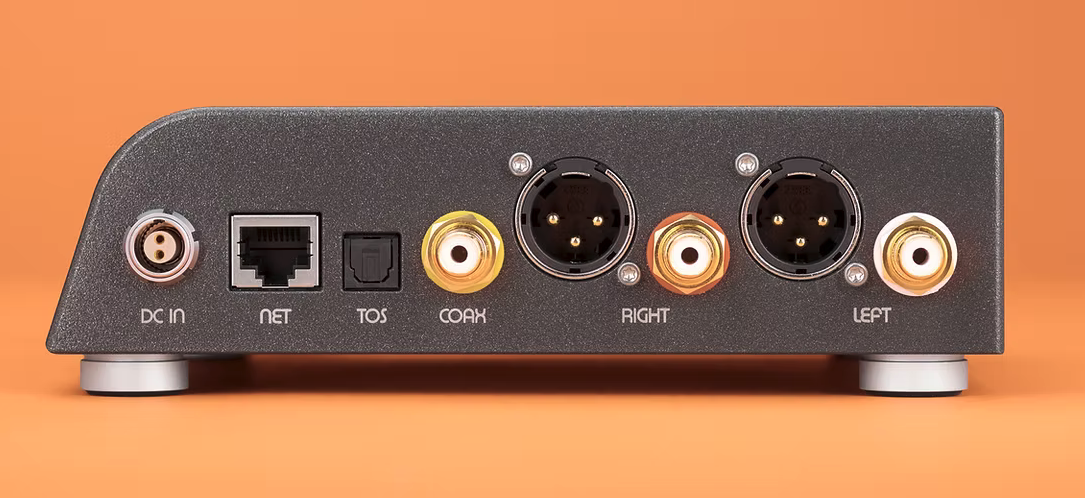
The model in my spotlight is the diminutive Madison Lounge Edition or “LE”, a physically small product with an outsized build and sound quality. The LE is the current big brother of the simpler Madison streamer (no “LE”). Later this year, the downmarket Madison will be discontinued, the current LE model will become the only Madison. The Lounge Edition version of the Madison I had embodies many upgraded components in the signal path, as well as upgraded power supply storage capacitance in the unit itself. To further distinguish the two models, the LE has a warm, pale buff finish. My review sample came with a small, external aluminum PSU. It will be replaced later this year by a higher current unit in a composite case. Also later this year, a new upgraded $2.5k power supply called the PowerS will be released. It will have the same footprint as the Madison, allowing for stacking.
According to Kevin Wolff, International Sales Manager for CH Precision as well as Wattson Audio, the Madison LEs “…are the first new pieces produced in our CH Precision facility.” I asked Wolff about how Wattson and CH are intertwined. He stated, via e–mail, that the Wattson Audio division and parent CH Precision collaborate closely, and that partnership extends to both engineering and manufacturing. “All aspects of Wattson’s construction, from circuit board population to final assembly and testing, are carried out in the same Swiss facility, by the same team that builds CH Precision’s reference-grade electronics. This gives us exceptional control over quality, consistency, and performance.” Some tasks, like enclosure milling and SMD parts population, are made by long-term partners in the area.
Alex Lavanchy is chief engineer and founder of Wattson Audio. Florian Cossy, the “C” in CH, heads up CH Precision. “Alex was Florian’s first additional engineer, who later purchased Wattson as Florian started CH Precision in 2009. Back in 2004, Cossy had started an OEM company known for their network bridge solution. That scheme has since been integrated into several of the industry’s highest achieving digital products. A bridge is what gives a DAC its UPnP, Roon Ready, Audirvāna, Tidal Connect, and Qobuz Connect functionality. I mentioned to Wolff that, to my ears, the Wattson team had spent inordinate attention on the temporal aspects of digital audio delivery; jitter and phase noise. Those are the subtle aspects of digital audio that refute the “bits are bits” argument some simplistic reductionists posit. Indeed, he confirmed my assumption. Wolff explained that, “…given Alex’s close relationship with Florian and CH Precision, it’s not a mystery that there is some shared DNA. At the top of this list is a very similar upsampling filter that focuses on time coherence. At CH Precision, we call it (the) PEtER Upsampling Spline-Filter… the Madison LE Streamer has x8 upsampling, All Wattson and CH Precision products bear “…a family resemblance where musicality is at the foundation, vs. the world’s flattest frequency response. It is our opinion that hearing is more acute in the timing domain.” They entirely isolate the audio clock from the network domain, with all digital audio signals re–clocked with a precision, low jitter oscillator close to the DAC subsystem.
Lavanchy also responded via e–mail to my inquiry about paying particular attention to the temporal aspects of digital audio. He replied that, “It seems that you and I have the same experience regarding digital audio and time-related problems. For this reason, during the electronic design of the Madison Streamer, we focused primarily on clocking and clock distribution on the PCB: short clock traces, point–to–point connections, impedance control, very low noise power supplies, very low phase noise oscillators and so on. As you mentioned, the analog circuits have required a lot of experiments and fine-tuning. Having almost every thing on one single PCB with a limited set of features allows for drastic BOM budget reduction compared to bigger and more complex products, while maintaining (peak) performance… We do our best to minimize any interference of any kind.”
When I asked John Giolas, VP of Marketing, if the Wattson app provides control while Qobuz, TIDAL, et cetera provide program material, he replied that “…the native Qobuz app identifies the Madison LE on the network and streams directly to it. Our Wattson Music app can be used for setup and control, but playback is indeed handled by the service app of your choice—Qobuz, TIDAL, Roon, or others.” Giolas also informed me of some of their other design considerations… The Madison architecture emphasizes ultra-short signal paths, minimal filtering, and carefully shielded analog sections. They made deliberate choices to avoid overt complexity in favor of transparency and timing precision, thus achieving “…exceptional technical performance and musicality not through engineering compromise, but through elegant simplification.” The final output of any piece of audio electronics is essentially modulated power from the wall outlet, so thoughtful power supply topology is essential. The unit incorporates multiple discrete regulation stages for digital, analog, and processing domains. Linear regulators are employed where it counts most, especially around the DAC and analog output stages. Also, they “…employ star-grounding techniques and meticulous physical layout to ensure low impedance and minimal interference between subsystems.” Their operating system is an in–house customized embedded Linux distribution built specifically for audio playback on TI’s Sitara Arm processor. “It allows for optimized hardware access, low system overhead, and precise clock management.” The analog output stage is transformer–less, DC-coupled, fully balanced, and carefully tuned.
I’ve mentioned that the Madison LE is physically small. How small? The product itself is only 6.9" wide, 7.3" deep, and 2.1" tall. For reference, that’s about the size of three stacked Blu–ray cases…compact indeed! Weight is a surprising 2.37lb, which is enough to keep everything from sliding with heavy audiophile–style cables connected.
I started my listening with a biased comparison. In house, I have the exceptional value that is LinkPlay’s WiiM Amp, which is roughly comparable, sound quality–wise, to Bluesound’s NODE ICON. I consider both to be entry level so I mentally refernced them but left them out of my listening regime. However, I was fortunate to also have Orchard Audio’s $1995 PecanPi+ Premium streamer in for review while I wrote. Writing in HifiZine.com, I stated that, “…at twice the price, the Madison LE is certainly more refined, with truer tone, less audible congestion, and a deeper soundstage.” For me and my audio geek buddies, the Madison LE offered a clear advantage when compared directly to the PecanPi+ in real time. That’s not surprising given the cost differential.
There was no mistake that Wattson’s entry provides a more sophisticated, nuanced take than anything I’ve had at chez OMas. To my surprise, that includes my current reference streamer, the hardware/software combo of Sonic Studio’s Amarra Luxe feeding exaSound’s e22 Mark II DAC powered by UpTone Audio’s outboard JS-2 dual PSU. For a very long time, I have listened to many, many software packages and streaming appliances that claim to provide audiophile playback. So far, I have found most wanting in multiple aspects, including audible distortion, choked perceptual bandwidth, and lack of credible transient response.
Let’s dig into some level–matched listening…After trolling through many hours of new and familiar tunes, I chose Either Way I Loose off Chills & Fever to start [44.1/24 Ruf Records 2017], the fourth studio album by K.C. blues singer-songwriter and guitarist Samantha Fish. This clean, gutsy and tastefully produced song keeps things simple. Through the Amarra/e22 combo, the soundstage was flatter, lacking as much width and depth as through the Madison LE. Very low amplitude aspects were also diminished. This was most evident on the very stereo reverb applied to the left–panned sax, where it was as if the saxophone was drier.

I was recently down in Miami to visit my old friend Trevor Fletcher, manager of Criteria Recording Studios where a certain Derek and the Dominos album was recorded. Although I have a 192k file of the legendary Layla, that quality isn’t available on Qobuz, so I turned to the relatively low–fi Tedeschi Trucks live version off Layla Revisited - Live At LOCKN’ [Qobuz 192k Fantasy 2021]. I concentrated on Susan Tedeschi’s vocal, which had a pleasant chestiness that was lacking from the software/DAC pairing’s rendition. Same for Derek Trucks’ axe and Gabe Dixon’s crucial keyboard contribution. Truck’s guitar tone and Dixon’s piano timbre were both fatter and more substantial with the little streamer.
Since I seemed to be on a fem vocalist kick, I added a fave voice to the mix. Most folks know Ann Dustin Wilson from Heart’s 1977 Little Queen, the smash follow on to Dreamboat Annie from two years prior. Black Wing, the second cut off Wilson’s 2022 album, Fierce Bliss [Qobuz 48/24 Silver Lining Music] is both familiar and new, with modern fidelity and amped up sound. This track confirmed my earlier opinions; Wattson’s attention to detail during design and construction makes for a better, more engaging listening experience. More slam and impact, more air and openness, and an easier entré into your musical delights.

After all that rocking, I felt it was time for a simple program with subtle aural cues, so I punched up The Strathclyde Motets: O Radiant Dawn, title track of The Gesualdo Six’s Radiant Dawn [Qobuz 192/24 Hyperion 2025]. Choral director Owain Parks wrote that, “the repeated chords which build up from ‘come, shine on those who dwell in darkness’ sound like emerging light.” Through the Madison LE, the room resonances authentically bloomed from the reverberation, while each voice of the six person ensemble floated and hung in the air as luminous as sunlight beaming through stained glass. Throughout my listening, I was struck by the clarity, better envelopment, LF and lower midrange richness and solidity that the Madison LE brought to the table. Reggaeton; acid jazz; orchestral extravaganzas; dinosaur rock; no matter what I threw at it, the Madison LE offered up music, music, music. Not audio, but swoonable, danceable and bopable beats aplenty.
Two areas of possible concern: First, there are no WiFi or Bluetooth radios in the Madison LE, which could well contribute to its excellence. There are AES3 optical and unbalanced inputs, however, which widens one’s source choices. My only dislike regarding the Madison LE: Qobuz Connect! As of this writing, it’s unstable and not quite ready for prime time. I’ve tried it on several streamers and they all disconnect randomly, report erroneous errors, sometimes require fiddling with the target player or restarting an application altogether. Not to worry though, this is the freshman release and, as with all software, it will improve over time.
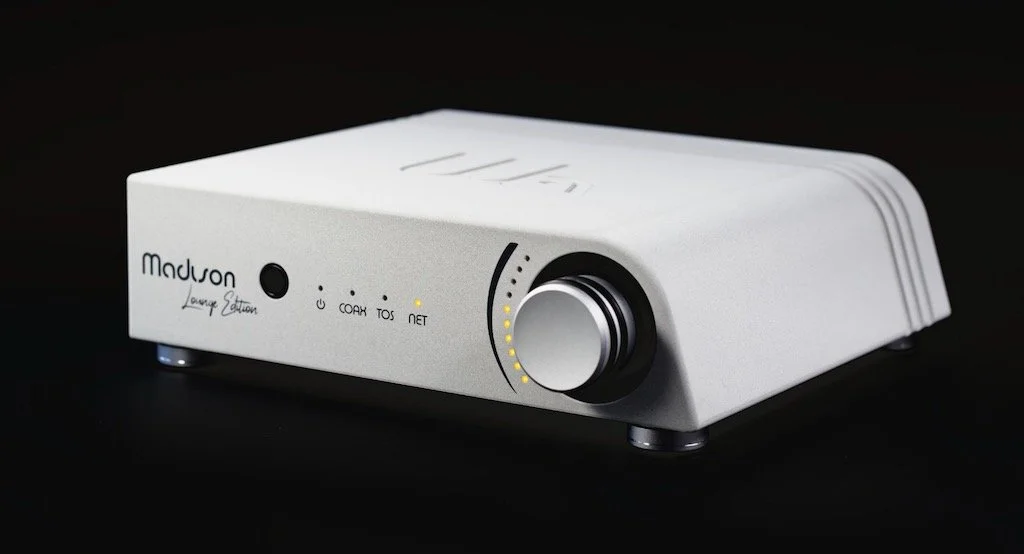
The Madison LE is simply the best streamer I have heard at anywhere near its price. The aural refinement, subtle detail, wide bandwidth and exceptional attention to every element, has created what I consider to be a reference in the streaming category. If you are shopping for a mid–priced streamer, Wattson should be on your short list. In summary… you gotta hear this little box! You don’t have to thank me, it’ll be well worth your time.
THE COMPANY
Wattson Audio
Préverenges Switzerland
www.wattson.audio
Madison LE — $4995