ROTEL DX-3 - REVIEW
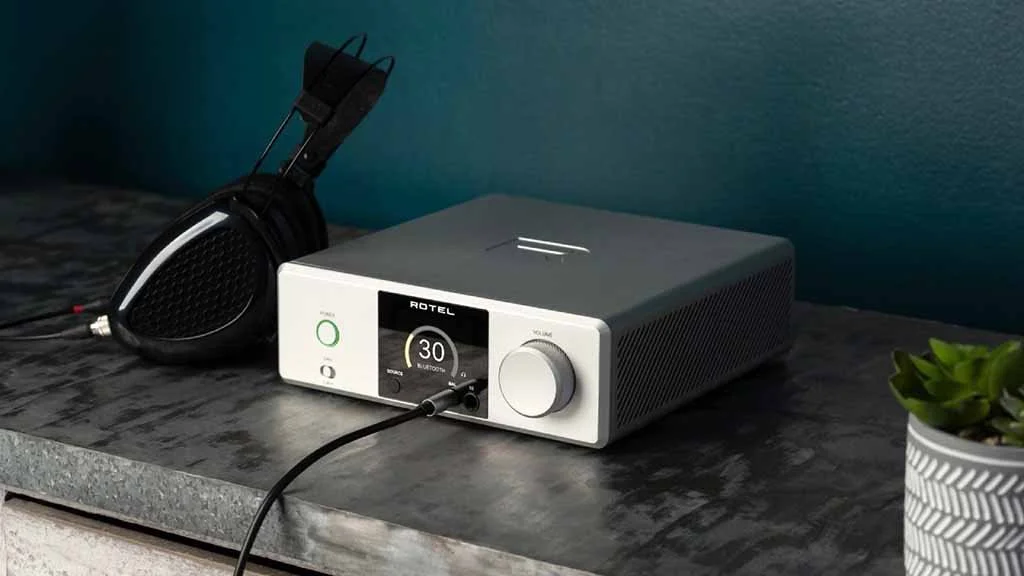
ROTEL DX-3 DAC HEADPHONE AMPLIFIER
“Personal Audio” encompasses many aspects. There’s the TWS earbud + phone crowd, and the audiophile hipsters with their portable high resolution players. I include myself in that later clade. Those both, however, are mobile solutions and there are those who eschew anything small as having insufficient cojones for their manly pursuits. My opinions are bifurcated, between desktop and mobile. Each has their strengths and weaknesses. The subject of this month’s review is a lifestyle desktop audio product, the lovely little DX-3 from Rotel. The DX-3 combines a Class A headphone amplifier with ESS Technologies’s SABRE integrated DAC chip for a great sounding DAC/headphone amplifier in a small, understated package. Rotel is a company I’ve known of for quite some time, but I’ve never had an opportunity for critical listening.
Founded one year after I was born, way back in the ’50s, Rotel began as a Japanese distributor for Sylvania. In 1961, they exited the distribution business and became an audio OEM as well as manufacturer under their own brand. According to their marketing folks, “A notable example of the company’s acclaim came in 1973 when Consumer Reports graced the RX-402 receiver with its coveted ‘Best Buy’ rating. What CR didn’t know…was that the two runners-up also came from the same Rotel factory, even though they were sold under different brand names!” 1993 marked the introduction of Rotel’s higher performance Michi brand and , in 2006, Rotel and Bowers & Wilkins entered into a joint venture covering shared operations of manufacturing and logistics in Zhuhai, China. Today, Rotel is still family owned.
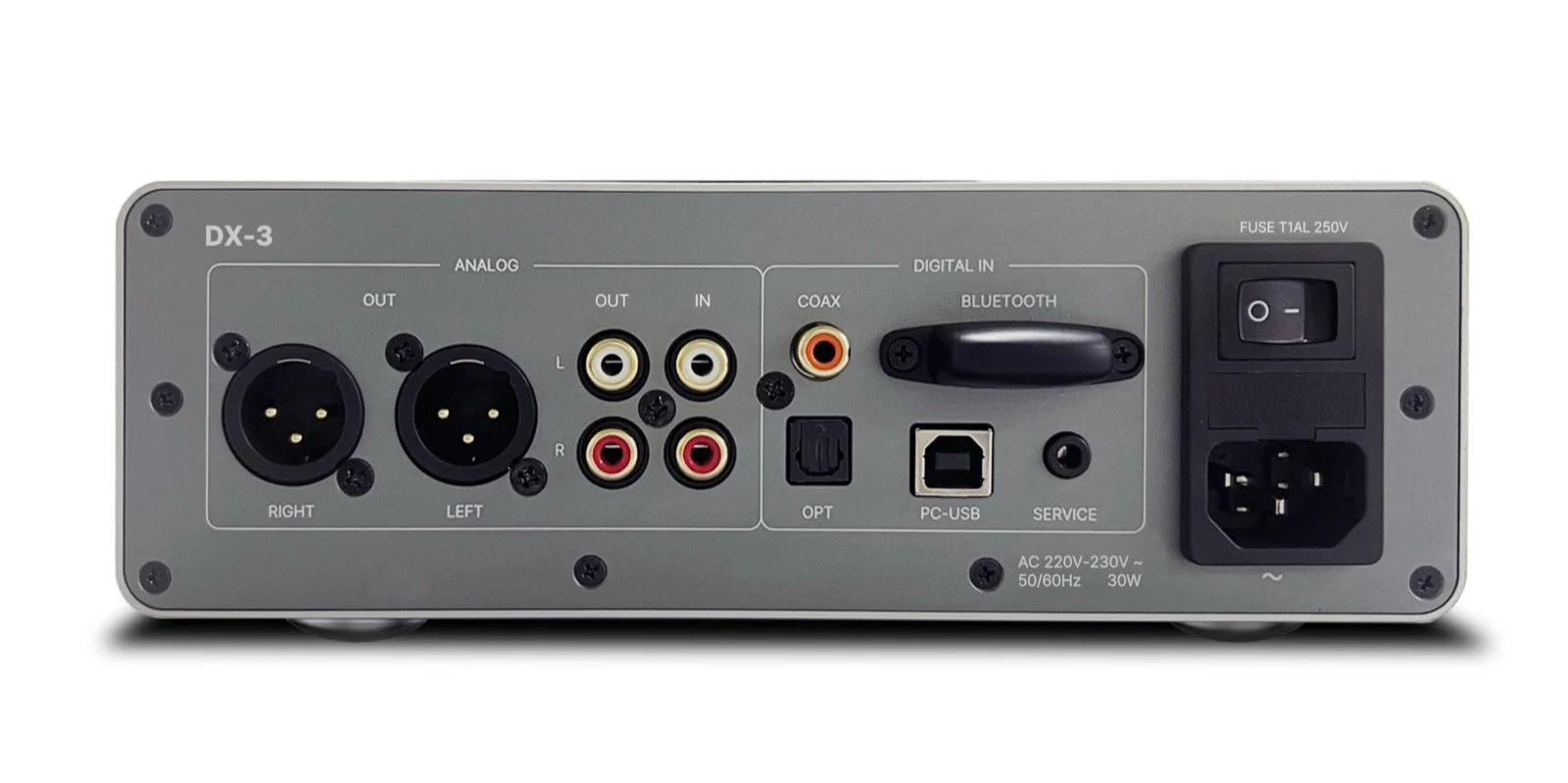
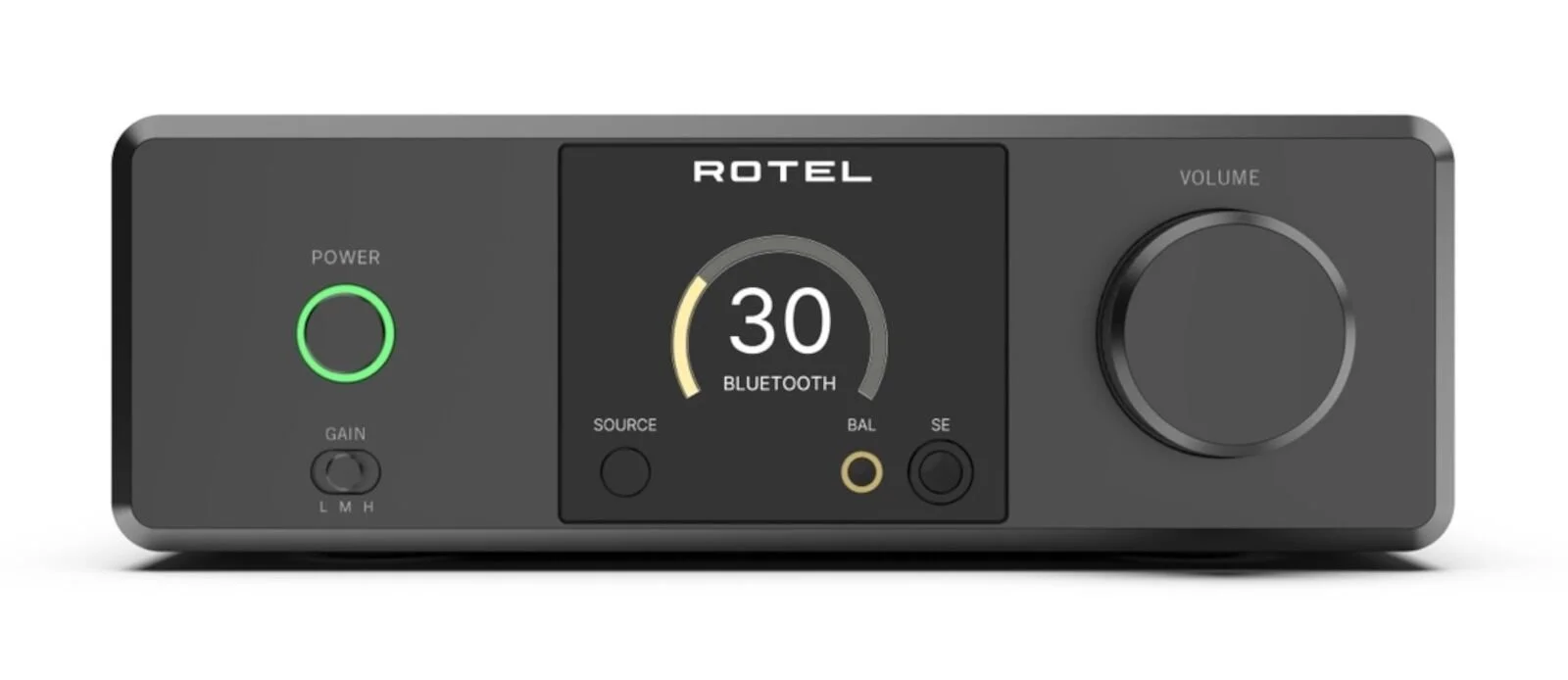
Back to our model under the microscope…the DX-3 is encased in a black or silver–finished aluminum chassis, a pleasantly clean and stylish design. The right side is vented, but you wouldn’t know from looking. A diagonally incised pattern of slots keeps the case just warm to the touch when in use. Those diagonals are echoed in miniature by the knurled pattern on the volume knob. The front facia has that control, along with a color display, a soft power button with a kelly green illuminated ring, and a two position gain switch. Just below the display are two headphone jacks, one ¼" unbalanced and the other a 4.4mm balanced. In fact, the whole shebang internally is fully balanced.
Time to go over the techie stuff…Since, at a fundamental level, an amplifier is modulating the mains power, shaping it into music, a product’s power supplies have a heavy burden to fulfill. In the DX-3, independent power supplies feed all digital and analog circuits. According to Rotel, “…isolated power” feeds the DAC conversion circuitry. “Housekeeping (CPU, display) circuits also have separate power supplies to avoid noise feeding back to critical, sensitive audio circuits.” Dual slit-foil smoothing capacitors provide “…ripple free current to the sensitive audio circuits with more than enough reserve power to drive the Class A headphone amplification stages. The headphone amplifier uses fully differential +/- 12V DC power supplies for greater dynamic range and higher immunity with less noise.” The toroidal step–down transformer is manufactured in-house, and is pared with ultra-low noise isolation and filter capacitors.
“With over 64 years of design experience, heritage and architecture in the Rotel technology portfolio, there was no shortage of circuit topologies to choose from. However, the DX-3 posed both challenges and opportunities as the physical size is non-standard (relative to a) traditional–sized Rotel. The engineers had less physical space to work with but still required a no-compromise solution. Each circuit was carefully analyzed to consider how to minimize the space required all while limiting noise, distortion and interference with closer proximity of the design.”
Since a DAC and display are also involved, all the software and hardware is engineered internally by the Rotel team, including the main and XMOS USB software. “This allows 1:1 communication between the product management, project development, hardware and software engineering, quality assurance and testing and in-house manufacturing teams for real-time communication.” The XMOS in question is a 32 bit multicore microcontroller, a computer on a chip.
As to the DAC, it’s based on the SABRE ES9028PRO integrated circuit. I asked Rotel what factors landed the engineering team on the ESS part. I was informed that they found “…the ESS to be more revealing and transparent in rendering of the audio…while each DAC has a unique ‘personality,’ the ESS9028PRO when used with an ESS co-developed set of external output filter circuits was found to have the quietest background of any other model DAC auditioned.” I’ve had several HPA/DACs in house of late, and the Rotel is one of my faves for both sound quality and industrial design. The included extruded aluminum remote control is a welcome addition for couch–locked listeners.
I loved that relays, with their reassuring mechanical clicks, can be heard when plugging in headphones or switching inputs. This implies long term reliability. Speaking of inputs, the DX-3 has an AES3 optical in, that’s “TOSlink” for those of you still in the Dark Ages. For this review, I did not even bother with that as AES3 optical is the weakest digital interconnect method available due to it’s inherent jitter. Same goes for Bluetooth…nice to have for the kids and casual listening while making dinner, but not a high fidelity choice.
I started my listening by first investigating the headphone output of the DX-3 since that’s its raison d’etre. Feeding the USB input using the Rotel–supplied cable, the DX-3 acts as a standard class–compliant device. I launched Amarra Luxe and set the DX-3 as the playback target. Amarra is my reference, the most linear dedicated player I’ve encountered. I had the exceptional Madison LE streamer (review forthcoming) also on my desk so, to compare, I launched Qobuz and selected the little Wattson box as that target. The Madison LE supports Qobuz Connect so Qobuz’s player app is not part of the sound, which is a good thing. Granted, the Madison LE lists for $5k, but I thought that it would provide a higher fidelity bar for comparison. For this portion of the review, I pressed my current generation Audeze LCD-3 into service using the factory–supplied cable from my Meze Empyrean. The DX-3 was a bit lean at the very bottom but less so than the Wattson in the upper bass. The DX-3 possesses a subdued yet pleasantly fat bottom, an upper bass bump that I found pleasing. As to resolution, the Rotel was not quite on par in its ability to tease out lower level information. That said, massed horns and strings, as heard in the Melbourne Symphony Orchestra’s Holst: The Planets [Qobuz 96k 2025], were convincingly portrayed by the less than half priced DX-3. No surprise, the Rotel’s high frequency extension was a bit subdued. Triangle strikes were noticeably less sparkly but, again, I could not fault the Rotel when considered as a whole. It offers excellent sound quality for the price.
I wanted to move to a comparison product more evenly matched in cost. Also in my desktop stack was Orchard Audio’s $2k Valencia. Because the Orchard has only a balanced output, I went with a lovely $200 purple Apos x Z Reviews Magia cable, which is fabricated from 152 fine strands of 6N OCC copper conductors. Although the equivalent gauge is 25AWG, it has an even softer hand than my Meze cable…nice! Comparing the DX-3 to the Valencia surfaced that age old audiophile trope that separate components trump integrated products. After digging around for higher rez tracks that would serve as test material, I settled on Matthew Halsall’s Finding My Way from his 2012 release, Fletcher Moss Park [Qobuz 88.2k Gondwana Records]. The Valencia revealed more air at the top, with associated detail in the metallic percussive elements. Also, the bottom was more sturdy, more solid without being hyped. For this comparison, I used the Madison LE streamer feeding the Rotel’s AUX inputs via ANTICABLES Level 6.2 unbalanced (RCA) interconnects since it has no balanced ins. These very short and ultraflexible little red devils were perfect for this application, adding little or no color of their own. For the Madison LE to the Valencia, I went with my trusty Soundstring GEN II Beta 2-22S plugged into the Orchard’s balanced XLR inputs. The Soundstrings are not quite as resolving as my Audio Art Cable Statement e SC Cryos, but those are very stiff and the Soundstrings are very flexible.
To finish my headphone amp evaluation, I went for an even more sensible comparison; Bluesound’s $1149 NODE ICON. I level matched and queued up track 3 from the Orchestre de Paris’ Berlioz: Symphonie fantastique. Ravel: La Valse [Qobuz 96k Decca 2025]. Through Berlioz’s third movement, the Rotel was darker and richer, while the ICON’s AAA headphone circuitry offered a leaner, cleaner picture. The ICON’s image was narrower and more detailed; with additional lower high frequency emphasis. By comparison, I felt the Rotel benefitted from a gentle, low Q shelf of 1.5dB at 12K and 2.5dB at 20k. That provided all the air and crispness to match the ICON. Do note that the ICON was streaming directly from Qobuz, while the Rotel’s DAC was being fed by Amarra. Out of curiosity, I swapped the undistinguished USB cable for my spendier Wireworld Starlight 8 USB which, not surprisingly, allowed the missing snappiness and air that I was using EQ to compensate for. The timbre also improved, making for more realism. It confirmed that the Rotel was being held back by the included USB interconnect. With the fancier cabling and no equalization, I ended up preferring the Rotel’s approach over the NODE’s headphone output. To my ears, it was simply higher fidelity and truer in tone color. In case you’re wondering…for all of the above headphone tests, I set the DX-3 to zero attenuation and used Amarra to set levels.
But what about its line outputs? For that exercise in contrasts, I used my balanced Audio Art Cable Statement e SC Cryo, direct from the unit under test into John Curl’s at–home amp, the Parasound JC5 power amplifier. The Rotel was sourced, again, from Amarra Luxe via the thin red Starlight 8 USB. First up, Orchard Audio’s versatile $1500 PecanPi+ Premium streamer, which had a slightly laid back presentation, as if I’d moved back in “the hall” a row or three. There was a more layered soundstage, with each instrument’s distance from the listener more clearly delineated. In a discovery similar to what I experienced when comparing the DX-3 to the ICON, I found Orchard’s triple P to have a skosh more refinement when compared to the Rotel. Yet, the Rotel continued to draw me in…
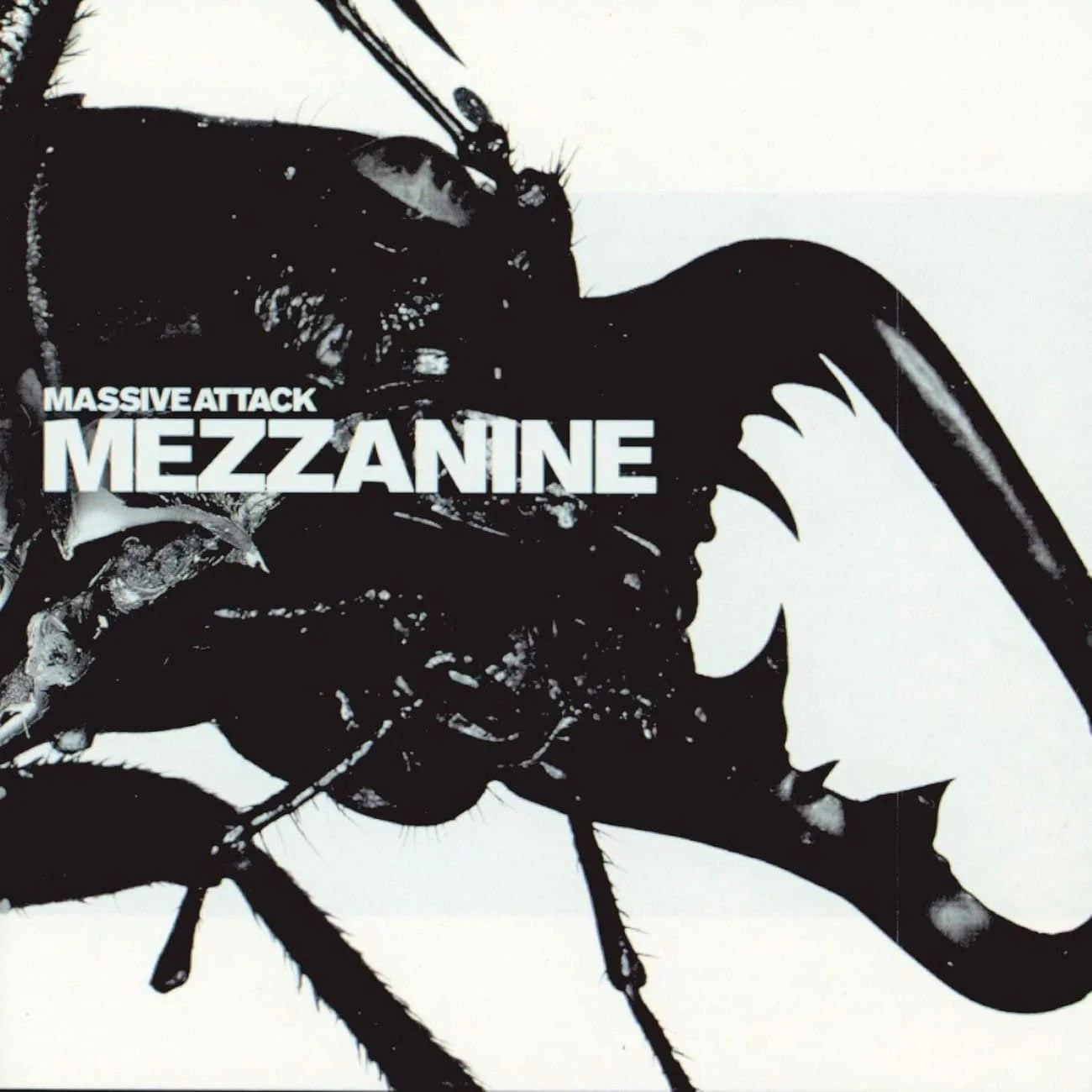
While still on the PecanPi+ versus Rotel path, younger members of our tribe Max and Alden requested Massive Attack’s Teardrop from their classic, Mezzanine [Qobuz 44.1 Circa 1997]. Who was I to refuse?! After absorbing the sounds, and unaided by me, Max said that the Orchard unit sounded more “spacey.” When asked for clarification, it turned out he was talking about a more expansive soundstage, which was both gratifying and a bit surprising coming from a “naïve” listener. Also unexpected and delightful was that Alden said, “…but I like the other one better.” He was referring to the Rotel.
If a “personal” system is what you seek and $1.5k is around your target budget, then I’d recommend you try to audition the embellishment–free DX-3. It combines excellent value with a crowd and audiophile–pleasing voice that keeps the listener engaged in their songs. Rotel’s mantra is designing “…no–frills audio components that emphasized musical accuracy, superb build quality, and affordability.” I can’t agree more!
THE COMPANY
The Rotel Co., Ltd.
Tokyo JP
Rotel DX-3 — $1499
###
Images of the DX-3 can be found at: