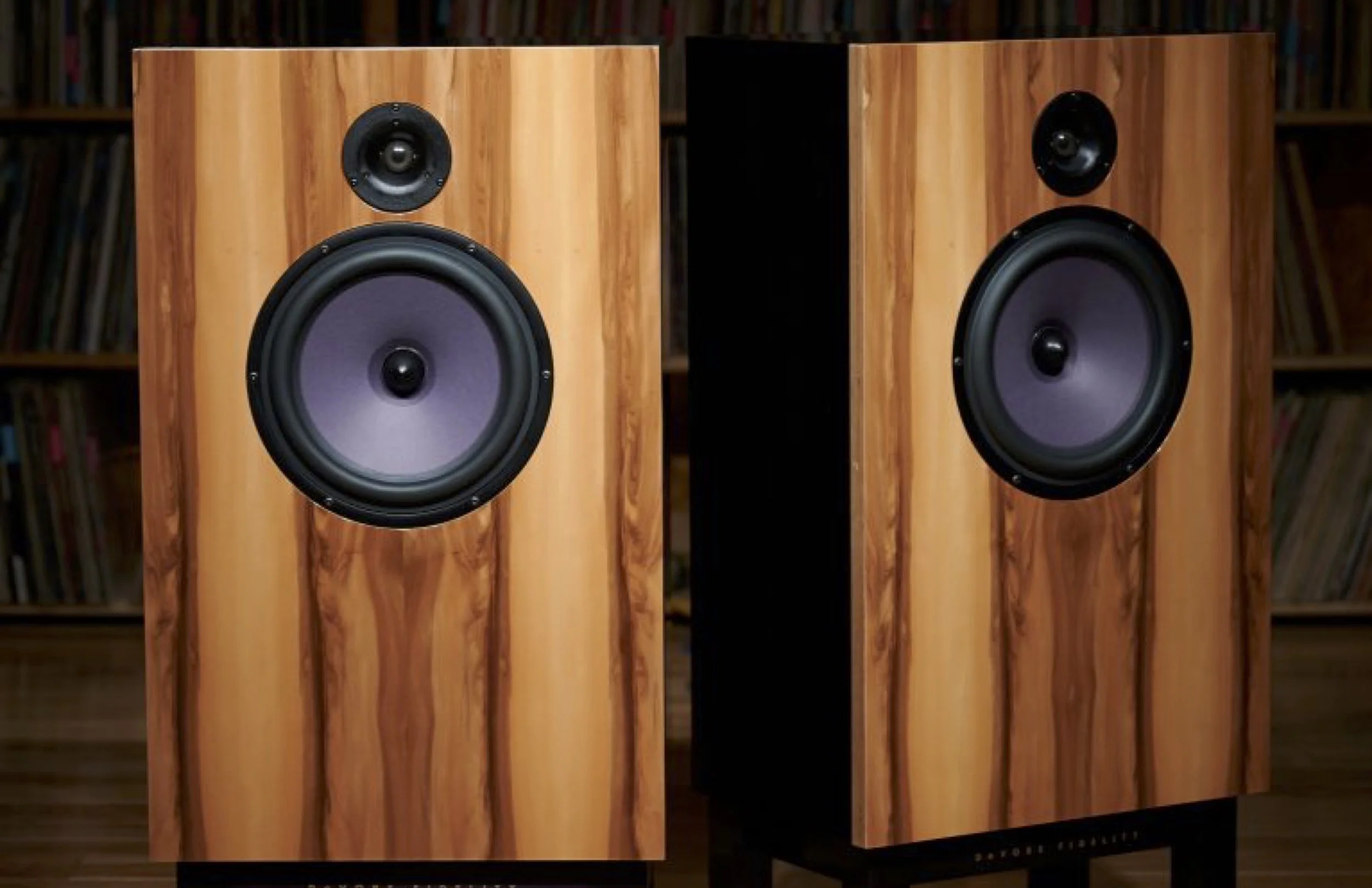
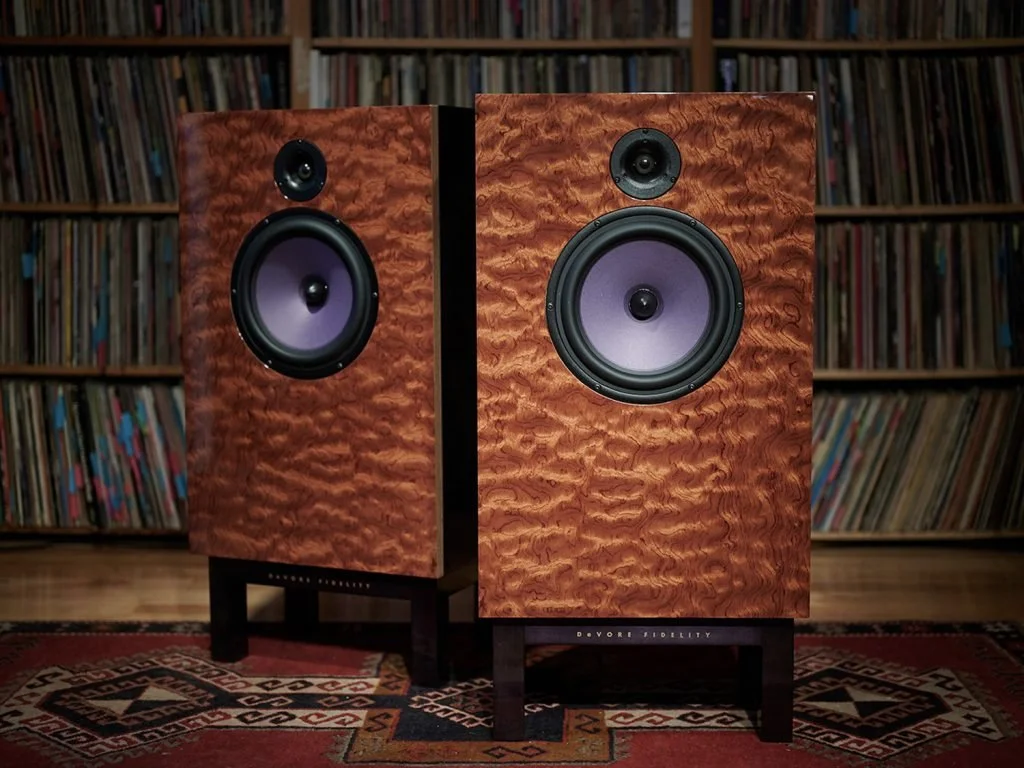
DeVORE FIDELITY Orangutan O/96s
When the DeVORE FIDELITY Orangutan O/96s came in for review, they had 200 hours on them. John suggested 450 hours for complete burn-in and before review. I had heard a great deal about the Orangutan O/96s and was anxious to see what they could do. Of course I didn’t listen right then, but a day or two later sat down for an “early” pre-note or two. My thought after listening was, “If this doesn’t get any better at the 450-hour point, I may be one of the few reviewers to return this speaker unreviewed.” I was truly worried and wouldn’t listen to them again until well after the 450 hours had clocked in. Suffice to say, that there was great trepidation.
And then at the 450 hour point, when the music began to play… The O/96s that had worried me when they had little more than 200 hours on them had now come to life. This was music on a level for which I had long been searching. Perhaps the O/96s were the final and most pertinent component of the Casa Heartsong reference system puzzle. What a difference an additional 250 hours made. Scratch that, what an impossible difference an additional 250 hours made in how the Orangutan O/96s evolved into truly outstanding loudspeakers. They now sang as if they were two to three times their asking price.
That afternoon became an occasion for just listening to vocal recordings. These were recording, that I’d been listening to for decades, from Joni Mitchell’s Blue to Shirley Horn’s You Won’t Forget Me (Verve) to Rickie Lee Jones’ Rickie Lee Jones (Other Side of Desire), etc. In every case, the music was powerfully moving, incredibly musical, with superb technical acumen. To say that I had heard these albums hundreds of times would not be an exaggeration. And the beauty of the music via the O/96s was the best I had ever heard. Eyes closed, still as a sculpture, taking in every note as if a pointer to a gold doubloon, I was mesmerized.
REFRAIN: Unlike most reviews, this review will be non-sequential, as it will start with how the components actually sound and not the process of physically “undressing” them and/or laying out their various parts, specifications, etc. Think of this review, then, as a non-linear movie— In the Shadow of the Moon, Kill Bill, Pulp Fiction, The Queen’s Gambit, etc.—that likewise starts at the end and winds its way to the beginning.
The System - Reference Two Channel
Grimm Audio MU2 Streamer/DAC/Preamplifier
AIR-TIGHT ATC - 5s Preamplifier
AIR-TIGHT ATM - 1E Amplifier
ATMA-SPHERE - GEM Integrated
ATMA-SPHERE - MP-3 Preamplifier
ATMA-SPHERE - Class D Monoblocks
LYRIC Ti 100 Single-Ended Integrated
Trafomatic Audio Rhapsody 300B Integrated
DeVore Fidelity Orangutan 0/96
Fern & Roby Raven III Speakers
Kubala-Sosna Emotion Interconnects (XLR, RCA), Speaker Cables
Grimm Audio SQM Interconnects (XLR, RCA)
TORUS AUDIO power conditioner
RSX BEYOND, MAX power cords
SEISMION Amplifier Stand (powered)
The Sound
The Orangutan O/96s as part of the reference system quartet made every album, every track, every selection feel far too short. The music resonated with such sublime beauty, transparency, overall technical acumen, that it kept me glued to my seat for hours. Seldom have I been in such anticipation of the next song, the next track, and actually dreading the end of an album. After a long-known album had ended, it was not uncommon for me to comment, “That was insanely short.” The end would always come much too soon, and this would be the rule, not the exception, with the Orangutan O/96s in the system.
The Orangutan O/96s pulled one of the most deft disappearing acts I can remember—unequaled by any other speaker I’ve ever had the pleasure of reviewing or owning. And as Orangutan O/96s are no small speakers, though certainly not a behemoth, this was fascinating. To my reference music collection, noted for spatial/dimensional recordings, I went. They were played back via the O/96s, like the Top-of-the-Line (TOTL) electrostatic headphones and headphone amps had, and I was transported to venue after venue with all the air and ambiance and spatial cues intact. This was beyond impressive. I thought about adapting the term Yellow-Chair-Tardis, which I had used for the TOTL electrostatic HPAs/HPs time machines, but White-Sofa-Tardis just didn’t sound right. But there was more…
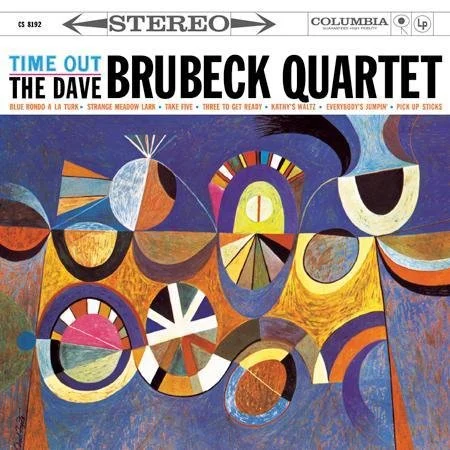
Joe Morello’s cymbals had never sounded so tonally/timbrally real and alive and so spatially apparent. Nor had Khatia Buniatishvili’s piano, which was now real enough to stroll up to, to sit and to listen while she played. On and on it would go across all of my favorite pieces—Olafur Arnalds’ Island Songs (Mercury), Tord Gustavsen Trio's The Other Side (ECM), Charlie Mingus’ Tijuana Moods (RCA Legacy). They all quickly left the realm of thin three-dimensional renderings to a more robust, fleshed-out stage of living, breathing musicians. And the depth of the soundstage was quite remarkable and extended well into the patio, just beyond the front wall. This, too, was quite new.
I thought about its price, adaptability to power, and its other abilities relative to speakers that were exceedingly more expensive, speakers that did not possess these abilities. Why weren’t they standard fare for a great many audiophiles and music lovers, not more fêted in the industry? Here was a relative bargain, a chameleon in terms of power requirements, with all the bona fides, musical and technical, that music lovers and audiophiles would crave. Then a recent conversation with a retailer made things quite clear. A speaker that was much more expensive relative to the O/96s meant more profit. “It doesn’t matter,” he said. “If they are better in every way, the dealer just won’t make as much money.”
So times have definitely changed. The audio salesman who would sell you the best system, not the most profitable system is, perhaps, an endangered species now. The Orangutan O/96s may well be overlooked in light of the profit made from stratospherically priced speakers. Speakers that are not better or anywhere near as adaptable to power requirements or as technically or musically astute, just more profitable. However, for me as a reviewer it was a no-brainer. “Youse guys aren’t getting out alive. See…” (think James Cagney).
I have owned and reviewed a good number of speakers, many a good deal more expensive than the O/96s and certainly more highly praised, but none possessed the whole-cloth musical acumen, the soup-to-nuts technical abilities of the 0/96 or its sublime musicality. Yes, there have been other quite exceptional and more expensive speakers, but they pale in comparison to this sub-$20k speaker.
Bass
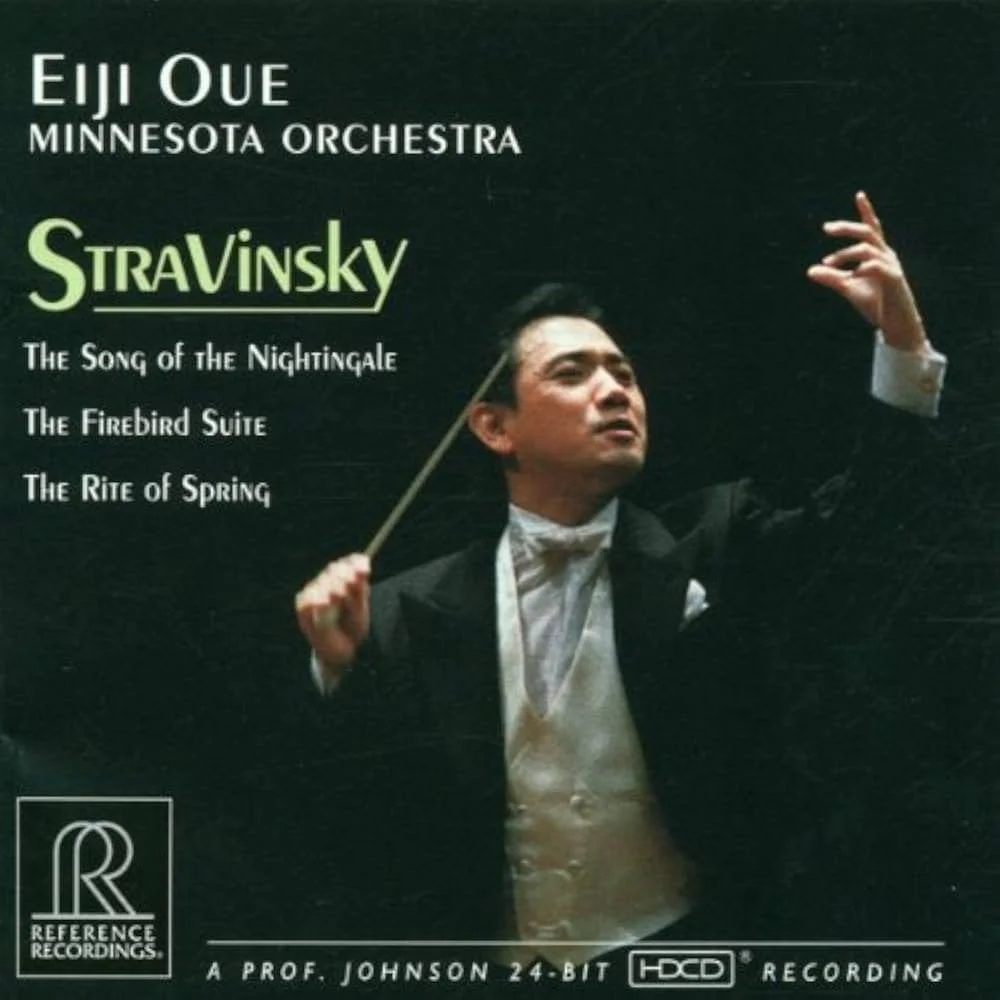
The O/96s reached into the sub-bass and grabbed up the Holy-Bass-Head-Grail as if they were simultaneously eating bonbons, jumping about on a pogo stick, and playing paddle ball (a little red ball attached to a “wooden” paddle), just that easily. It was as if my various bass-afflicted review tracks had finally come to life with the Orangutan O/96s in the mix. Eiji Oue’s Stravinsky and Rachmaninoff (Reference Recordings) albums, as a result, were torments for any neighbors who also worked from home, though my apartment is to a large degree isolated in the complex.
There is no other speaker that I have, to date, reviewed that can match the sub-bass reach of the Orangutan O/96s, and certainly not with a minimum of 20 watts, mind you!

Midrange
Mesmerizing. The Orangutan O/96s’ rendering of the midrange was natural, textured, three-dimensional, and taken as a whole, incredibly beguiling. The Vivid Audio Kaya 45 certainly had its way with vocals and is perhaps a hair’s breadth away from the O/96. However, there is more of a feel of the voice via the texture of the O/96s, which flesh out three-dimensionality, and the in-room palpability of voices even more so. No other speaker has come close.
I’ve earlier referenced the various vocal tracks, both male and female voices, I’d listened to which had absolutely compelled my attention for several hours, so engaging and technically superb was the music. And if I had had any preconceptions, all it took was that one multiple-hour listening session, where all preconceptions were jettisoned into deep space.
It’s no wonder that so many reviewers, as I have come to discover, have opted for a pair of the Orangutan O/96s. Not only are they extraordinarily musical and technically superb from stem to stern, they pair easily with literally hundreds of amplifiers, from five watts to 400 watts. This is of course a reviewer’s dream speaker, given its tremendous versatility. “Youse guys aren’t getting out alive. See…”
Treble+
As a number of amplifiers and preamplifiers/amplifiers rolled in for review, the Orangutan O/96s were getting a nice workout and voicing beautifully with everything that sat in for an audition.
There were those amplifiers and preamp/amp combos that had very good top-to-bottom extension and those that did not. After hearing how extended the Orangutan O/96s could go with amplifiers—stratosphere and beyond—whenever things didn’t quite go there—it was clearly the amp’s fault!
As mentioned above, Joe Morello’s drum kit on “Take Five” (Time Out, Columbia) was the best to date. There was that electrostatic thingy going on again, which served to transport me to the studio in 1959. In this listening, the master tape was not required to hear treble+ resolution, tonal/timbral accuracy, and all the air that ever was around Joe’s drum kit and cymbals. After that, what more is there to say? Bravo!
Conclusion
Yeah. What can work with amplification from five measly watts to 400 watts, provide tonal/timbral renderings that harken back to the original venue, and even take you there, grab your heart like it’s sitting on your chest, and leap over tall buildings with a single bound? Okay, skip the building thing. But the rest is spot-on and of course you know the answer: the Orangutan O/96s.
The Orangutan O/96s had me planted on the sofa listening to tunes for many hours at a time and as happy as an officially protected turkey on Thanksgiving Eve. It was wonderful.
Impeccable transparency, resolution detail? Check. Wide top-to-bottom frequency extension? Check. Beguiling tonal/timbral accuracy? Check. A staging envelope—front to back, right to left, deep, high—to die for? Check.
This is a reviewer’s dream speaker, no doubt, and why so many reviewers have adopted the Orangutan O/96s. And while I don’t know the numbers, I feel as though there are too few audiophiles and music lovers who are familiar with these incredible speakers. To them I say, if you want a system whose voice you can radically change without replacing the speakers, add amp, then look no farther than the Orangutan O/96s.
They are of course easy winners of our DIAMOND AWARD, BEST OF THE YEAR AWARD, and EDITOR’s CHOICE AWARD. This is the Best of the Year Issue, after all.
Notes: First, never listen critically to a component before it’s fully burned-in per the manufacturer’s instructions, lest you get the wrong idea. Guilty. Second, never begin the review or take notes before it’s fully burned-in. Guilty. After that, however, you’re good. Despite my mistakes, I was.

The Technical Specifications
DEVORE FIDELITY
ORANGUTAN O/96
Frequency Response: 26Hz-31kHz
Sensitivity: 96 dB/W/M
Impedance: 10 ohms
Dimensions: 12″d x 18″w x 35.5″h, including stands
The Company
DEVORE FIDELITY
Orangutan O/96: $15,900/pair
DeVORE Fidelity
63 Flushing Ave., Unit 259
Bld 280, Ste 510
Brooklyn, NY 11205
(718) 855-9999
info@devorefidelity.com