ATMA-SPHERE MP-3 PREAMPLIFIER & S-30 AMPLIFIER - REVIEW
ATMA-SPHERE MP-3 PREAMPLIFIER & S-30 AMPLIFIER
In the past two reviews of Atma-Sphere’s products I have evaluated its newest amplifiers—GEM, a 5-watt, fit-in-the-palm-of-your-hand integrated, and its Class D Monoblocks. They have not been long standing Atma-Sphere products, with the exception of the MP-3 Preamplifier, though both of its newest products have been exceptional. In this review, however, I evaluate a combination of Atma-Sphere’s two long-standing, products—the Atma-Sphere MP-3 Preamplifier and S-30 Stereo Amplifier combo.
I had previously spoken of how Atma-Sphere both designs and prices its products to a formula. It is a formula that finds the Atma-Sphere products very reasonably priced and of exceptional quality, relative to its competition. This has been true with the GEM, the Class D Monoblocks, and the MP-3 Preamplifier. All have excelled far beyond their price tag, competing easily with other manufacturers Top-of-the-Line products for a fraction of what is being asked for these products. These other manufacturers, more often than not, go with a what-the-market-will-bear ‘formula’, which results in extraordinarily high prices and often moderately performing products. The what-the-market-will-bear ‘formula’ can also be seen in the prices of real estate and rentals, unfortunately, and has nothing to do with build quality or even location, in some areas. I digress.
My most recent experience of Ralph’s formulaic approach was the Atma-Sphere MP-3 Preamplifier and Class D Monoblocks in combination. The MP-3 and Class Ds at a combined price of a little over $12k easily out performed significantly more expensive integrated amplifiers and preamplifier/amplifier combos. It took only a few minutes to determine the stark differences in rendering the music, wherein the Atma-Sphere combo consistently came out on top! This went from head-shaking to jaw-dropping as the gap in pricing continued to widen between the Atma-Sphere combo and its competitors.
REFRAIN: Unlike most reviews, this review will be non-sequential, as it will start with how the component actually sounds and not the process of physically “undressing” it and/or laying out its various parts, specifications, etc. Think of this review, then, as a non-linear movie—Memento, Kill Bill, Arrival, Eternal Sunshine of the Spotless Mind, etc.—that likewise starts at the end and winds its way to the beginning.
The System - Reference Two Channel
Grimm Audio MU2 Streamer/DAC/Preamplifier
Silent Angel Bonn Pro8 Network Switch
Atma-Sphere MP-3 Preamplifier
Atma-Sphere S-30 Stereo Amplifier
Atma-Sphere CLASS D Monoblock Amplifiers
TRAFORMATIC RHAPSODY 300B Single-Ended Integrated
LYRIC Ti 100 Single-Ended Integrated
Devore Audio Orangutan 0/96
Fern & Roby Raven III Speakers
Kubala-Sosna Realization Interconnects, Speaker Cables, Power cords
Grimm Audio SQM Interconnects (XLR, RCA)
RSX BEYOND, MAX Power-cords
SEISMION Amplifier Stand (powered)
TORUS AUDIO Power conditioner
The Sound
I gave great praise to the Atma-Sphere MP-3 Preamplifier and Class D Monoblocks and they deserved every word. Their combined abilities set benchmarks time and again that no other preamplifier/amplifier combo or integrated that I have owned, reviewed, or auditioned had ever met. The MP-3 Preamplifier and Class D Monoblocks made listening to music fun, enjoyable, and a wonderfully engaging experience. This, as you can imagine, is saying quite a lot with 45+ years experience as an audiophile, music lover, and, as of late, a reviewer.
However, what the Atma-Sphere MP-3 and S-30 combo did, relative to the MP-3 and Class D combo, was better in, literally, every respect. There was greater clarity—transparency, resolution, detail—dimensionality, which heightened the in-room presence, spatial acuity, and the palpability of performers, which together infused an incredible sense of aliveness. This ‘aliveness’ continually lifted the music well beyond stereo playback. The Atma-Sphere combo, in fact, staged performances time and again, regardless of genre, dynamics, scale, etc. The very word ‘performance’ appears across my notes countless times, as this was no aberration, no exception, this was the rule with regard to the MP-3 and S-30.
This was music beyond any Single-Ended Triode (SET) that I have ever owned, reviewed, or even heard. The music was more dimensional, palpable, more nuanced, real, alive, and always more alive. The combos rendering was also far beyond any push-pull amplifiers that I have heard, owned, or reviewed, to date. No doubt, this owed to the MP-3 and S-30 combos’ Output Transformerless (OTL) design relative to amplifiers utilizing transformers. Regarding the OTL amplifier versus the transformer coupled amplifier, Ralph had this to say:
“Any transformer in the signal path does two things. It limits bandwidth and adds distortion. Distortion tends to obscure detail. How much bandwidth and how much distortion is a different matter; generally the smaller the transformer, the greater the bandwidth.With no transformer you hear more of what the tubes are doing.”
In comparison, other preamplifiers and amplifiers and even SETs, fitted with transformers, sounded distant, opaque, and even lifeless. This I would never have thought, but listening confirmed it time and again. And as I mentioned in a prior review, Ralph had let me know that his amps would easily surpass SETs, but I quietly scoffed, finding this a very bold statement. Well, in the end, it was truer than I could have imagined, with the latest proof—the Atma-Sphere MP-3 and S-30 combo—staring back at me from across the room. Incredible!
It has since become very clear why owners of Atma-Sphere amplifiers hold on to them for decades, if not their entire lives. In truth, I began planning, shortly into the review, on how this combo would remain a permanent member of the Casa Heartsong reference stereo quartet.
The Atma-Sphere MP-3 and S-30 combo’s volumetric cube is exceptionally deep, given its match to the Orangutan O/96, exceptionally wide, broadening the stage far out to the sides, and in depth. It has diminishingly few competitors in this regard. Soundstaging—positioning, layering, relative spacing, and volume—was spectacular and one of the reasons for performances in place of just good stereo reproduction. The performers were never tightly clumped or, seemed, to perform on top of one another, unless the recording itself dictated that. And I truly don’t remember the stage begging me to walk into it or staring slack-jawed into the space where the performers seemed so demonstrably present. Bravo!
Bass
Prodigious. Which begs the question, how is it possible for a 30 watt, tubed, OTL stereo amplifier to go deeper in the bass region than all other amplifiers and integrated amplifiers in house, including 100 and 400 watt monoblocks? This was, of course, a mind boggler. So, I emailed Ralph for his expertise on this matter.
“The S-30, SETs in general or any tube amp will attempt to make constant power with respect to load impedance, which is a very different behavior from a Voltage Paradigm device…Most box speakers have a low frequency resonance…Some speakers are designed to use that resonance to take advantage of this extra energy- thereby extending the low frequency reach of the speaker a bit. Such speakers (DeVore Fidelity 0/96) are meant for tube amps with a high output impedance like the S-30.”
Suffice to say, that the Atma-Sphere MP-3 and S-30 Stereo as allied to the DeVore Fidelity Orangutan 0/96 Loudspeakers, and the Grimm Audio MU2 rocked Casa Heartsong, when called for, to no end. If I had been concerned that Eiji Oue’s Stravinsky (Reference Recordings) with the MP-3 and Class D Monoblocks was giving my next door neighbor fits, what the MP-3 and S-30 combo was doing went far beyond that! In deference to my neighbors, I kept late night listening sessions to a minimum and relatively free of dynamic music and large scale orchestras. That said, those seven assembled tympani for the “Infernal Dance of King Kashchey” never sounded as powerful or as resolute or as commanding with the MP-3 and S-30 combo. And the inner detail, the ‘timbre’ of the drum skins, their internal resonances/voices, and the clear discernibility of the rapid-fire mallets striking the tympani never came to life like this. Not even 400 watt preamp and amplifier combinations were their match in this respect.
Ralph maintains that the DeVore Fidelity Orangutan O/96 Loudspeaker, optimized for tube amplifiers, is a perfect choice for the S-30. He also speaks to the fact that a Voltage Paradigm speaker, the majority of the speakers of the market, would not necessarily be a perfect choice for the S-30 and this might cause its playback to be less than optimal. So one would need to choose loudspeakers wisely to optimize this
Midrange
Yes, there was more detail, greater resolution and transparency, more ambient information. And coupled with exceptional spatial definition and weight, the performers were more dimensional and more palpable than ever. This gave ‘humanity’ and presence to vocalists, which, again, translated to a performance. If you’ve experienced this, then you know well what I refer to and it is no easy thing to find. I’d list the various reference albums, that I use to discern a component(s) midrange capabilities, but that would be pointless, unnecessary. The Atma-Sphere MP-3 and S-30 combo pushed all these albums to the level of a fidelity and rendering that was, at the very least, far above how they had been previously rendered.
What can one say, when every benchmark, every well known album or track used for reviews surges past earlier renderings and fastens one to the listening chair for hours, day after day. This was my experience with the Atma-Sphere MP-3 and S-30 combo. And it was an experience for which I had not been prepared, nor for which there is precedent, currently. Amazing!
TREBLE+
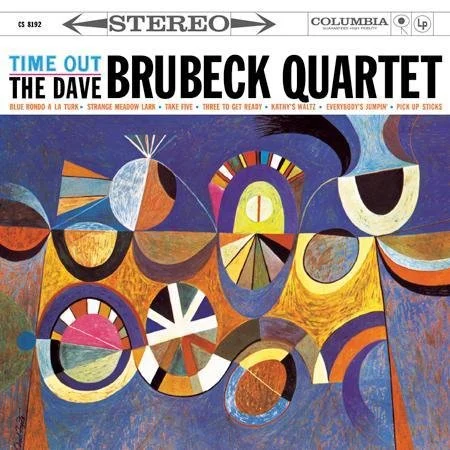
Dave Brubeck’s “Take Five” (Time Out, Columbia-Legacy) came alive with the Atma-Sphere MP-3 and S-30 combo. Joe Morello’s drum kit was more fleshed-out, palpable, and standing in space more so than it had ever been. And high treble extension, via the MP-3 and S-30 combo, went to the moon and beyond, which is to say, that it was always natural, beautifully resolved, and detailed.
Emmanuelle Bertrand’s “Tout un Monde: Énigme” (Dutilleux & Debussy: Works w/Cello, Harmonia Mundi) via the MP-3 and S-30 combo surpassed the abilities of its siblings, again, turning what had been an exceptional rendering, into one that was riveting. I cannot tell you how many times over the course of this review that I listened to this album and a host of others that were now more real, more alive, more engaging than they had ever been. My listening time increased rather dramatically during this review. Exceptional.
Design—Look and Feel
The Atma-Sphere MP-3 Preamplifier and the S-30 Stereo Amplifier are ‘old school’ in every way, when it comes to the look, the feel, and as I speak to below, their functionality.
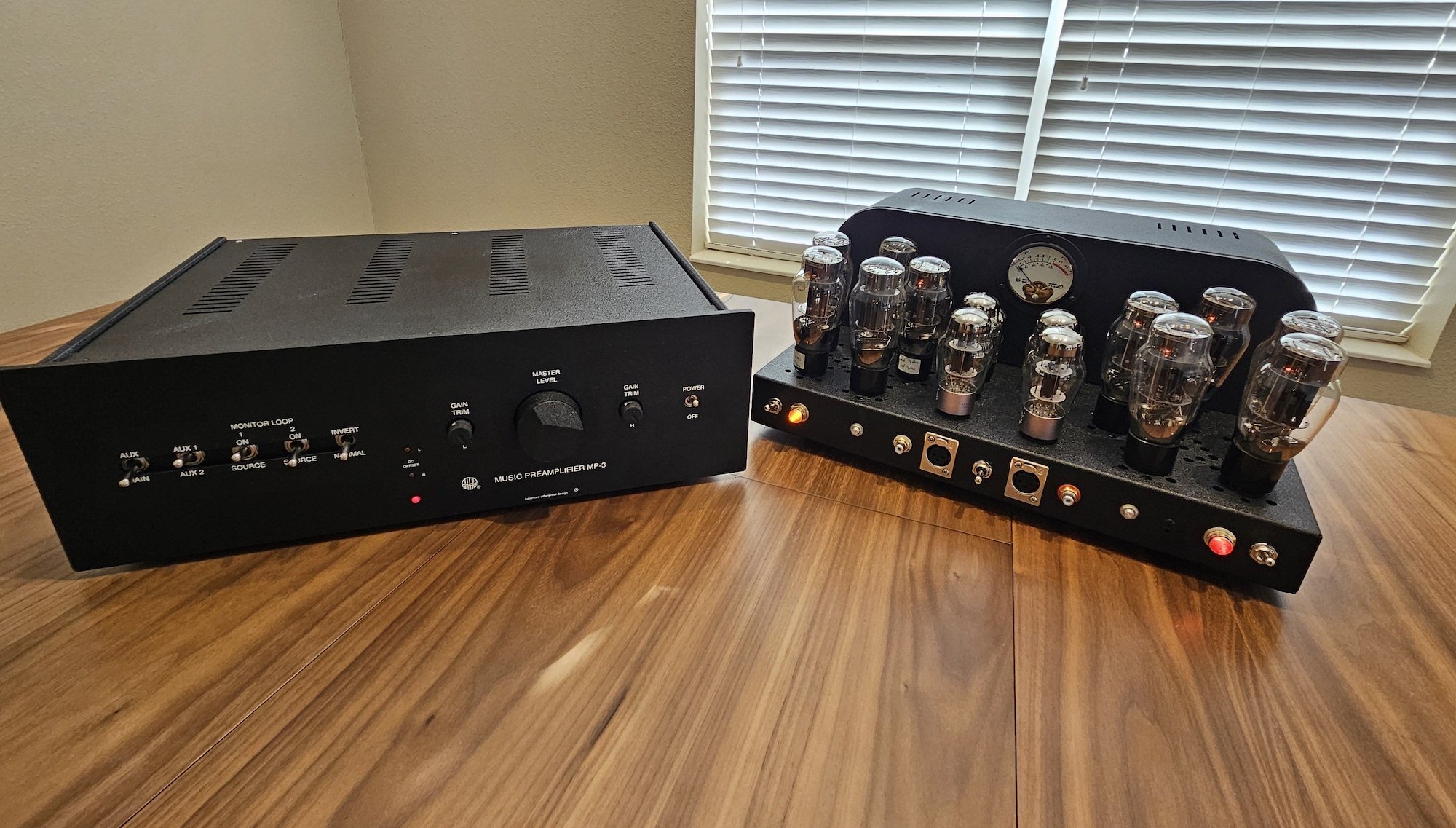
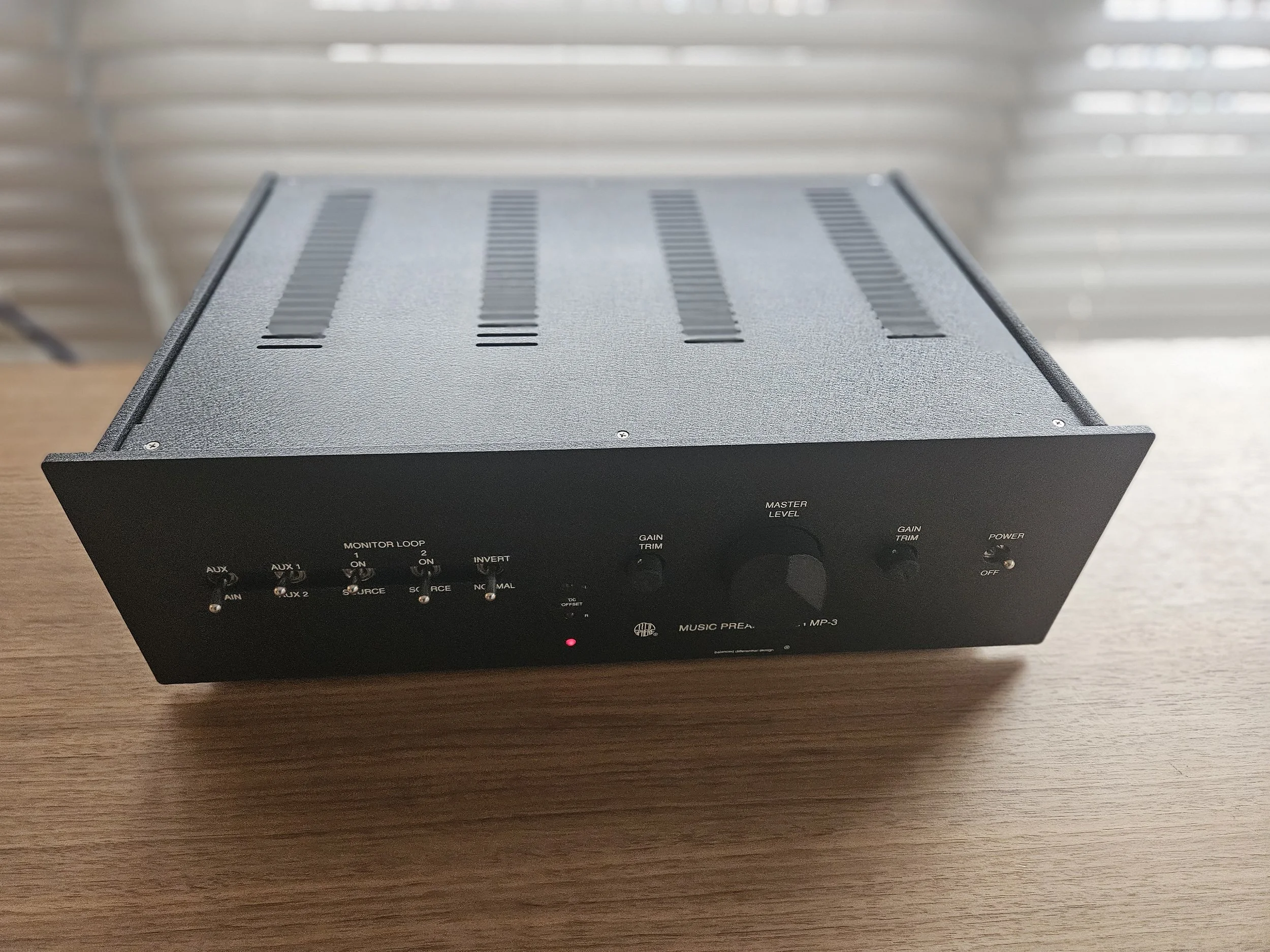
The Atma-Sphere MP-3 Preamplifier comes in a very straightforward rectangular, metal box, its patina is that of black ‘Wrinkletex’, which is supposedly very hardy and darn near scratch resistant. The MP-3 incorporates seven 12AT7 tubes and two 12AU7 tubes. Even its front panel controls are ‘old school’ represented by five toggle switches and three rotary knobs.
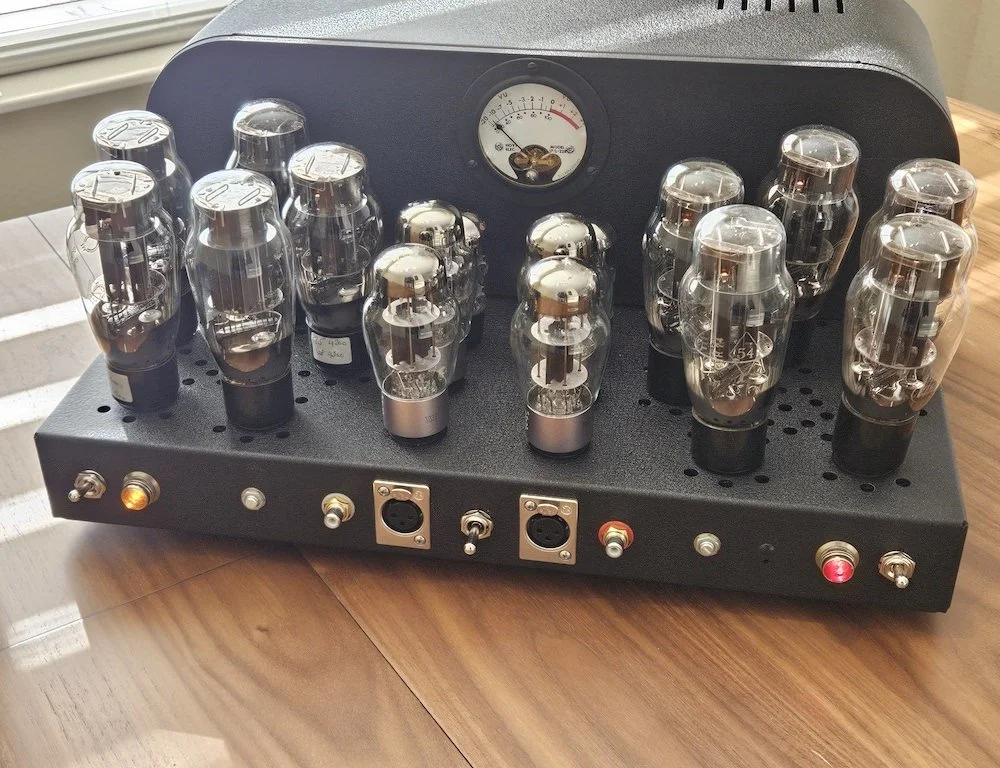
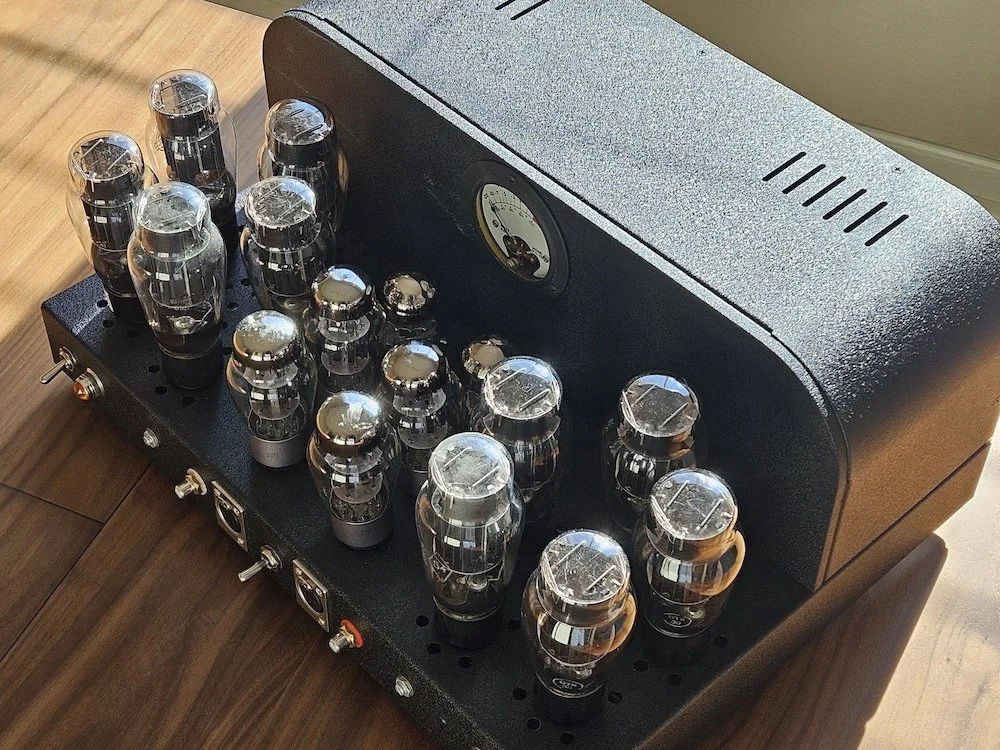
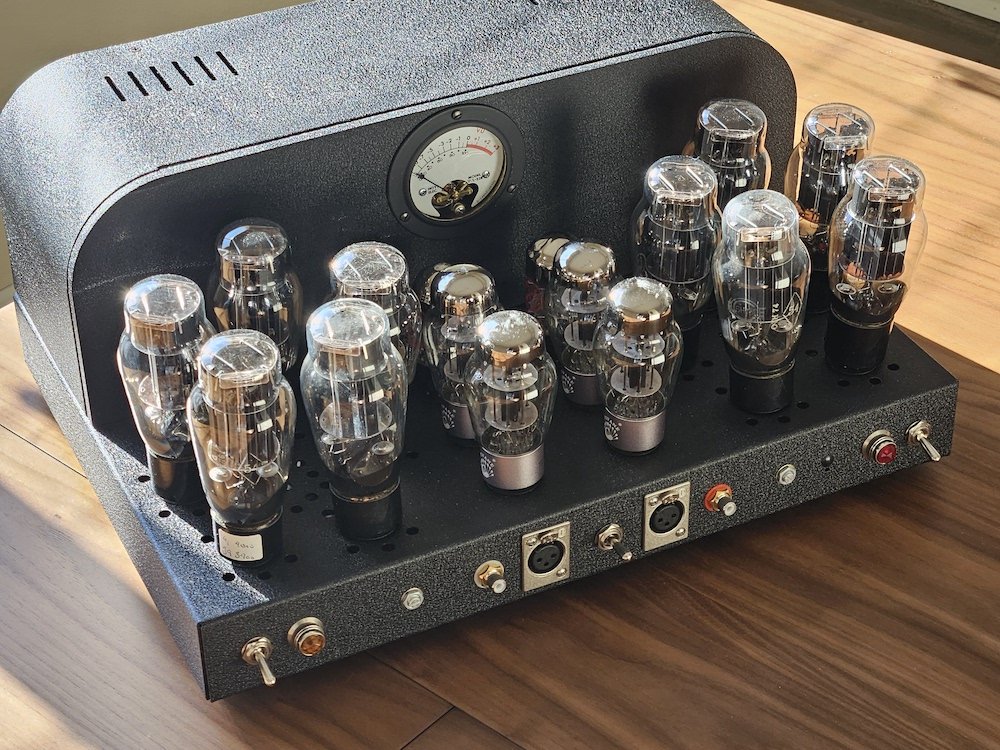
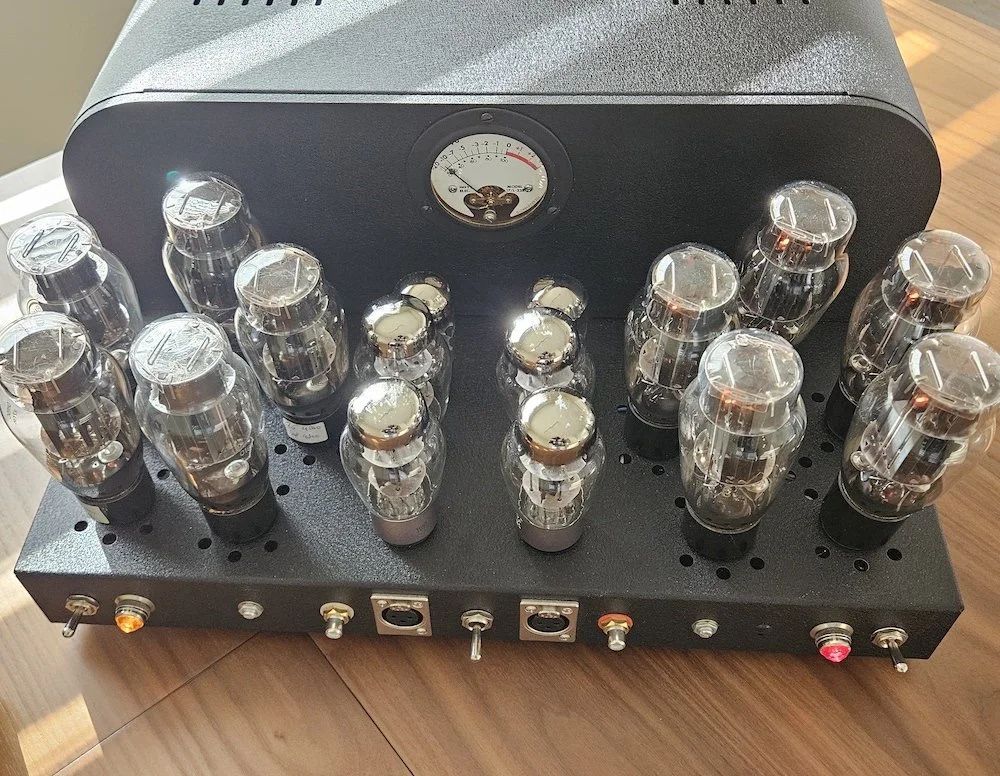
The Atma-Sphere S-30 Stereo Amplifier features an open design with its various tubes exposed on its top face. The S-30’s tube complement consists of 10 6AS7G output tubes and six 6SN7 driver tubes. On its front face the MP-3 features toggle switches like its MP-3 kin, as well as balanced and single-ended amplifier inputs. It’s definitely an ‘old school’ thing to have the amplifier inputs on the front face as opposed to the back and some might find it concerning. I must say that initially I did. However, when it came to plugging the MP-3 to the S-30 it was a very small thing, indeed, and was soon forgotten. What might be considered the S-30’s back face, which sits on the plane of the tubes, is an old school meter. The meter is pretty cool and gives the S-30 the feel of times past. The S-30 like the MP-3 is wrapped in Wrinkletex.
While many may consider the Atma-Sphere combo ‘no thrills’, I find it decidedly appealing as it harkens back to an early age where straightforward simplicity was the reigning theme.
Functionality
Atma-Sphere MP-3 Preamplifier
Front: As mentioned above, the Atma-Sphere MP-3 Preamplifier five has toggle switches and three rotary knobs. The toggle switches from left to right are for two auxiliary balanced inputs, two single-ended tape monitor inputs, and an inversion toggle. The front panel rotary controls from left to right feature a small diameter left-channel gain control knob, a larger diameter volume knob (centered), and a right-channel gain control knob. The smaller gain control knobs to ‘trim’ the volume in the left or right channels to taste. The larger volume control knob is a “precision 23 position stepped volume control built with 96 resistors on a custom built switch”.
Back: The MP-3 features from left to right an IEC two sets of balanced outputs. Next are four-sets of single-ended inputs for taping/monitoring that transform the signal-ended signal to a balanced signal internally. And at the far right are two balanced inputs, three if you have opted for the built-in phono-stage, which this MP-3 has and it is rightmost positioned.
The MP-3 is a fully Balanced Differential Design, which means it’s balanced through and through and doesn’t have, well, fake balanced inputs or outputs. Those for whom optimum quiet is essential or long cable runs, there is, perhaps, no better design. Ralph also mentioned that with this design, regardless of the balanced cable used or its cost, it will make little difference relative to the MP-3’s design (this also goes for the S-30).
Atma-Sphere S-30 Stereo Amplifier
Front. As mentioned above, the S-30's front face features two toggle switches, with one on the leftmost and one on rightmost side of the amplifier. At the S-30’s center are a balanced and a single-ended amplifier input. It should be noted that one begins with turning the leftmost toggle on first, waiting a minute or so and then turning on the right most—standby—toggle switch on.
Back. From left to right one finds a set of Cardas binding posts for the left speaker, an IEC socket in the middle and another set of Cardas binding posts for the right speaker. It’s a very straightforward procedure for plugging it in.
The S-30 is very light for a 30 watt tube amplifier, but this owes to its OTL design and the missing mass of metal that normally comes with transformer based amplifier designs. It does make one wonder to what extent that the missing metal frees the sound and, well, elevates it to a performance instead of just a stereo rendering.
However, one should abide most carefully when powering up the Atma-Sphere MP-3 and S-30. The procedure should follow the input to output power up, that is powering on one’s system from source to preamplifier to amplifier.
The MP-3 has two DC offset lights above the power light that come on briefly as the preamp warms up. The tubes are then locked in at zero volts at the output. Turning the amplifier on first and then the preamp will find those offset light searching, momentarily, for balance before they go off.
The Atma-Sphere MP-3 Preamplifier and the S-30 Stereo Amplifier are designed in a ‘old school’ and very straightforward, clean, no-nonsense way, and functionality is easy, when following the above guidelines.
Conclusions
Outstanding! Consider every technical benchmark—resolution, transparency, staging, dynamics, tone/timbre, etc.—checked, along with musicality, and the ability to present the music beyond stereo playback to that of a performance, checked. The sum total of this with the Atma-Sphere MP-3 Preamplifier and the S-30 Stereo Amplifier combo is one of the most engaging listening sessions that I’ve ever had. This moves the Atma-Sphere MP-3 Preamplifier and the S-30 Stereo Amplifier combo beyond a great many integrated amplifiers and amplifier combos currently on the market and for a fraction of a fraction of their cost.
You’ll pay many thousands more for an integrated amplifier alone, not to mention the tens of thousands that you’d pay for other manufacturers’ top-of-the-line amplification combos and still not achieve this level of performance. This pretty much says it all regarding the ability of this Atma-Sphere combo, its real world pricing, certainly relative to its competition. Incredible!
The Atma-Sphere MP-3 Preamplifier and the S-30 Stereo Amplifier combo wins easily our highest award—DIAMOND AWARD—for its ability to outperform other integrated amplifiers and amplifier combos, regardless of price tag (some gargantuan) and by a fair margin. Bravo!
Note: If your speakers are of the Voltage Paradigm you may be well served by the Atma-Sphere MP-3 and Class D combo. This combo may even take you to where the Atma-Sphere MP-3 and S-30 took me. Ralph has a pair of Voltage Paradigm speakers (or adjustable Power Paradigm speakers) and he believes the pairing is on par with the MP-3 and S-30. Mileage may, of course, vary.
Pros: Outstanding musicality and technical bonafides which together render performances and not simply stereo playback. This combo has diminishingly few peers at any price and they are the entry-level babies of the Atma-Sphere line! Though you’ll need a Power Paradigm speaker—meant for tube amps with a high output impedance—for optimal results.
Cons: None.
The Specifications
Atma-Sphere MP-3 Preamplifier
Line stage input impedance: 100KΩ single-ended/200 KΩ balanced
Gain: 15 dB
Auxiliary Inputs: 2 - Balanced (XLR)
Differential Inputs: 2 - Single-Ended (RCA)
Tube Compliment: 7 x 12AT7, 2 x 12AU7
Frequency Bandwidth: 1 Hz-200 KHz, +0 dB, -2dB
Phono stage input impedance: 47 K Ω, adjustable
Phono stage gain: 55 dB
Phono bandwidth: 0.5 Hz-90 KHz within ½ dB
Dimension & Weight: 13"x 17" x 5.5” (33 x 43 x 14 cm) 19 lbs (8.6 kg)
Atma-Sphere S-30 Amplifier
Power Output: 30 watts per channel into 8 Ω 45 watts per channel into 16 Ω
Gain: 23dB (for 8 Ω)
Speaker Outputs: 0, 4, 8 Ohms/per side
Tube Complement: 10 x 6AS7G output tube, 6 x 6SN7 driver tube
Frequency Bandwidth: 1Hz-200KHz within 3 dB
Dimension & Weight: 13"x 17" x 8" (33 x 43 x 20 cm) 24 lbs (10.9 kg), without tubes
The Company
ATMA-SPHERE
Atma-Sphere MP-3 Preamplifier (line stage only): $6,450
Atma-Sphere MP-3 Preamplifier (line stage & phono stage): $7,700
Atma-Sphere S-30 Stereo Amplifier: $5,100
www.atma-sphere.com
ralph@atma-sphere.com
Tel. : +1 651-690-224