MUSIC REVIEW: JULIA BULLOCK – WALKING IN THE DARK
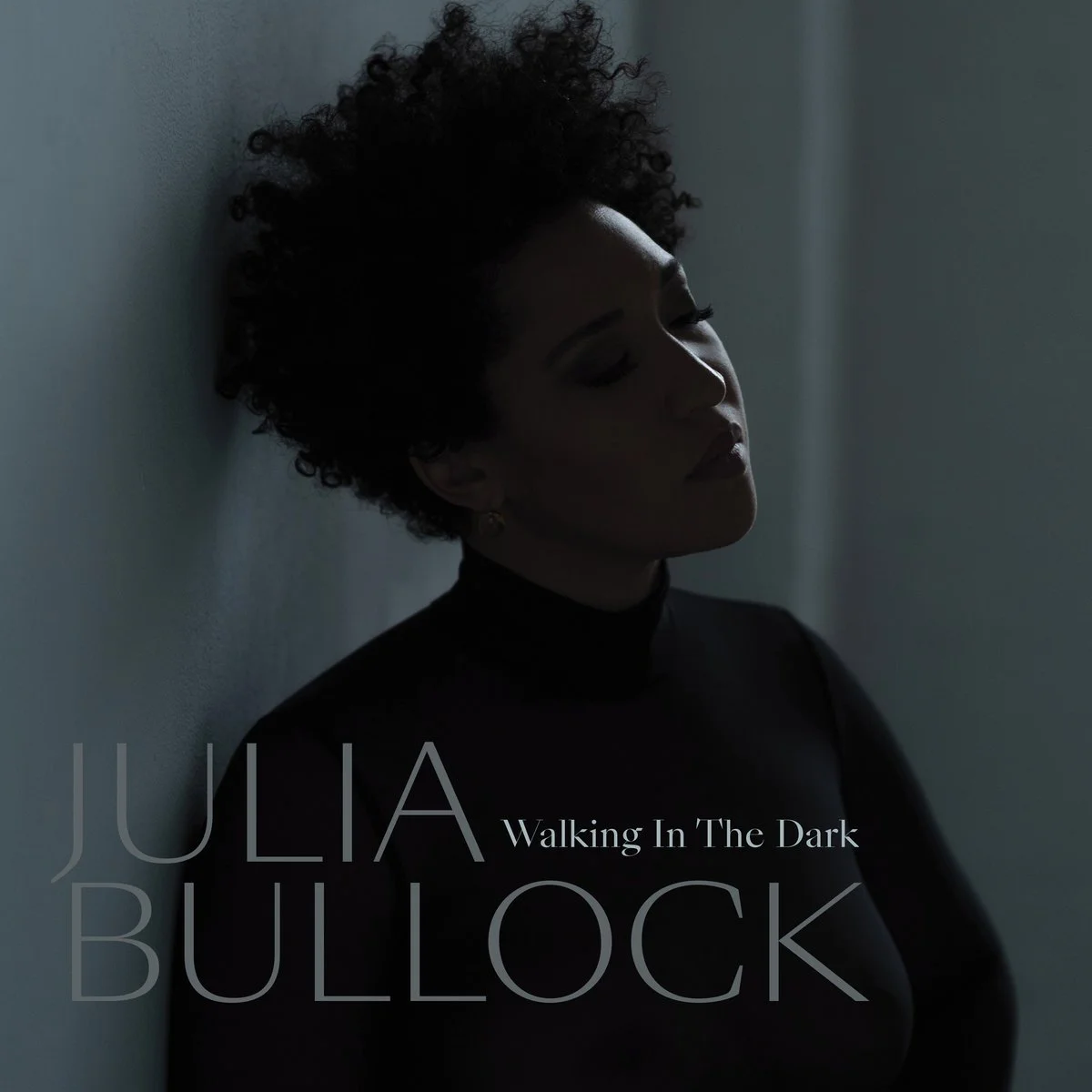
I must confess to a love for the soprano voice, especially one oozing with power and passion and possessing the added bonus of an expressive low register. So when I came across Walking in the Dark, the debut album of American soprano Julia Bullock, I was immediately excited and intrigued, not least by the eclectic mix of music on the album ranging from modern classical to folk rock to jazz-based to spirituals. Intriguing, particularly when the singer unambiguously identifies herself a “classical singer”.
The first track opens with the naked voice, a voice that has me captive from the start. The piano joins in and Oscar Brown Jr’s “Brown Baby” unfolds, a call to all for a more just world for all, and the first of three songs on the album covered by Nina Simone whose influence Bullock is happy to acknowledge. Bullock gives it her own interpretation, combining a classically trained voice with all the passion and heart of the song. A popular song from the 1950s follows, “One by One” by little known singer-songwriter Connie Converse. Bullock sings it in the manner of a modern artsong, her voice velvety, caressing.
The next track, ‘Memorial de Tlatelolco’, from John Adams’s magnificent opera-oratoria El Niño (2000), comes in as a veritable aural shock as voice and orchestra (London’s Philharmonia) explode into a fiendishly difficult and fiendishly dramatic aria, with the chorus punctuating the vocal line in the second half. This is modern opera at its best, full of passion and drama, and Julia Bullock’s voice unleashes at full tilt, her range on full display, the high notes contrasting with the velvety low register featured in the previous two tracks. Bullock has had major roles in three of Adams’s major works and you can see why in this track which displays her technical prowess and expressive powers. Christian Reif both conducts the Philharmonia and accompanies Bullock in the other songs on the piano. (He is not only her musical partner, but her life partner as well.)
“City called Heaven” is another definite standout on the album, taking us straight into the world of spirituals. In Bullock’s interpretation it carries centuries of human sorrow and human hope and human faith. It reminded me of the great dramatic soprano Jessye Norman singing spirituals, imbuing them with all the rich emotion of her operatic voice.
More of Julia Bullock’s gorgeous low register is on show in Billy Taylor’s “I Wish I Knew How it Would Feel to be Free”, another song covered by Nina Simone (along with the final track, Sandy Denny’s “Who Knows Where the Time Goes”), with Bullock ornamenting the vocal line with beautiful melismas.
Samuel Barber’s “Knoxville: Summer of 1915”, a descriptive musical tableau for soprano and orchestra, is a centrepiece of the album, conveying the fluidity of the constantly shifting impressions of a summer evening.
“Who Knows Where the Time Goes” returns to a different feel, with Bullock caressing the music and our ears with her voice. A muted, gentle conclusion to an eclectic album with a deeply personal choice of repertoire.
For me it was the tracks for voice and piano which stood out most, even more so against the background of the classical works, as the contrast in itself displayed the extent of Bullock’s versatility. If it’s a soprano voice capable of expressing heartfelt pain and heartfelt hope that you’re after, Julia Bullock is a most welcome arrival on the classical scene. And the fact that she can cross genres and musical boundaries so well is an added bonus.
Irina’s latest critically acclaimed book, Heloise Speaks, a true and powerful love story, centuries before Romeo and Juliet, is now available: Heloise Speaks, A Verse Novel