MUSIC REVIEW: II DELIRIO DELLA PASSIONE – ANNA LUCIA RICHTER
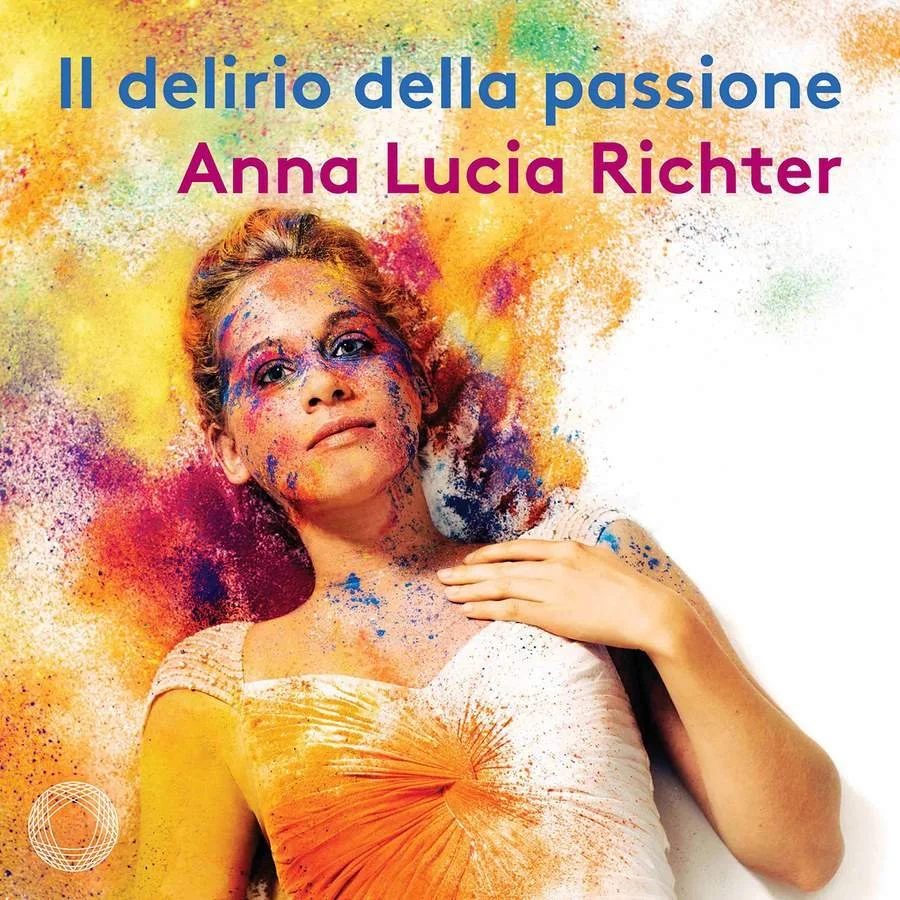
An album of Monteverdi arias, canzonettas, madrigals. That already sounded promising. How could I resist? Monteverdi was a musical genius from the 17th century who well and truly put opera on the musical map. While not strictly speaking the first opera composer (that honour went to members of the Florentine Camerata who thought they were reviving Ancient Greek drama), Monteverdi was the one to set opera on its path and ensure its subsequent blossoming into the tremendous artform which was to flourish over the succeeding centuries.
I stumbled across this album by chance – although is anything really by chance? I was browsing compilations on Idagio – this one was called ‘Softly Sung’ and promised to show just how soft and exquisite the human voice could be. Sometimes all you crave is a bit of quiet. Indeed, I have found that to be increasingly the case in a world overloaded with attention seeking noise. So when I came across ‘Softly Sung’ I was immediately drawn to give it a listen.
Well, the first track was the beginning of Arianna’s impassioned Lament from Monteverdi’s opera Arianna. It was anything but soft and gentle. More like overflowing with passion and longing and grief. The exquisite love duet “Pur ti miro” from L’incoronazione di Poppea followed and I was hooked: I just had to find the whole album, aptly named Il delirio della passione. Which I duly did.
The album opens with a very spirited and fast rendition of the Prologue from L’Orfeo. This sets the tone of what is to follow straight away – this is Monteverdi with no holds barred in the hands of a renowned present day Monteverdi interpreter, Luca Pianca. Speed, dynamics, a freshness of approach, a certain improvisatory freedom in ornamentation, all are hallmarks of the album and all are present from the start. The instrumental opening (with tambourine) literally sets your toes tapping. The voice of Anna Lucia Richter erupts into this, focused and supple, and pleasingly and unashamedly varied in timbre throughout the vocal interludes, soft, strident, whispered, exuberant. Each verse is nuanced, drawing us into the depths of human emotion in the vocal storytelling Monteverdi excelled at, along with his amazing ability to align his vocal lines to the inflections and phrasing of speech.
In “Zefiro torna”, a ‘musical joke’, the countertenor voice of Dmitry Sinkovsky is introduced and blends perfectly with Richter’s light soprano. Both are capable of virtuosic displays, both play with the music in what could be characterized as a good-natured vocal duel, interrupted briefly towards the end by a slower more reflective recitative. “La mia Turca” enters with ‘exotic’ Turkish instrumental colour and Oriental scales, something later composers were also to play with.
But it is the “Lamento d’Arianna”, here given in its entirety and taking up tracks 4–7, that is the centrepiece of the album. The scena, the only part of the opera to have survived, is a lengthy solo vocal performance which apparently originally included interjections by the chorus (similarly to the “Lamento della ninfa”), though these are now lost. Once again, Richter’s control over different vocal timbres and addition of expressive details makes this a compelling and impassioned performance. She knows just when to add vibrato to a note to heighten its affect. Nor is she afraid of sinking into a whisper. All in all the piece demonstrates just how well operatic expression is suited to conveying powerful moods and emotions as it alternates between lament, anger, pleading, fury, pain, sadness – a whole kaleidoscope of emotions which are here masterfully conveyed.
“Pur ti miro”, the closing love duet for Nero and Poppea from L’incoronazione di Poppea follows. These were both bloodthirsty plotters yet are given some of the most exquisitely beautiful duet music ever written. Sinkovsky’s countertenor again complements Richter’s soprano, their voices interweaving in cascades of ornamentation and held close harmonies, bearing testimony to the boldness of Monteverdi’s harmonic language.
Another ‘musical joke’ lightens the mood, followed by a sacred song that sets a more solemn tone without, however, letting up on vocal virtuosity, giving us a kind of foretaste of the vocal roulades of Handel, Mozart, Vivaldi.
A male ensemble of two tenors and one bass make their appearance in the poignant “Lamento della ninfa”, showing us what Monteverdi possibly intended for the “Lamento d’Arianna”. Richter’s soprano is highlighted effectively against a backdrop of plucked instruments and male voices.
The cornetto, its distinctive sound somewhat resembling a muted muffled trumpet, introduces a new musical colour in another ‘musical joke’, “Si dolce è’l tormento”, which showcases the lower register of Richter’s voice (she has recently transitioned into a mezzo soprano), caressing the notes in a way complementary to the cornetto.
The cornetto comes fully into its own in the final number, “Ohimè ch’io cado”, imitating and competing with the voice, and providing what sound like jazzy improvisational solos. It helps remind me of the use Monteverdi was already making of imitation and dialoguing between voice and instrument, a device to be famously exploited in the future by other composers – Lucia di Lammermoor’s mad scene comes to mind. A virtuosic conclusion to a satisfying foray into the music of Monteverdi.
Is the album too much of a good thing? Possibly – if listened to in a single breath so to speak. I would suggest returning to different pieces on separate listening sessions – it helps you to appreciate the intricacy of the musical lines and hear the daring harmonies better with fresher ears.
Interestingly, Richter is a German lieder and choral music specialist who has herself recorded several improvisations for voice and piano, which actually sound like fully fledged lieder, so Pianca’s freer approach to Monteverdi would have suited her well. And to hear this music given free rein in all its impassioned expression, no longer subjected to the idea that early music was somehow always performed in a restrained, bloodless manner, was for me a bonus. Perhaps it would not be a purist’s first choice, but I preferred the zest and improvisatory freedom of these interpretations. The unbridled verve of the ensemble playing at times is literally contagious and has you wanting to get up and dance.
All in all, thoroughly recommended both for the Monteverdi afficionado and the newcomer to his music.
Irina’s latest critically acclaimed book, Heloise Speaks, a true and powerful love story, centuries before Romeo and Juliet, is now available: Heloise Speaks, A Verse Novel