MUSIC REVIEW: J.S. BACH ANDRÁS SCHIFF – CLAVICHORD
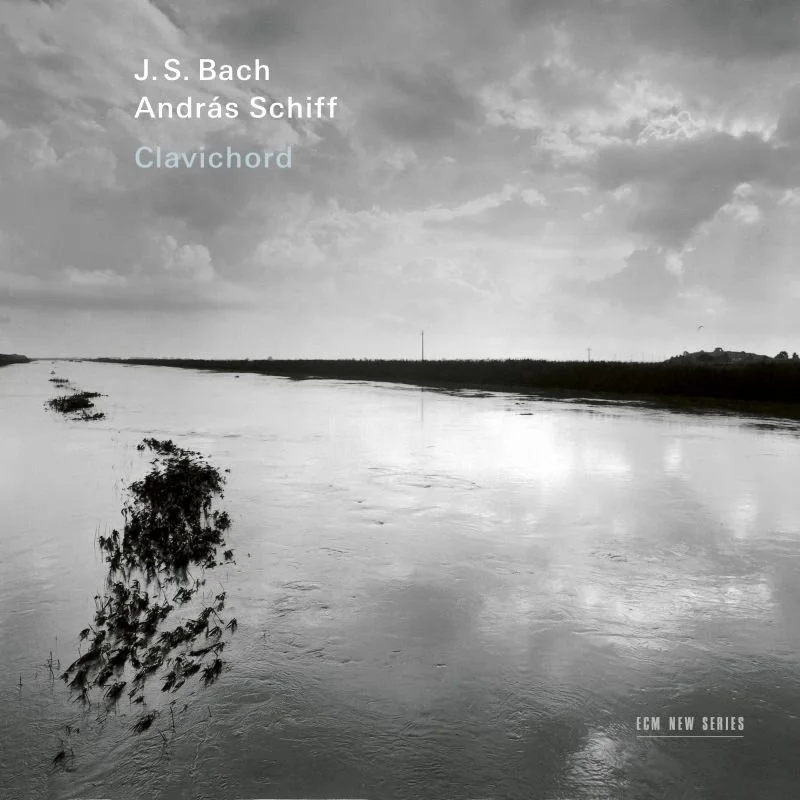
I still remember the first time I got to experience a clavichord. It was at the private home of a lady my piano professor and I were visiting in the hope of obtaining a sponsorship for the Conservatorium. And there it was, so small and intimate, standing modestly in a back room and not taking up much space at all. Not much aural space either, as I was soon to discover. I was invited to play it. Of course Bach came to my mind straightaway. After all, the clavichord was Bach’s favourite keyboard instrument for its expressive capabilities as compared to the harpsichord. I remember being shocked initially by how, well, quiet it was. A small unintrusive instrument with a small unintrusive sound. It made you really listen. Perfect for introspection and deep listening into the music. I realized this as I played my way ‘into’ the instrument, and began to hear and better differentiate its subtle nuances of volume and colour and touch.
And now years later I come across this new album by András Schiff, released January 27, 2023, in which Schiff returns to Bach and specifically to Bach on the clavichord. The album was recorded in Bonn in the Beethoven-Haus, on a replica of a Specken clavichord from 1743 built by Boris Potvlieghe in 2003.
The bulk of the album is made up of the Inventions and Sinfonias, but the opening number is the relatively little played Capriccio in B flat major ‘on the Departure of his Beloved Brother’ (BWV 992). A solitary example of programmatic music painting by Bach (still a teenager at the time he wrote it), it comprises six movements and includes a friends’ lament, a semi-improvisational section, the joyous arrival of the postal carriage, and a fugue with an imitation of a post-horn which the clavichord pulls off quite creditably to my ears.
This is followed by fifteen 2 part and 3 part Inventions (BWV 772-786) and the clavichord brings out their contrapuntal lines with great clarity and distinctiveness. Its naked sound is very revealing of the accuracy and brilliance of fingerwork and phrasing, even more so in some ways than a harpsichord. Invention No.4 is particularly brilliant, but in every case the polyphonic textures are transparent and beautifully pointed, with the playing leading you into following the individual lines. No.7 in E minor was a favourite of mine with its long left hand trill. As with the better known 48 Preludes and Fugues, different tonalities and scales evoke the exploration of different moods (akin to classical Indian ragas or ‘scales’ evoking different ‘rasas’ or moods), so the E minor Invention contrasts with the happily busy and lighthearted Invention in F major that follows, to give just one example. Like most of the works included on the album the Inventions are more modest, private setting pieces, though no less intricate and rewarding – and heartfelt – for that.
The Inventions are followed by four Duettos (BWV 802-805) from the Clavier-Übung III, another less well known set of Bach pieces which suit the clavichord very well. The highly contrapuntal No.4 sounds particularly brilliant on the instrument. More well known are the complexities of the Ricercar a tre voce from the Musikalisches Opfer (Musical Offering) (BWV 1079) in its keyboard version, which comes next. The fifteen Sinfonias (BWV 787-801) which follow also wind their way through many of the major and minor keys. Sinfonia No.15 is particularly striking for its driving rhythms. Once again, a very good choice of repertoire for the clavichord.
What is unexpected is the conclusion – the mighty Chromatic Fantasia and Fugue in D minor (BWV 903), a true masterpiece. Schiff displays speed and virtuosity aplenty in the Chromatic Fantasia which threatens to spill over beyond the instrument in its sheer exuberance, emotion, and cascades of notes. I personally have always thought this was a piece just waiting for the advent of the grand piano to bring out all its colours and moods. That said, the sheer brilliance of this performance remains awe-inspiring. The great Fugue is masterfully played, every contrapuntal line clear and differentiated, as to be expected from such a musical master as András Schiff.
Schiff himself calls this album an invitation into “a new world, a quiet oasis in our noisy, troubled times”. Maybe this is what we need in our times of superamplified basses and volume cranked up to the point of distortion. A return to experiencing quiet and to distilling the gentle drops of sound arising out of silence. My only quibble is that a recording cannot quite convey the subtleness, delicacy and sheer quietness of the clavichord sound, especially if you are tempted to turn up the volume. My tip – don’t! If anything, try turning it down for a more authentic experience. Even better, see whether you can find a clavichord to try for yourself and experience how it might sound in a small intimate space. You just might find the colours and touch control, and its sheer quietness, quite beguiling, and revelatory of the music in a different way. The clavichord did indeed offer more expressive possibilities than the harpsichord, including subtle volume control and even a subtle vibrato, all achieved through touch. It could even sustain notes a little, unlike the plucked action of the harpsichord. Which are all reasons why it was Bach’s favourite keyboard instrument. For most of us it could never replace the piano and all its possibilities, but it could certainly complement it.
It is said that part of the genius of Bach’s music is that it adapts well when transposed to all sorts of instruments and instrument combinations, both old and new. Bach is satisfying to listen to, also on what one could call a ‘mathematical’ level, and possibly even more satisfying to play, making it a constant pleasure to discover or rediscover Bach’s music on different instruments. This album helps us on this journey, with the added bonus of what will, for many, be the discovery of a new instrument with its soundworld.
Irina Kuzminsky
A brief postscript. Having listened to Bach on the clavichord I was in the mood for some meditative music and another recent release (from February 10, 2023) caught my eye, Meditations – Chants & Piano, with Tim Allhoff (piano) and Cantatorium under Fr Robert Mehlhart singing Gregorian chant (Sony Classical 2022). The album appears to try to build on the hugely successful recording from 1993, Officium, a collaboration of jazz saxophonist Jan Garbarek with the Hilliard Ensemble singing Gregorian chant. The timeless haunting quality of the saxophone’s voice weaving in and out of the soberly sparse chant was nothing short of mesmerizing and helped bring the spiritual rigour and beauty of Gregorian chant into the modern world. Meditations – Chants & Piano attempts a similar integration of Gregorian chant and jazz piano but to my ear, the melding is not there, that seamless integration of new and old, enhancing both. Here the elements somehow remain disparate, the piano intruding on the chant. However, it is an interesting concept, and maybe the piano parts on their own would form a fine jazzy meditative album for those who like that kind of sound.
Irina’s latest critically acclaimed book, Heloise Speaks, a true and powerful love story, centuries before Romeo and Juliet, is now available:
Heloise Speaks, A Verse Novel