CLARUS CABLES - REVIEW
CLARUS CABLES:
No area of high-performance audio can be more confusing than choosing cables. There’s a wide variety of competing designs, and many manufacturers claim to provide the best transmission of the pure audio signal. With its established line of cables, Clarus, a firm founded in Orlando, Florida, in 2011, offers its own solution for discriminating audiophiles.
Clarus touts a few things that set it apart from most other cable manufacturers. First, they use oxygen-free pure copper by Ohno Continuous Casting (PCOCC). PCOCC's low electrical resistance and single-crystal impurity-free construction make it ideal for accurate signal rendering.
Chief designer Jay Victor used extensive experimentation and testing to finalize the cable designs to align with the sonic goals Clarus had established. There are a number of videos well worth watching on the Clarus website. The site further reveals that Clarus combined art and science, and listening, to hit the mark. No magic dust or voodoo involved.
Clarus also claims to have a patented cable design that uses three distinctly different conductor types. According to Clarus, “each individually insulated; solid heavy-gauge conductors, flat conductors and spiral-ribbon conductors (with a non-conductive core) dramatically improve clarity, and the resulting sound is more open and transparent. The key to the outstanding performance of Clarus Cables is the size of each conductor and its physical relationship to the other conductors.” In fact, Clarus holds numerous patents linked to their designs.
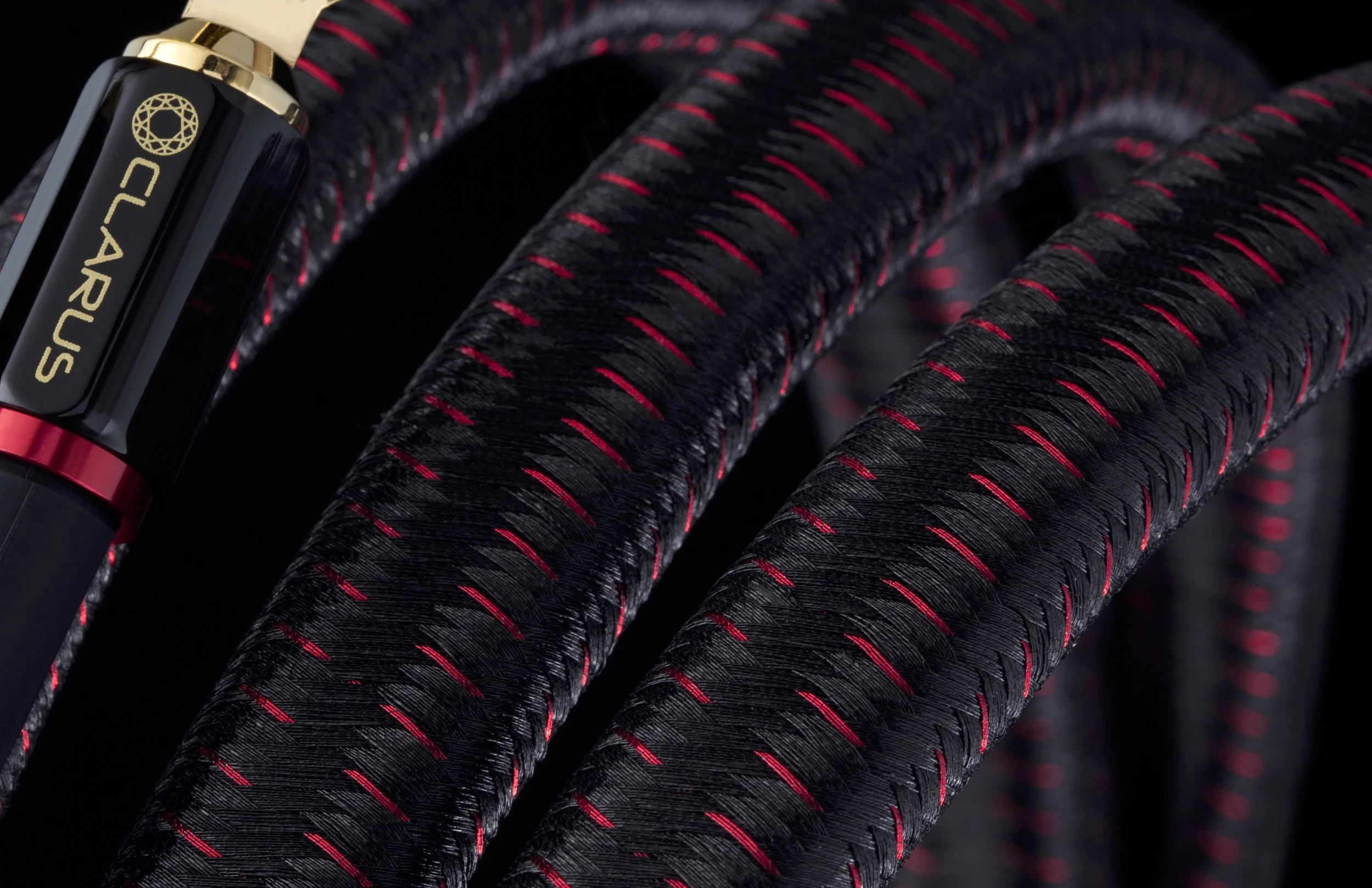
We received for review a set of the Clarus Crimson line, their top stuff. Included were balanced XLR cables, single-ended RCA cables, power cords, and their USB cable. The cables are very impressive in their build quality and workmanship, with a fit and finish appropriate for a premium audiophile product. As a plus, they are attractive and seem durable enough to outlast their owners. All the cables are beautifully terminated as well, which inspires confidence in use.
The Clarus Crimson line are luxury audio products, priced accordingly. The single-ended Mk II interconnects start at $1,560. The XLR balanced version starts at $2,100, the power cords start at $1,110, and finally, the USB cable starts at $525. Price increases with length, which is standard.
Set-up and listening
We installed the interconnects first, then the power cords, then the USB cable. We prefer to stagger the introduction of each set of cables so we can hear what each layer is contributing. Of note, Clarus sent the cables “burned-in,” so we did not spend too much time letting them settle; we got right down to listening. We connected a Rogue RP-7 balanced preamplifier to a Simaudio 861 power amp with the XLR cables, as well as the balanced Bryston BDA-3 DAC.
We used the single-ended interconnect with a SOTA Comet turntable and Pyxi phono state (review forthcoming). We used the power cords on the DAC, Preamp, and Power amp. The USB cable was inserted between a Sonore Rendu streamer and the Bryston. We auditioned the USB cable last, and to say we were thrilled with its performance would be an understatement. The cable is rugged and the connectors are superb. We immediately heard an improvement in overall clarity and spatial cues over several other USB cables we own; to be fair, they are also far less expensive.

What we noticed immediately was that the Interconnect cables were incredibly nimble on musical transients. They were also full-bodied in the midrange and lower treble. This was apparent on the new album from one of our favourite bands, The Clientele, I Am Not There Anymore, which is chock full of lush Beatle-esque splendour, prog rock experimentation, and memorable melodies and lyrics, their trademark.
The band’s lead architect, vocalist, and guitarist Alasdair MacLean’s voice is a beautiful instrument, with overtones of John Lennon-era Rubber Soul, and the Clarus cables brought out all the dimensions in his vocals. Having seen the band live, I can tell you that the tonal accuracy was absolutely top-tier. The band creates a very evocative impressionistic landscape throughout their albums, and the new one was no exception. The arrangements had so much nuance and the bass had realistic weight through the Clarus loom.

We then streamed the self-titled debut from Fractus, a Glasgow-based ensemble that plays the most charming blend of styles. It can be best described as chamber folk jazz. The music is all acoustic, with dark, delicate hues. Instrumentation includes violin, cello, saxophone, drums, accordion, and the lovely vocals of Irini Arabatzi. Tracks like Plastic Vortex and Sitting Tides had the most enticing pastoral mood, and the Clarus cables made the music sound as if it was flowing out of the speakers like puffy clouds. There was so much expressiveness and the imaging was precise. The Crimson cables also managed to bring out the intimacy in these songs, giving it the feel of music recorded in a cozy den.
Following this lead, we listened to quite a bit of orchestral classical music, all high-resolution 96 Khz and above in sample rate. We found soundstaging rather exceptional, and locating parts of the orchestra on the virtual stage was easy. We thoroughly enjoyed everything, from classical guitar pieces to organ symphonies. Timbre and texture was exceptionally rendered, a must for purist acoustic recordings. Orchestral swells had a gorgeously smooth texture, while percussion hits were dynamically powerful and natural.

The album that really showed what the Clarus Crimson cables could do was Folksongs by Duo Apollon. The duo, made up of classical guitarist Aaron Has and soprano Anastasia Malliaras, has produced a modern masterpiece, performing pieces composed by Ravel, Falla, Britten, and Seiber. The music is breathtaking and the recording is superb, with just enough ambience and hall sound. The Clarus Crimson wire came as close as you can get to making these two musicians holographically present in the listening room. A real wow moment.
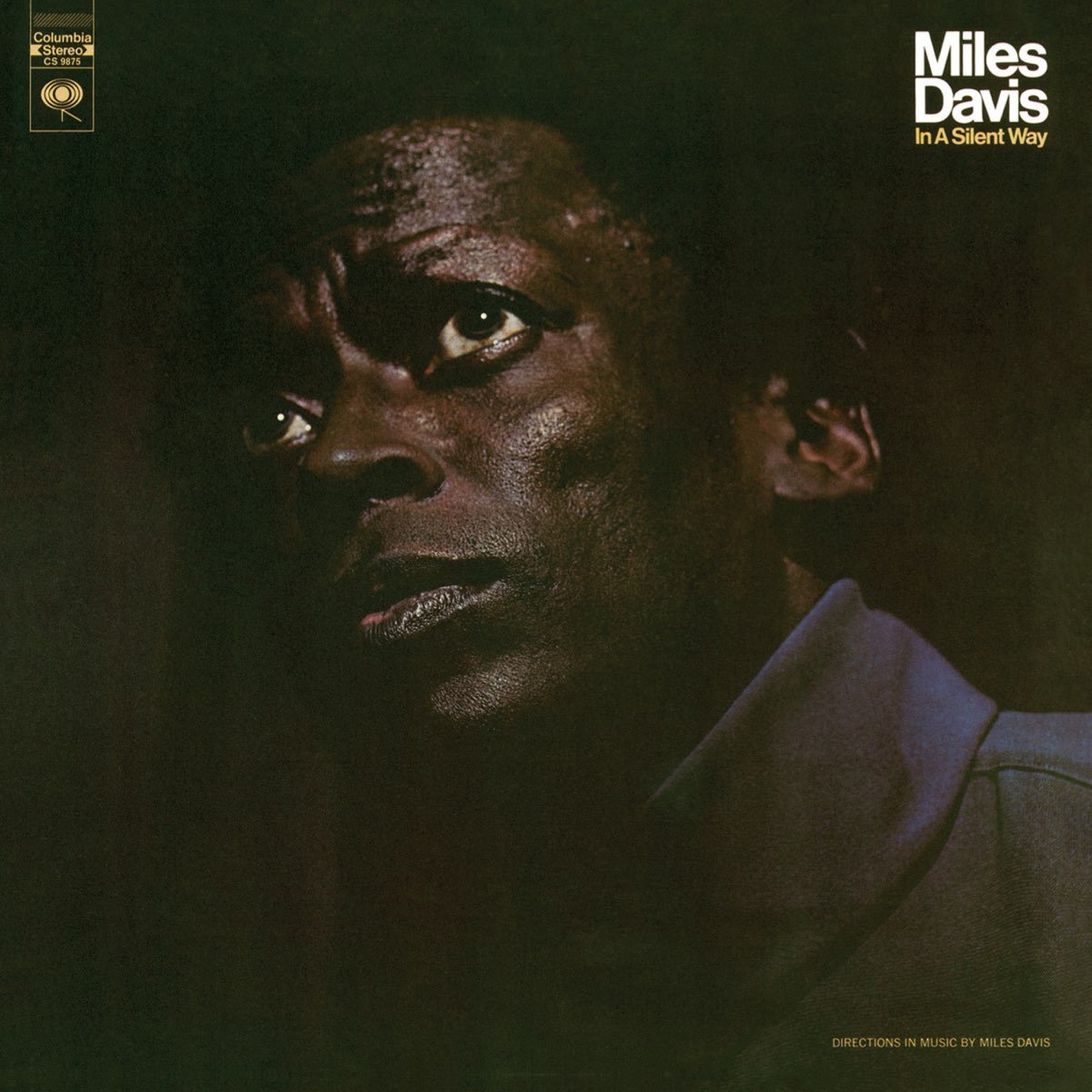
The Crimson RCA cables were put to the test when we spun original pressings of Bitches Brew and In a Silent Way, two of Miles Davis’s influential and controversial releases. These albums are a challenge for any system and cables. The Clarus Crimson loom made perfect sense of the jagged rhythms, complex interplay, and unusual instrumentation. In a Silent Way is essentially a two-part tone poem, with some stellar guitar playing by John McLaughlin, and the Clarus cables brought out the mysterious and dreamy moods. Bitches Brew was made to sound more coherent, and even the dated production shone through. Davis’s horn fared especially well, with full-throated brassy overtones.
Conclusion
To summarize, the Clarus Crimson Cables are quite special. They produce the lowest noise floor we have heard from any cables. They also immediately solidified an already very good sound system. There was definitely a synergy between the cables and our system, and the power cords, USB cable, and analog interconnects seem to be of a piece. Clarus also makes high-end power conditioning products, and interestingly, a portable dongle-style USB DAC.
The Clarus Crimson line is not entry-level in price; in essence, these are big-boy and -girl cables. They are an investment that should last a lifetime. We would highly recommend an audition if you’re considering a cable upgrade. The Clarus Crimson line simply does nothing wrong. Virtually state-of-the-art!
Manufacturer information
Clarus Cable
7022 TPC Drive Suite 500
Orlando, FL 32822
(888) 554-2514 or
(407) 855-0497
info@claruscable.com
Clarus Crimson line
http://www.claruscable.com/crimson.cfm