BLUESOUND NODE ICON
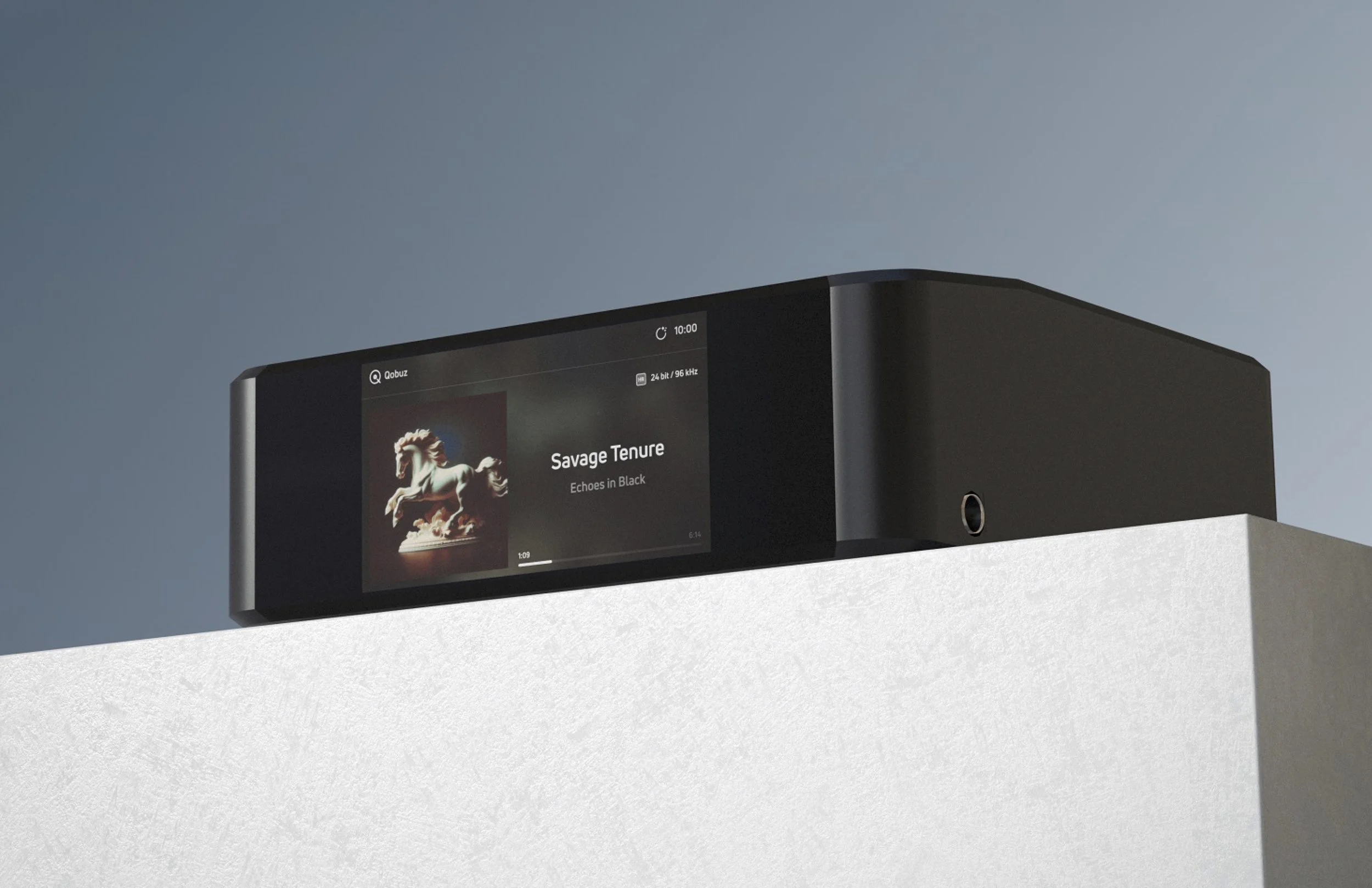
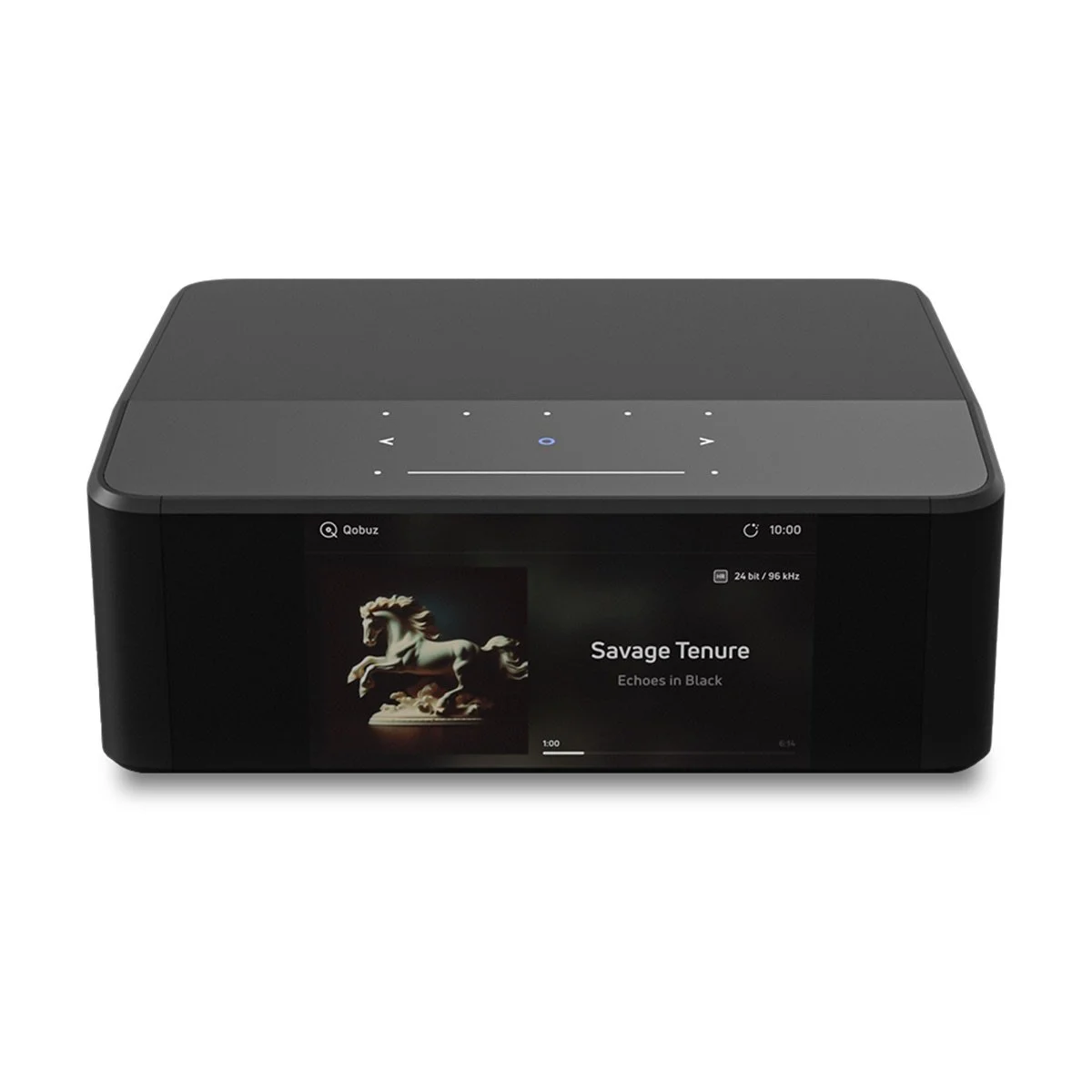
Part of the Lenbrook Group, Bluesound was founded in 2012 by a team that includes former PSB and NAD Electronics designers. This was at a time when Sonos was the brand to beat in the networked home audio space. One of Bluesound’s latest offerings is the ICON, a high resolution streaming appliance situated near the top of the NODE family. Stout and small, the ICON is available in any color, as long as it’s black. There are no physical controls, only software–driven touch controls on the top front. As you would expect from any modern streamer, comprehensive control is achieved via an app for common computing platforms. I used both the identical macOS and iOS versions.
When the unit arrived in its slick paperboard packaging, I unwrapped it expecting to screw on some stub antennas and log into my WiFi network. No such luck. As is increasingly the case with higher end streamers, the ICON needs a hardwire network connection. Eeeks, my listening room had no such thing! After hitherto unforeseen expense and a great deal of wailing to my more than understanding wife, I established a CAT8 connection from my fiber’s basement access point directly to my audio rack’s location.
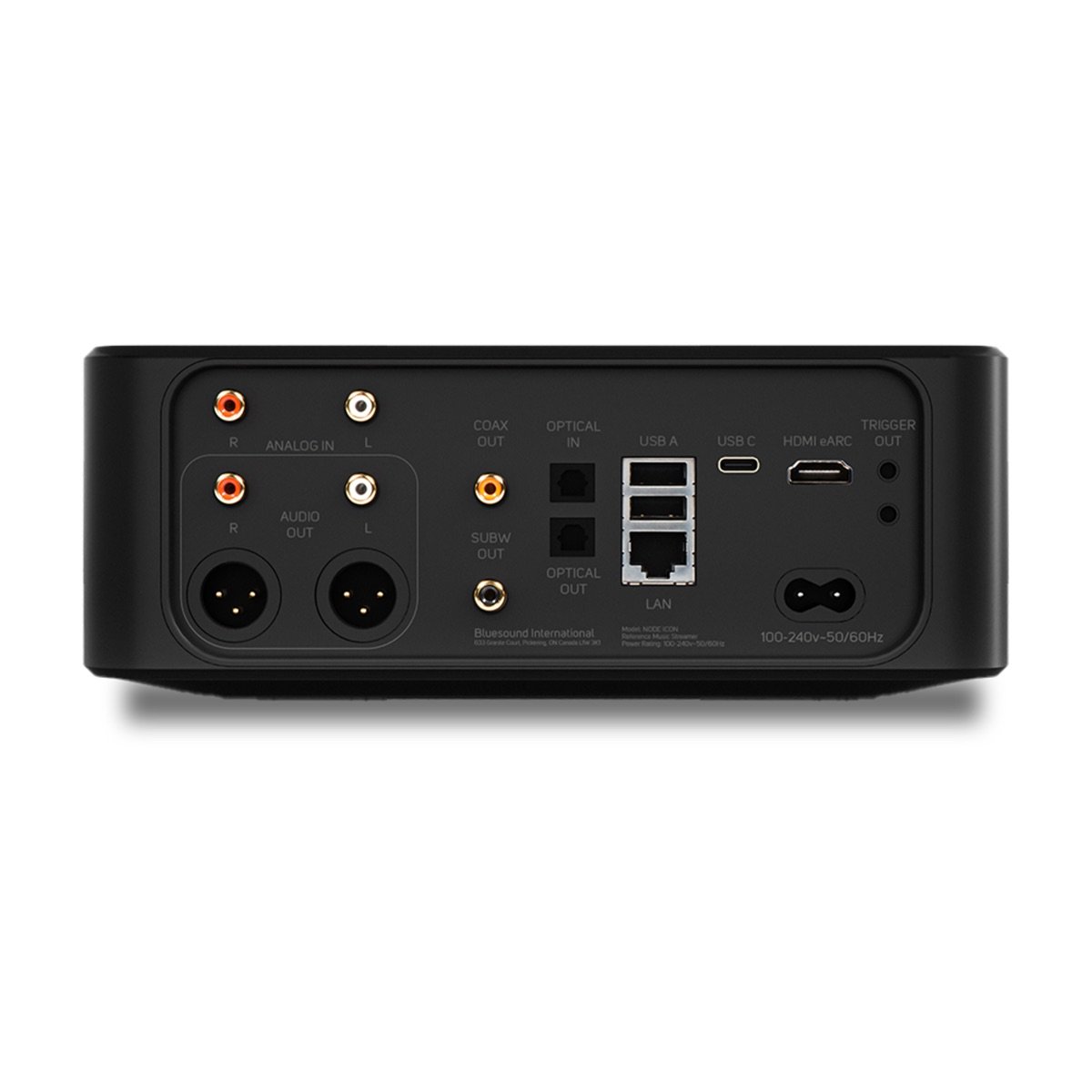
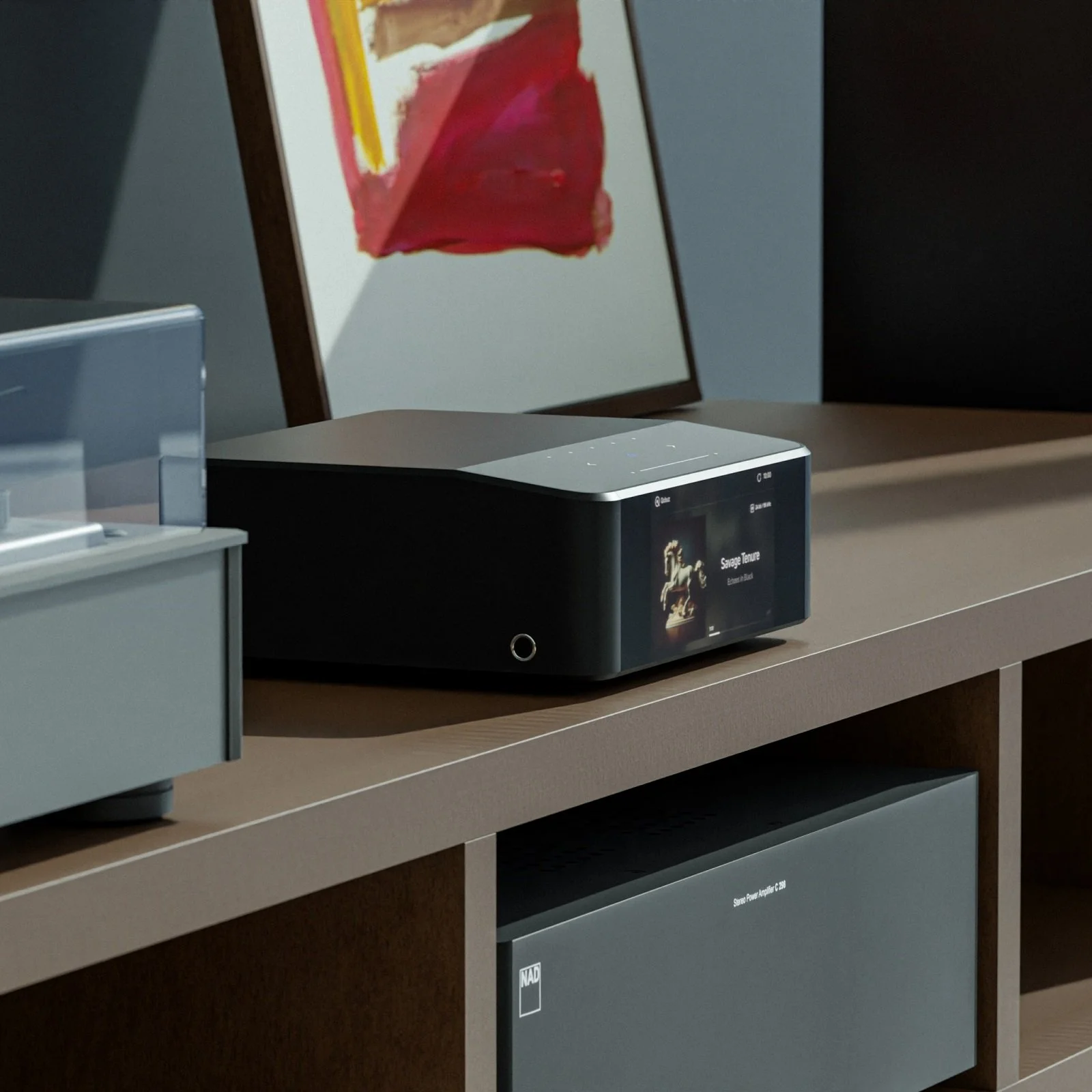
Around back, the ICON has balanced and unbalanced analog outputs. I relied on the balanced connections directly into my Parasound JC 5 via Audio Art Cable Statement e SC Cryo. A mono subwoofer out is also available, as is a AES3 unbalanced on RCA in case you want to send to an external DAC…more on that in a bit. If you’d like to use an ICON to spiff up your TV audio, an HDMI ARC smart output is included. For older TVs, an AES3 optical out is also present. As that particular interconnect method is the lowest of fidelity choices, I ignored it. Unbalanced analog outs are present in case you’d like to drive an existing legacy component. For the lo–fi members of your household, Apple AirPlay 2 and aptX Adaptive Bluetooth are right there, in da’ box. After plugging the ICON into mains power, I patched in the outputs to the amp, powered everything up and…was more than disappointed. The sound was closed, relatively harsh, and not at all what I expected. With a frown and a grunt, I powered down the amp, queued up an extra long Qobuz playlist and left it to cook. I came back to it in a week and things had improved dramatically. Restarting the playback, another weeks worth of burn–in brought it up to where I had initially hoped to have been. Now I could begin listening in earnest and comparing it to my reference, an equivalent rig consisting of a Mac mini running Amarra… Pardon? Unless you are a DIY audiophile with computer geek credentials, you may not know that, as a product class, streamers are actually small computers with a network adapter mated to a DAC. In the case of the ICON, all that is in the box along with a power supply and color display. Think about that… a pile of noisy tech; the always noisy computer and a PSU along with a display and network adapter, all cohabitating in the same enclosure with another sensitive digital device; the DAC. Streamers are not easy to design and execute well!

Although the ICON can handle “internet radio” I largely stuck with local files and Qobuz. One exception is Radio Paradise’s RP Global Mix, a tasteful stream of solid songs encoded in MQA†. As to local files, I could find no mention in the user manual of what file formats are supported, and that wasn’t the only aspect of the product that was sorely absent! Turns out uncompressed WAV and AIFF are good to go. For losslessly compressed files, FLAC and ALAC are recognized. Not surprisingly, MQA is also handled since Bluesound’s parent owns the format. In the case of MQA, those special color–coded dots some of you have come to expect appear, showing if the file (green dot) was encoded at the source and label/artist–approved, or (blue) the 24 bit file was simply confirmed and unfolded as valid MQA data. I even dug out one of my rare MQA files that encodes super high Rez audio in a 44.1/24 wrapper. Dronning Fjellrose from Hoff Ensemble’s fabulous Quiet Winter Nights played with all the purity of timbre, extended air and snappy transients one would expect from that format. Also, the BluOS controller app correctly showed the unfolded or decoded 352.8kHz (44.1 x 8) sample rate. As to DSD data, I confirmed that single speed (“DSD1” or “DSD64”) on up to 4x (“DSD4” or “DSD256”) DSF files are properly decoded. I can only guess that DSD data is not played natively, being transcoded to linear PCM.

Speaking of DSD, I compared the “plain” 24/96 file of They Can’t Take That Away From Me from Ella Fitzgerald and Louis Armstrong’s 1956 performance to the MQA–encoded version. Sure enough, even though the MQA file also unfolds to 24/96, the ICON revealed the delicate temporal correction that MQA is capable of. The unfolded version conveyed the true detail that was stored on the analog recording, adding a touch of verisimilitude that the ALAC just didn’t capture. Same goes for the Dan of Steel…Babylon Sisters from Gaucho is another classic, and the blue dot, MQA–encoded version gave me that teensie extra bit of lovely authenticity, with everything including Fagen’s vocal having the proper texture. Switching to the ALAC was a let down.
A very nice convenience feature is not one but two headphone jacks. This allows two people to share a personal listening experience. Initially I thought that unfortunate, as the ¼" unbalanced jacks are driven from a TXH AAA amplifier. AAA is proprietary tech using a main amplifier that furnishes the bulk of the power, with a secondary, lower power correction amplifier that identifies and cancels distortion from the main amp. This allows it to provide good sound quality while achieving much higher efficiency and lower power consumption. The correction amplifier also reduces crossover distortion compared to traditional Class AB designs. That said, all the AAA designs I have heard leave me cold…until now. They have tended to come across as threadbare and lifeless. When I first booted up the ICON, it is a computer after all, I found the headphone output underwhelming. No surprise there but what really did surprise me was Bluesound’s implementation once it was burned in. Here was an AAA amp I could respect; an engaging, bottom–up sound with a touch of warmth. An almost British vibe; very nice!

I wanted to try moving from local files on to streaming since, after all, the ICON is a streamer! After jumping around in my playlists, I landed on horn man Miguel Zenón’s Navegando (Las Estrellas Nos Guían) from his 2022 Música De Las Américas [Qobuz 96/24 Miel Music]. This tastefully produced Latin jazz piece has a lot going on, with Zenón’s quartet of pianist Luis Perdomo, bassist Hans Glawischnig, and drummer Henry Cole keeping it real while the notable ensemble Los Pleneros de La Cresta add their special plena Puerto Rican flare. The ICON delivered a top–down, high fidelity rendition that could hold its own in its price class. As to my Mac mini running Amarra Luxe feeding my exaSound e22 Mk. II DAC…well, as you might expect, the far more expensive component rig dispatched the lower cost appliance in terms of lustrous tone, and relaxed expression.

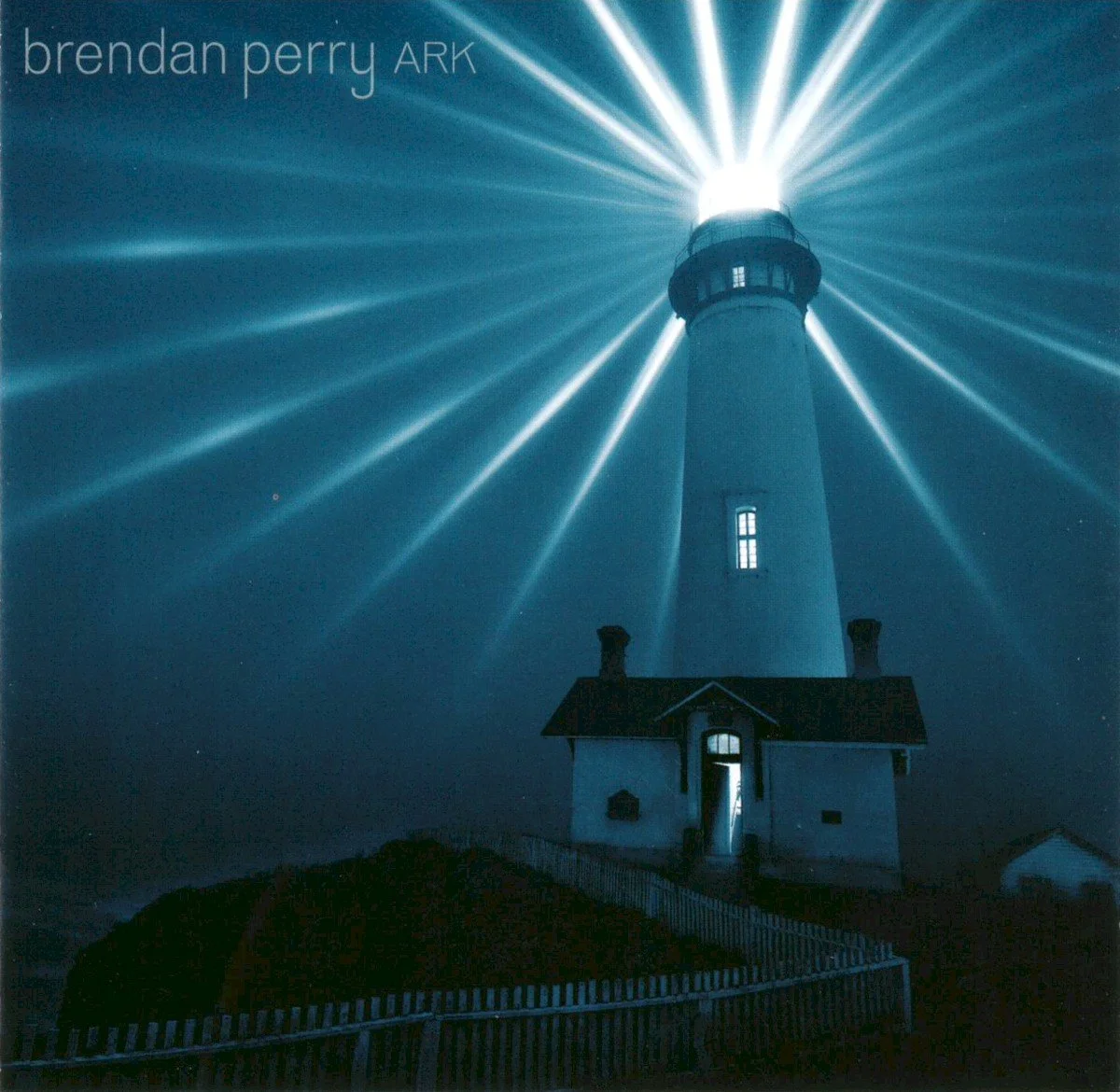
In order to remove as many variables as possible, I decided to send the AES3 unbalanced output from the ICON into my reference DAC. I chose two adjacent tracks in my public Qobuz playist, “omas_test.” Starting with Estelle Revaz’s 11 Capricci for Cello: No. 6 in E Minor from J.M.C. Dall’Abaco: 11 Capricci for Cello [Qobuz 96/24 Solo Musica 2024] with The first thing I noticed was a slight reduction in soundstage depth, along with a larger reduction in width. I also noticed a loss of detail. The high frequency synth decoration that appears around 24 seconds in on Brendan Perry’s The Devil and The Deep Blue Sea [Qobuz 44.1 Cooking Vinyl 2010] from Ark was less cutting, less sharp edged when sent from the ICON compared to Amarra. The bottom was also slightly floppier, less well defined. Frankly, this was to be expected. Amarra employs the same playback engine as the legendary soundBlade mastering DAW.
In addition to the overall sound, another aspect of the ICON I genuinely love is the proximity–aware control surface on the top. The touch controls “time out” and disappear after a user adjustable period of inactivity, leaving only a small, deep blue ring visible as a confirmation. If enabled; when you move your hand near the surface, the controls wake and become visible. The whole control panel has three user–adjustable brightness levels as well. A small but thoughtful approach to less idiot lights competing for your attention. Other than the sad state of the user manual, the only major complaint I have with the ICON is the software, a Linux “fork” or derivative called BluOS. Compared to iOS and other audio Linux versions like Volumio, BluOS running on the ICON is buggy and sluggish. Annoyingly, the software does not conform to modern UI guidelines, with its dead ends and other peculiarities. I should know as, in my day job, I’m the UX or User eXperience guy at my high end audio software company! This may sound like first world whinging, which it is, but other streamers I have, like LinkPlay’s sensational WiiM product line, have managed to field a fast, easy to use OS running on a runt of a computer.
“Streamers” or audio components meant to deliver data delivered from streaming service providers have become a strong segment of the high fidelity market. Indeed, there are so many that the market has started to fragment; integrated amplifiers and converters with internet data as an input choice now compete with the rarer stripped–down “pure” streamer offering no other inputs. Along with the fragmentation, prices have now settled into what I think of as four basic levels. The lowest cost units, under $80, are pure versions meant to add streaming to existing lower fidelity systems. Slightly more advanced versions have more features and/or more human–centric user interfaces. These more refined products will run you about $90 to $500. From there, prices for the upper middle tier range from over $500 to less than $2000. At this level, you can expect many more features, including the color front panel displays seen on some of the fancier examples from the next lower cost category, along with balanced outputs, support for very high sample rates, better quality circuitry and accompanying higher fidelity. Often, entry level amplifiers with streaming built in are also part of this price bracket.
Beyond $2000, the sky’s the limit when it comes to design measures that wring ultimate fidelity out of the system, along with blingy casework and highly optimized bespoke software inside. Within the NODE product range, the ICON sits one down from the top. Bluesound’s fanciest offering adds Compact Disc ripping, internal storage, along with a beefier internal computer capable of smooth multitasking. At $1149, Bluesound’s NODE ICON is situated comfortably in that affordable second tier, providing convenient, high fidelity in a visually seamless, stylish package.
THE COMPANY
Bluesound
Pickering ON
www.bluesound.com
NODE ICON — $1149 as tested, Dirac Live is additional
† — Radio Paradise streams MQA–encoded AIRIA audio on all four of its channels, Main Mix, Mellow, Rock and Global. High resolution, 24 bit masters are sourced when available and the stream carries more complete metadata, including cover art. In BluOS, the streams unfold to a perceptually lossless 44.1/16. According to Radio Paradise, “…this marks the first time an internet radio station will carry MQA-encoded content,” and is exclusive to BluOS.