ALLNIC RHDA 7500 DAC - REVIEW
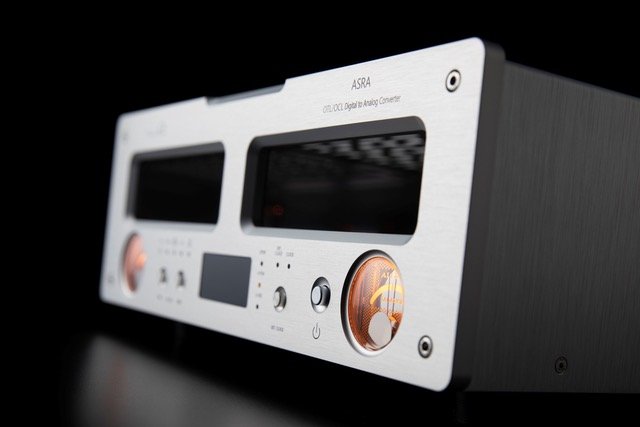
Allnic RDHA-7500 DAC - When Digital Disappears
There are digital-to-analog converters that impress with specifications, and there are those rare components that make you forget specifications altogether. The Allnic RD-7500 belongs firmly in the latter category. It is a converter whose engineering is unapologetically ambitious, yet whose purpose is remarkably simple: to remove every possible obstacle between the recorded performance and the listener.
The RD-7500 represents the latest expression of Allnic Audio’s long-standing fascination with transformerless, capacitorless tube circuitry. While many manufacturers continue to refine conventional solid-state output stages, Allnic has pursued a distinctly different philosophy—one that values simplicity, linearity, and directness above laboratory perfection.
At its heart sits ESS Technology’s flagship ES9039PRO DAC, one of the most sophisticated digital conversion platforms available today. With HyperStream IV architecture, 32-bit processing, exceptional dynamic range, and vanishingly low distortion, the digital foundation is unquestionably state-of-the-art.
Yet unlike many converters built around the same chip, the RD-7500 never sounds like a demonstration of silicon technology. Instead, it sounds remarkably human. The RD-7500 does all valid digital resolutions, DXD to DSD512 included. There are also multiple digital inputs including AES/EBU, and of course USB. There are also some additional bonuses for those who want ultimate flexibility, with an external clock input, and Bluetooth connectivity.
That difference begins after the digital conversion itself. Rather than relying on complex multi-stage transistor amplification with layers of corrective negative feedback, Allnic employs a single-stage gain circuit centered around one 5687 dual triode per channel. It’s an elegantly minimalist approach that reflects the company’s belief that every additional component introduces another opportunity for signal degradation.
This simplicity extends even further. The RD-7500 employs Allnic’s signature OTL/OCL architecture—Output Transformer-Less and Output Capacitor-Less. By eliminating output transformers and coupling capacitors, the analog signal travels an unusually direct path to the connected preamplifier or integrated amplifier. In theory this removes sources of phase shift, inductance, stored energy, and frequency limitations. In practice, it contributes to one of the most effortless presentations this reviewer has encountered from digital playback, as you will see reading on. The Allnic RD-7500 retails for $9950.
Set Up& Listening:
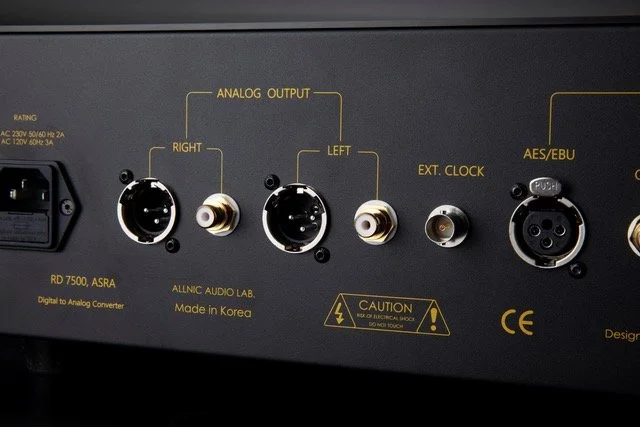
The RD-7500 was set up in a networked system with a Sonore UltraRendu streamer, an Intona USB cable along with their excellent USB isolator. Analog cables Clarux XLR into a Rogue RP07 preamp, and a Sim Audio 761 power amp, and Magnepan 2.7X speakers. Everything was plugged into Bryston and Audience power conditioners with Clarus power cables.
The first impression is not spectacular detail or exaggerated dynamics. It is ease.Music simply flows.The RD-7500 possesses an uncommon sense of natural timing. Instruments appear without mechanical precision or etched outlines. Instead, performers occupy space with convincing dimensionality, allowing the listener to focus less on individual sonic attributes and more on musical communication.
The rendering of vocals is among the many strengths of the RD-7500. .Whether listening to intimate jazz recordings, folk singers, or large-scale classical performances, voices emerge with remarkable body and emotional authenticity. There is no added warmth in the so called traditional tube sound sense, nor any artificial sweetness. Instead, the human voice carries subtle inflections, breath, texture, and phrasing that often become homogenized by more analytical converters.
Stringed instruments are equally persuasive. Violins possess a resinous bite without glare. Acoustic guitars reveal the complex interaction between string, wood, and air. Pianos exhibit impressive harmonic density while retaining exceptional transient clarity.
Bass performance deserves special mention. One might reasonably expect an output stage devoid of coupling capacitors to produce excellent low-frequency extension, but the RD-7500 goes further by delivering bass that feels remarkably unconstrained. Notes begin and stop with convincing speed while maintaining impressive weight and tonal color. There is no sense of sluggishness or excessive bloom. Instead, bass lines exhibit both agility and authority.
The treble follows the same philosophy. Instead of dazzling the listener with exaggerated brilliance, high frequencies simply extend without apparent limitation. Cymbals shimmer naturally into silence. Hall ambience becomes increasingly apparent. Fine spatial information accumulates almost subconsciously, creating a believable acoustic environment rather than an artificially enlarged soundstage. Many highly resolving converters achieve their detail through relentless analytical presentation. The Allnic achieves comparable resolution by lowering the noise floor of perception itself. As listening sessions lengthen, one becomes increasingly aware that fatigue simply never arrives.This quality may ultimately prove more valuable than any measurable specification.
The true measure of any reference DAC is not how spectacular it sounds on audiophile demonstration recordings, but how convincingly it communicates the personality of vastly different musical performances. Over several months of listening, the Allnic RD-7500 proved itself equally comfortable with classic rock, modern alternative, and small-group jazz, and beyond. It was consistently revealing the emotional intent behind each recording rather than imposing a sonic signature of its own.

Few live albums present as many challenges as Led Zeppelin’s The Song Remains the Same in its 24-bit/96 kHz Jimmy Page remaster. The RD-7500 unraveled the controlled chaos of Madison Square Garden with remarkable composure. Jimmy Page’s layered guitar textures emerged with exceptional harmonic richness, allowing overdriven amplifiers, echo, and natural sustain to coexist without becoming congested. John Bonham’s drums possessed explosive transient attack while preserving the resonant bloom of the toms and the woody character of his famous Ludwig kit. Perhaps most impressive was Robert Plant’s voice, which floated naturally above the dense mix with convincing dimensionality and effortless clarity. The enormous ambience of the arena extended well beyond the loudspeakers, conveying not only the scale of the performance but also the excitement of the audience.
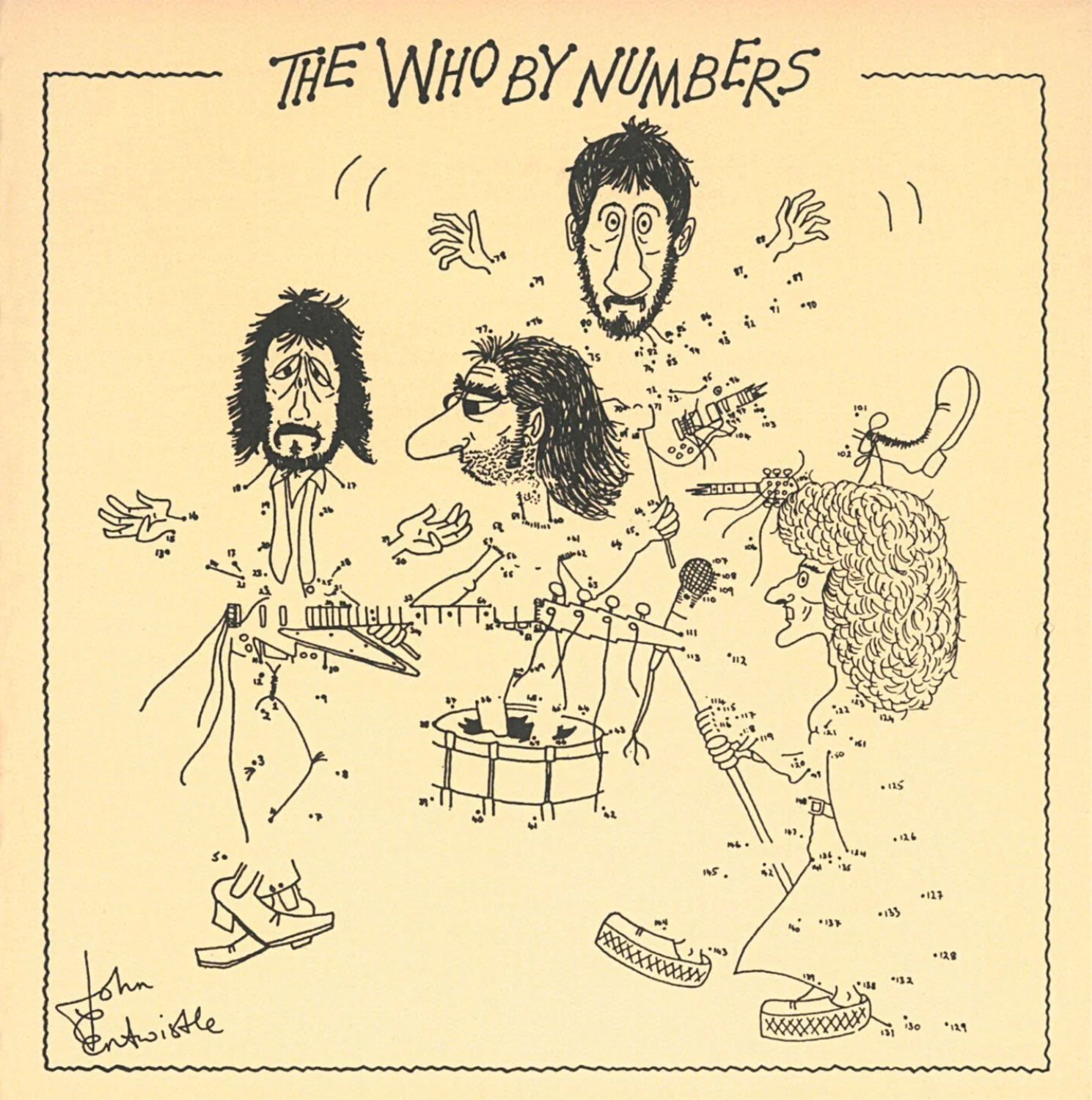
Switching to The Who’s The Who by Numbers in its 24/96 remaster revealed a completely different strength. Pete Townshend’s acoustic guitars carried a beautifully textured realism, each pick stroke sounding immediate without excessive edge. Keith Moon’s frenetic drumming retained its trademark energy while individual cymbals occupied clearly defined positions across the soundstage. Roger Daltrey’s vocals displayed an emotional vulnerability that can sometimes be overshadowed by the band’s explosive instrumentation. Through the Allnic, this introspective album became less about volume and power and more about musicians interacting in a room, exposing subtle phrasing and dynamic shifts that often escape notice.

The self-titled debut from Cage the Elephant demonstrated the RD-7500’s ability to thrive with contemporary productions. Modern rock recordings often compress dynamics in pursuit of impact, yet the Allnic found remarkable depth within the mix. Electric guitars remained dense and aggressive without becoming abrasive, while Matt Shultz’s vocals retained their raw, almost reckless immediacy. Bass lines hit with impressive speed and authority, never obscuring the driving rhythms beneath. Rather than smoothing over the album’s intentionally gritty production, the RD-7500 embraced its energy while avoiding the listening fatigue that frequently accompanies highly compressed recordings.
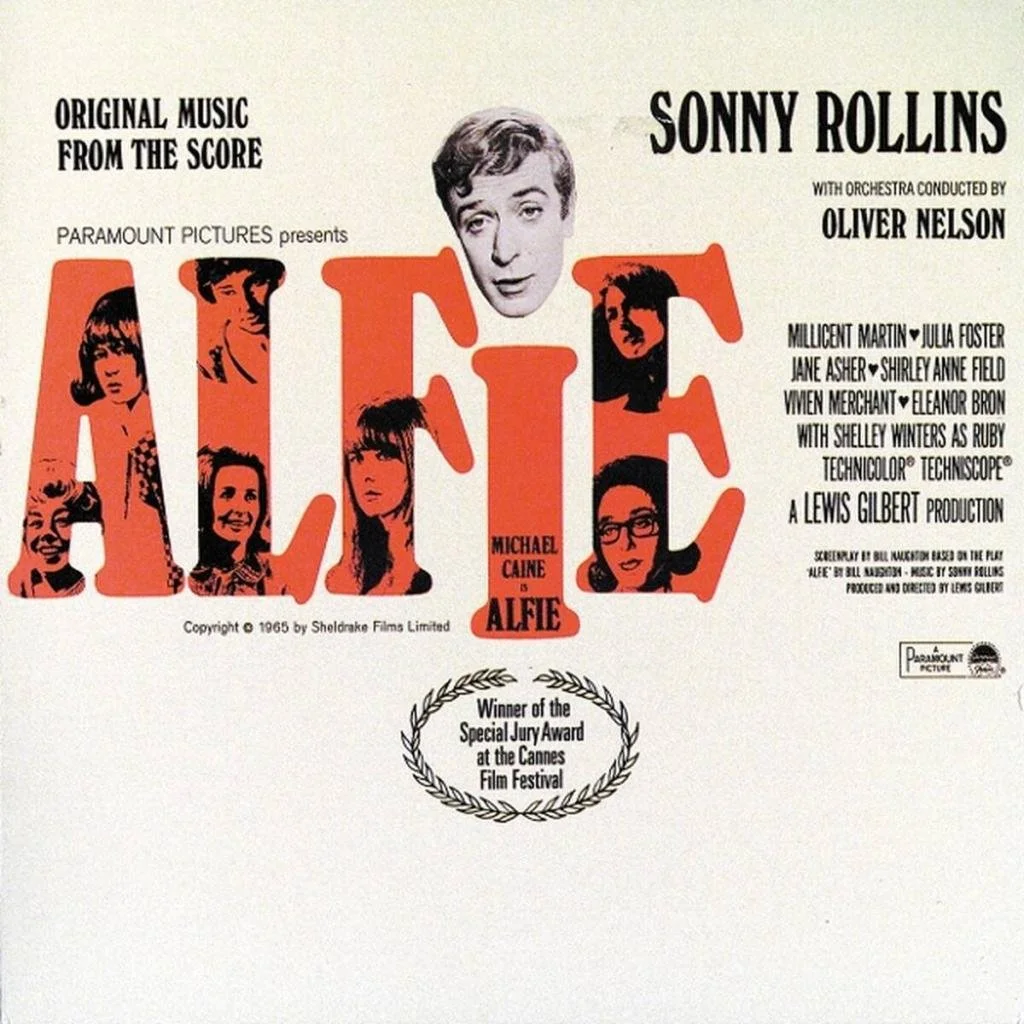
Jazz lovers will find much to admire in Sonny Rollins’ Alfie (Japanese import SHM-SACD rip) The RD-7500 reproduced Rollins’ tenor saxophone with extraordinary tonal complexity, capturing the instrument’s breath, reed texture, and dynamic expression without exaggeration. Brass possessed convincing burnished warmth while remaining highly resolved. Kenny Burrell’s guitar exhibited wonderful harmonic density, and the rhythm section flowed with an effortless sense of swing.
The recording’s intimate studio ambience emerged naturally, with instruments surrounded by believable acoustic space rather than etched outlines. Most impressive was the DAC’s handling of microdynamics, the subtle changes in Rollins’ phrasing and articulation became central to the musical experience, drawing the listener deeper into the performance with every chorus.
Across every recording, the Allnic exhibited one consistent characteristic: an uncanny ability to disappear. Instead of highlighting detail for its own sake, it presented recordings as cohesive musical events. Differences in mastering, production style, and recording venue became immediately apparent, yet the RD-7500 never sounded analytical. Whether reproducing the thunderous grandeur of Led Zeppelin, the introspective honesty of The Who, the youthful urgency of Cage the Elephant, or the sophisticated interplay of Sonny Rollins, it consistently served the music first—and in the world of reference digital playback, there is perhaps no higher compliment.
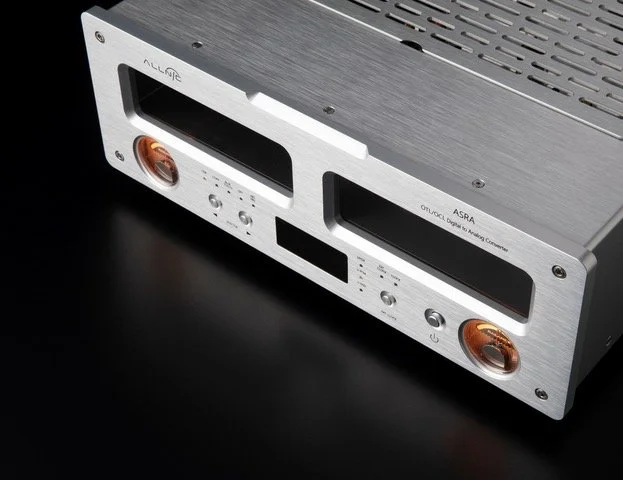
A few weeks into auditioning I received some highly prized NOS tubes to swap out. A pair of Philips Holland 7119 were installed in a manner of seconds. The procedure is ridiculously easy, simply flip open the top panel, and access the tubes. These tubes offered a gorgeous tonality without in any way changing the overall character of the DAC. There were pristine high end frequencies and superb low end solidity. But let me state even the stock tubes performance beautifully.
The RD-7500 also demonstrates admirable versatility in this regard. Tube rolling is unusually approachable thanks to its use of only one output tube per channel. Owners may experiment with compatible 5687-family variants—including the E182CC, 7044, 6900, and 7119—without facing the considerable expense associated with larger tube complement designs. This flexibility allows listeners to tailor subtle tonal characteristics while preserving the converter’s essential character.
Compared with Allnic’s flagship Signature models, the RD-7500 deliberately avoids unnecessary complexity. Rather than employing multiple output tubes or elaborate dual-chip architectures, it embraces a more focused implementation built around a single ES9039PRO and an exceptionally direct analog stage. The result is not a compromise, but a distinct interpretation of Allnic’s design philosophy.
Conclusion
Value in high-end audio is often difficult to define. The least expensive component is rarely the best value, while the most expensive often offers diminishing returns. The RD-7500 occupies an enviable position between those extremes. Its engineering is genuinely original rather than derivative, its build quality reflects meticulous craftsmanship, and its sonic performance competes comfortably with converters commanding considerably higher prices. More importantly, it succeeds where many technically accomplished DACs do not. It encourages listening, not evaluating, not comparing.but simply listening.
The Allnic RD-7500 demonstrates that true high-end digital playback is not about reproducing more information. It is about preserving more of the musical event. By combining one of today’s finest digital conversion platforms with an elegantly simple, transformerless, capacitorless, zero-feedback tube output stage, Allnic has created a converter whose greatest virtue is that it rarely calls attention to itself. When the equipment disappears and only the performance remains, a digital component has accomplished something genuinely remarkable. The RD-7500 does exactly that. The RD-7500 will be a reference DAC going froward. Very highly recommended and a DIAMOND AWARD winner.