MUSIC REVIEW: ÓLAFUR ARNALDS – THE CHOPIN PROJECT
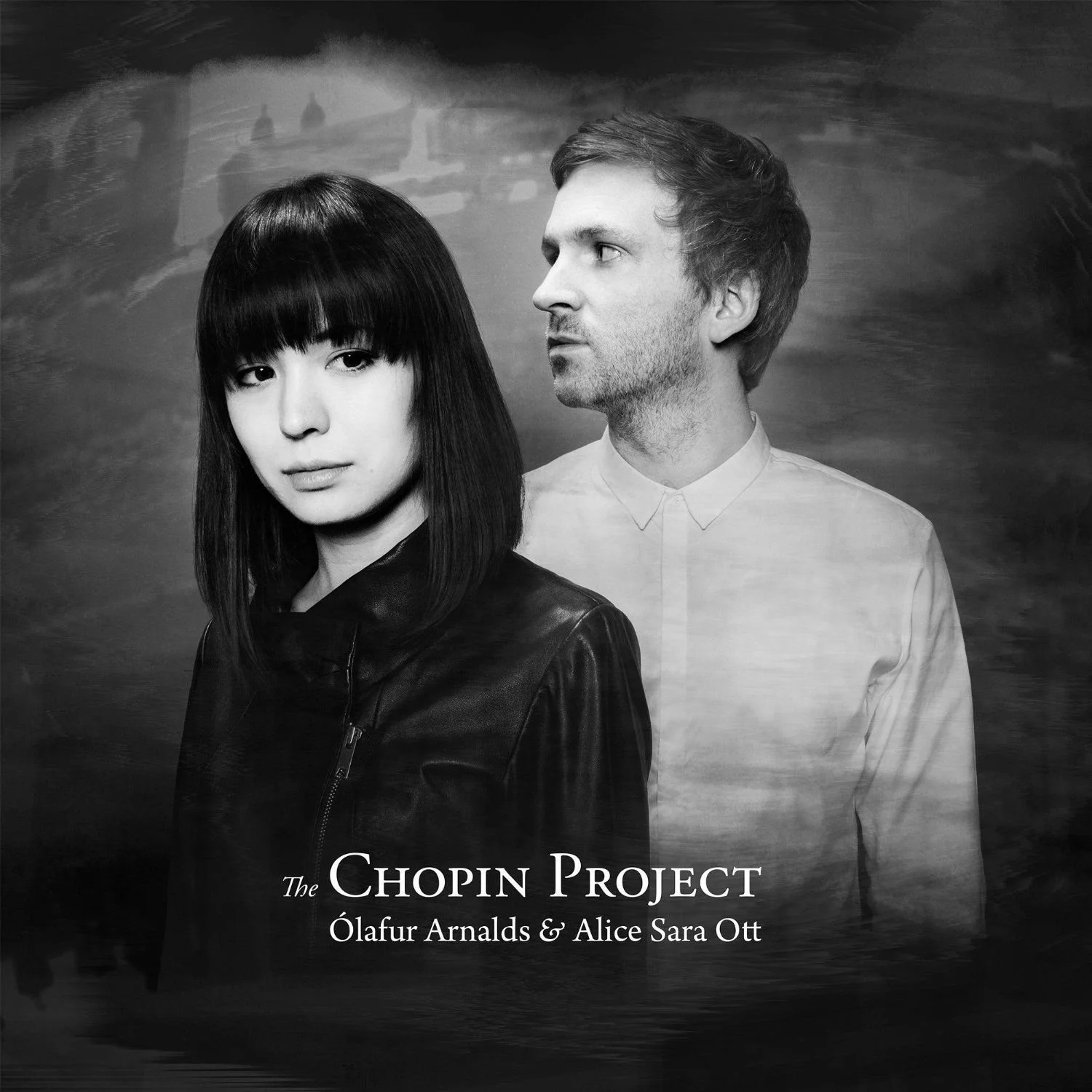
Who said classical music is moribund? Or even old-fashioned for that matter? Just because too many recordings of the old great composers - great for a reason as they have survived the passage of decades and centuries - have been presented as museum pieces, all imperfections edited out, does not mean that is all that they are. These works live and breathe in the hands of each new interpreter, that is, as long as that interpreter is not just a proficient musician but, above all else, an artist. An artist able to enter the beating creative heart of the composer and participate in that original act of creation through their own act of co-creation.
This is something that Icelandic electronic musician and composer Ólafur Arnalds has achieved in collaboration with German-Japanese pianist Alice Sara Ott in The Chopin Project. Arnalds’ own compositions, inspired by and based on Chopin’s pieces, are interspersed with music by Chopin, aptly often called the poet of the piano.
As part of their mission to bring to the fore the heart, the direct poetic touch of Chopin’s music, Arnalds and Ott researched older, less perfect recording techniques, different microphones and venues, and, importantly in my eyes, older pianos. Importantly, because as a former pianist myself giving recitals, I still remember being blown away by playing an Erard grand from the mid nineteenth century for the first time at a friend’s house. I was immediately struck by how much softer and less brilliant it was than a modern concert grand, but at the same time, how much more subtle to the touch, and how many more colours were at my disposal. I am now the proud owner of a small Bechstein grand from the 1920s and fully understand why Bechsteins were the preferred pianos of Liszt and Debussy. The pianos Chopin played would have been closer to my Bechstein, and much much closer to that Erard, although Chopin himself preferred the Pleyel, which is not far removed in terms of quality and sound.
In any case, these old pianos somehow free more of the poetry and colours of the music from the perfection and light brilliance of most modern instruments, inviting one into a more intimate ambience and drawing the listener into Chopin’s passionately dreamy melancholy.
I have always loved listening to (and playing) Chopin’s Nocturnes (and his Scherzos … and … and …), so for me, this album which features the Nocturnes in C sharp minor, C minor, G minor, and D flat major as originals and inspirations, is a delight. Apart from the concept, a lot of the success of the album is down to the playing of Alice Sara Ott, who seems to have a particular affinity to the music of Chopin - and to Debussy, Satie, Ravel, all favourites of mine. It was Ott’s recording of the Chopin waltzes that actually inspired the project. That, and the fact that Chopin was Arnalds’ late grandmother’s favourite composer. I like the way Ott shapes and phrases the music - nothing is rushed, there seems little concern with virtuosity per se, and every note and nuance is allowed to speak for itself with the space to do so. Also featured on the album are Arnalds’ electronic keyboard textures and a live string quintet, of whom I would like to single out Mari Samuelson for her exquisite violin solo on Track 3, the Nocturne in C sharp minor as arranged by Nathan Milstein.
The opening track, “Verses”, and also track 7, “Written In Stone”, are both based on the Largo from Chopin’s Piano Sonata No. 3 in B Minor, which is itself the second track of the album, beautifully played by Ott. (I shall be checking out more of her recordings for sure.) A delicate meditative atmosphere and ambience are established straightaway and are carried through the album. The Nocturne in C sharp minor begins conventionally for piano, then launches into a solo violin taking on the breathtakingly beautiful right hand melody. Hearing it unaccompanied like that removes some of the familiarity and reintroduces one to that beauty. The piano returns to frame the piece, transitioning smoothly into Arnalds’ “Reminiscence”, which grows organically out of the Nocturne material.
The Nocturne in G minor is accompanied by the sound of rain, which takes you to the heart of a musician playing for themselves, or for, perhaps, a small gathering. The piano’s sounds blend with outside noises in the way so many of us experience when making music, not in a sealed studio isolated from the outside world but subject to its whims and sounds. As I am listening an absolute downpour sets in and adds its own ‘music’ to the music.
“Letters Of A Traveller”, melding Chopin’s Nocturne in D flat major with Arnalds, is a favourite, the beginning particularly evocative with the gorgeous low bass and cello grounding the plucked harmonies. And the Raindrop Prelude to end with, bringing back by association the sounds of the rain from an earlier track. Exquisite.
This is one of those albums I cannot believe I did not discover earlier, an album I shall be returning to time and time again. Classical music - and modern classical - is not only alive and well, but it is opening up new vistas while honouring and incorporating the past and leading the way into a subtler, more harmonious future, which, maybe only it and a few others can see for the moment. But the fact of seeing it means it is there, waiting for us to step into. Maybe that is the job of artists now - to imagine, and, even more, to see and to reveal that better future
(2015 Mercury Classics, a division of Decca Music Group Limited)