SONNET KRATOS AMPLIFIERS - REVIEW
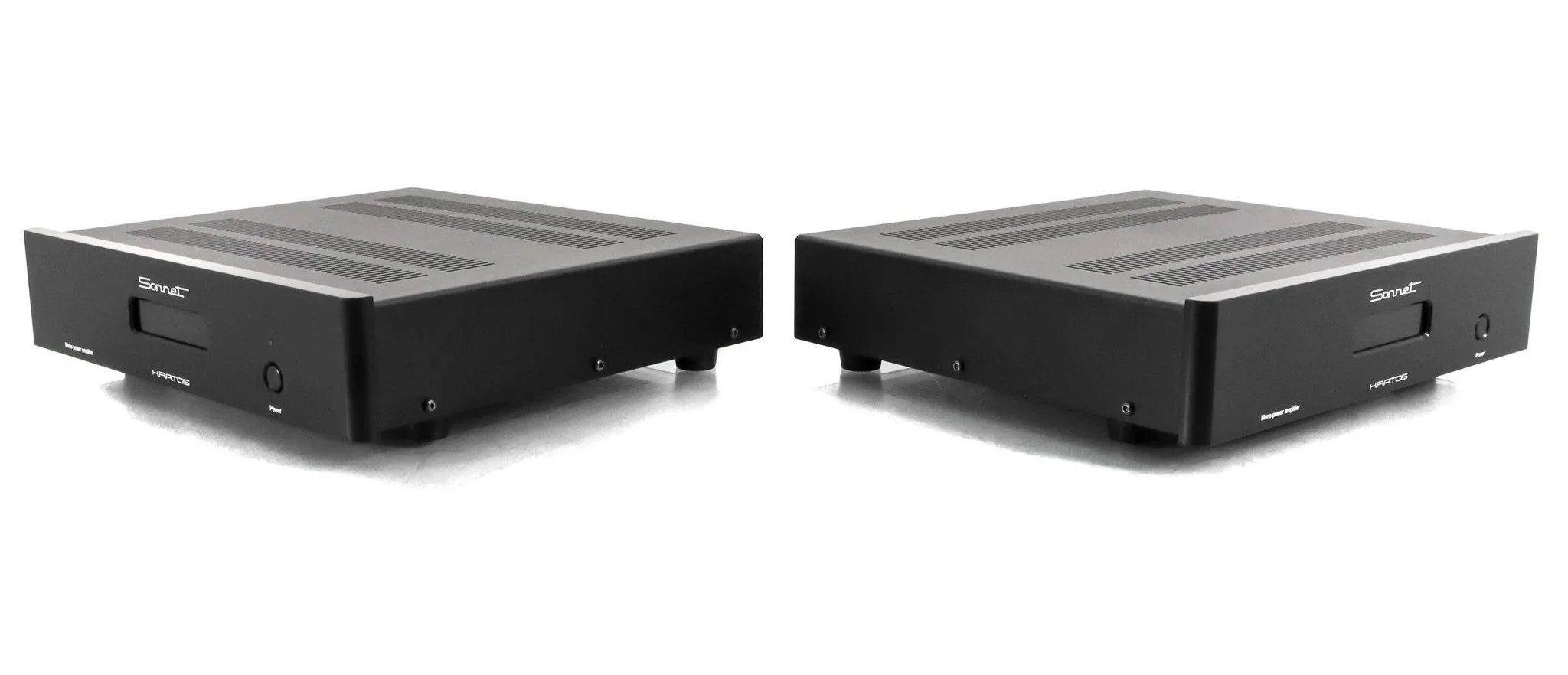
SONNET KRATOS AMPLIFIERS
After having reviewed the stellar Sonnet Digital Audio combo of digital components, the Morpheus DAC and Hermes streamer, https://www.audiokeyreviews.com/the-reviews/sonnet-morpheus-and-hermes
we were very pleased to have the opportunity to evaluate the Kratos solid state mono block amplifiers. As with the other Sonnet products, the Kratos were designed in the Netherlands by the chief architect of Metrum Acoustics, Cees Ruijtenberg.
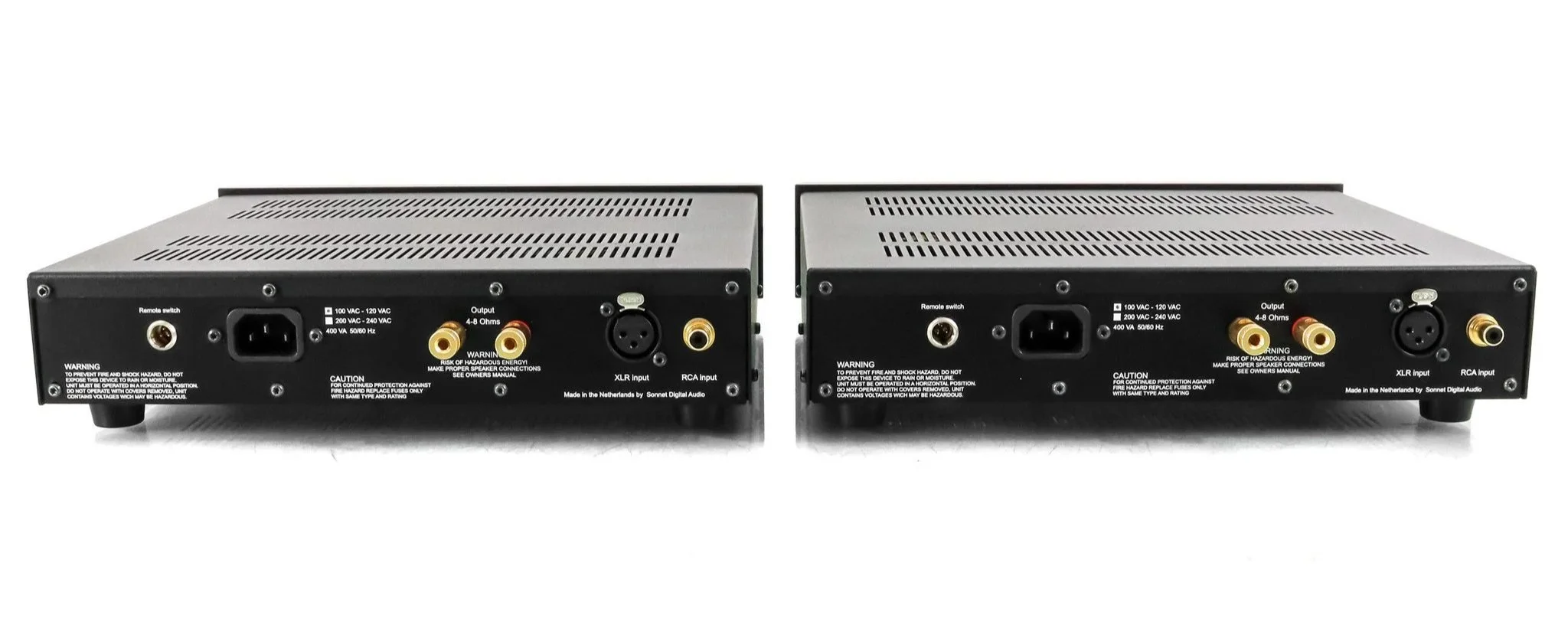
The Kratos amplifiers use a high voltage FET transistor input and a Class A/B MOSFET output. The amps put out 50 Watts per channel into 8 Ohms and this almost doubles to 95 Watts per channel into 4 Ohms. According to Sonnet, they choose a very robust power supply, and they employ judicious feedback for linearity and damping factor. The Kratos are a true balanced design, with selectable XLR and RCA inputs available.
The amplifiers have a very manageable footprint, weighing in at 9 lbs each, and being no wider than a shoebox. They are very sturdy however, as the workmanship is tip top. They have a few nice most welcome features as well. There is a selectable automatic music detection circuit that will activate the amps when they receive a signal, so one does not have to turn them on or off manually. They also have a temperature read out on the front display, The amps can be ordered with a black or silver faceplate. Our samples arrived with a silver finish.
Set Up & Listening:
The Kratos were used with by Rogue RP-5 preamplifier, a Byrston BDA-3 DAC, a Sonore microRenu 2 streamer, and the speakers were Magnepan 1.7i. The analog source was a Rega Planer 6 turntable. Cabling was Audio Art Cable all around. Everything was connected to Bryston and Audience power conditioners. No special tweaks were used aside from an Audio Art Cable power cord on each amplifier.
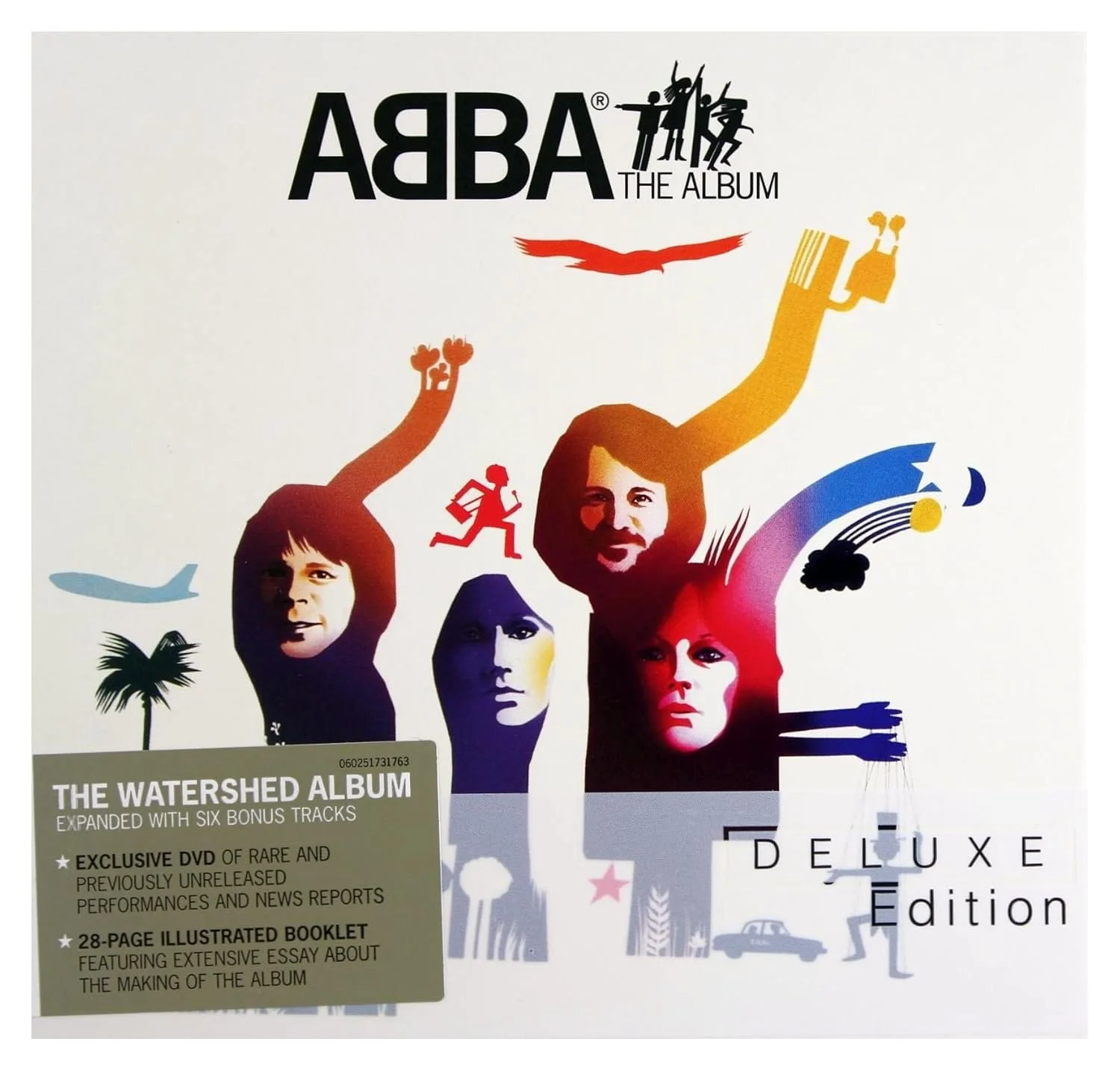
The first album we spun was an original vinyl pressing of ABBA’s 1978 succinctly titled The Album. It features some of their most loved songs, “Thank You For The Music”, “Take A Chance On Me”, and “The Name Of The Game”. Our favourite track on this album is one of the more obscure cuts, “Eagle”. It literally soars with stacked harmony vocals, somewhat dated keyboard sounds, and a searing guitar figure. We were immediately struck by the sheer scale and depth the Kratos produced with this song, and on the rest of the album. It was a clear window into the band’s studio genius.
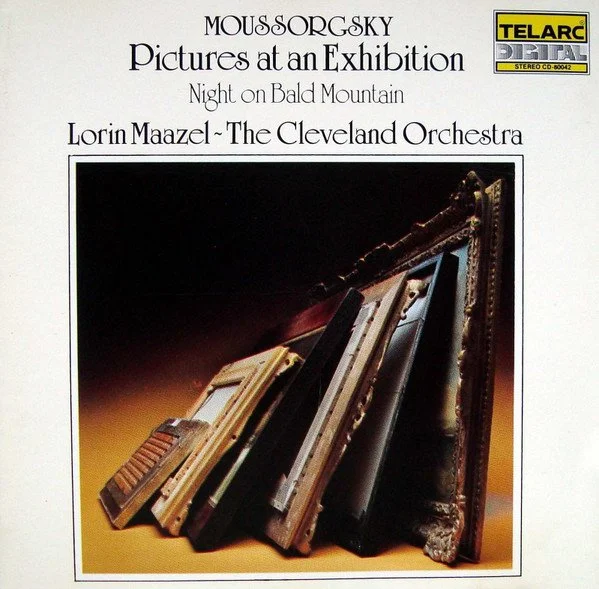
Next up was a stern test for any amplifier. Telarc’s famous recording of Lorin Maazel and the Cleveland Orchestra’s performance of Mussorgsky’s Pictures At An Exhibition is stellar in every way. This was an early digital recording, done with such care and attention to detail that it still stands up today against the very best recordings. It was originally released on vinyl in 1980 and a few years later on CD. Craft Recordings released a flawless vinyl reissue and the Kratos rendered this performance with incredible dimension, depth, and overall impact. The low noise floor and control of the bottom end were nothing short of spectacular.
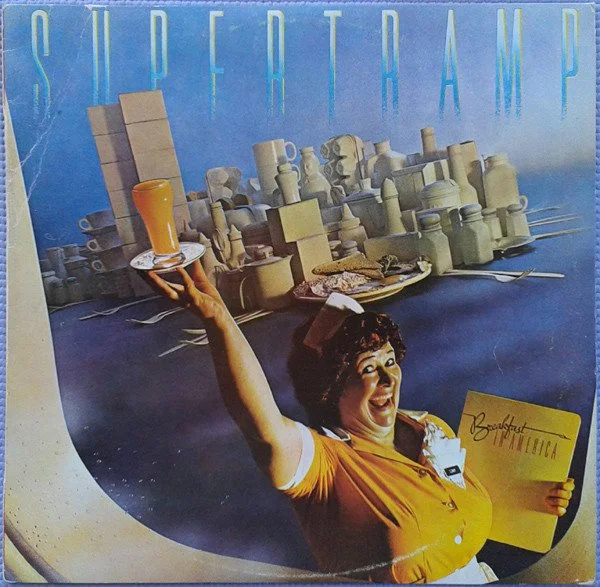
We then went back to a bit of classic rock, spinning original pressings of Supertramp’s 1978 release, Breakfast In America. By this time the band had moved away from their prog rock roots to produce more structured, tighter, and radio friendly tunes, but still with tons of craft. “The Logical Song” is the biggest hit on the record, along with “Take The Long Way Home”, a close second. The entire platter is a great listen. It was time travel back to our youth hearing these songs with fidelity unmatched back in those days. The layered vocals, the quirky keyboards, and the distinct vocals of Roger Hodgson were holographic and multidimensional.
We received a batch of excellent recent SACD releases, and put them to good use in evaluating the Kratos. Some of the standouts are the Mobile Fidelity DSD remasters of the entire Eagles studio output, the Analogue Productions remasters of Jethro Tull’s Stand Up, and Pink Floyd’s Animals. All of these SACDs were, to our ears, the definitive digital versions of these recordings. The analog like texture, along with the natural dynamics, were tailor made for amps like the Kratos. We have found that high quality DSD remasters or recordings can really reveal the limitations of any amp, and no obvious holes appeared anywhere.
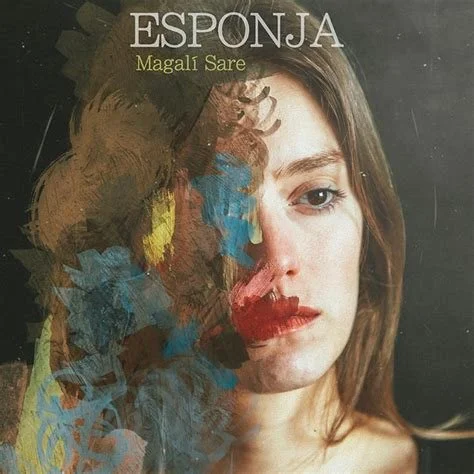
Pivoting to newly recorded music, we are smitten by two albums by Barcelona born Magali Sare, Esponja, and reTORNAR. The music defies categorization, and can maybe be best described as avant garde Flamenco Jazz, but even that may not cover it. The recordings are stellar, and she is a multi instrumentalist with degrees in flute, piano, and voice. The albums are simply intoxicating, and the 24 bit downloads were so dimensional and present in the room via the Kratos that this was the highlight of the review period.
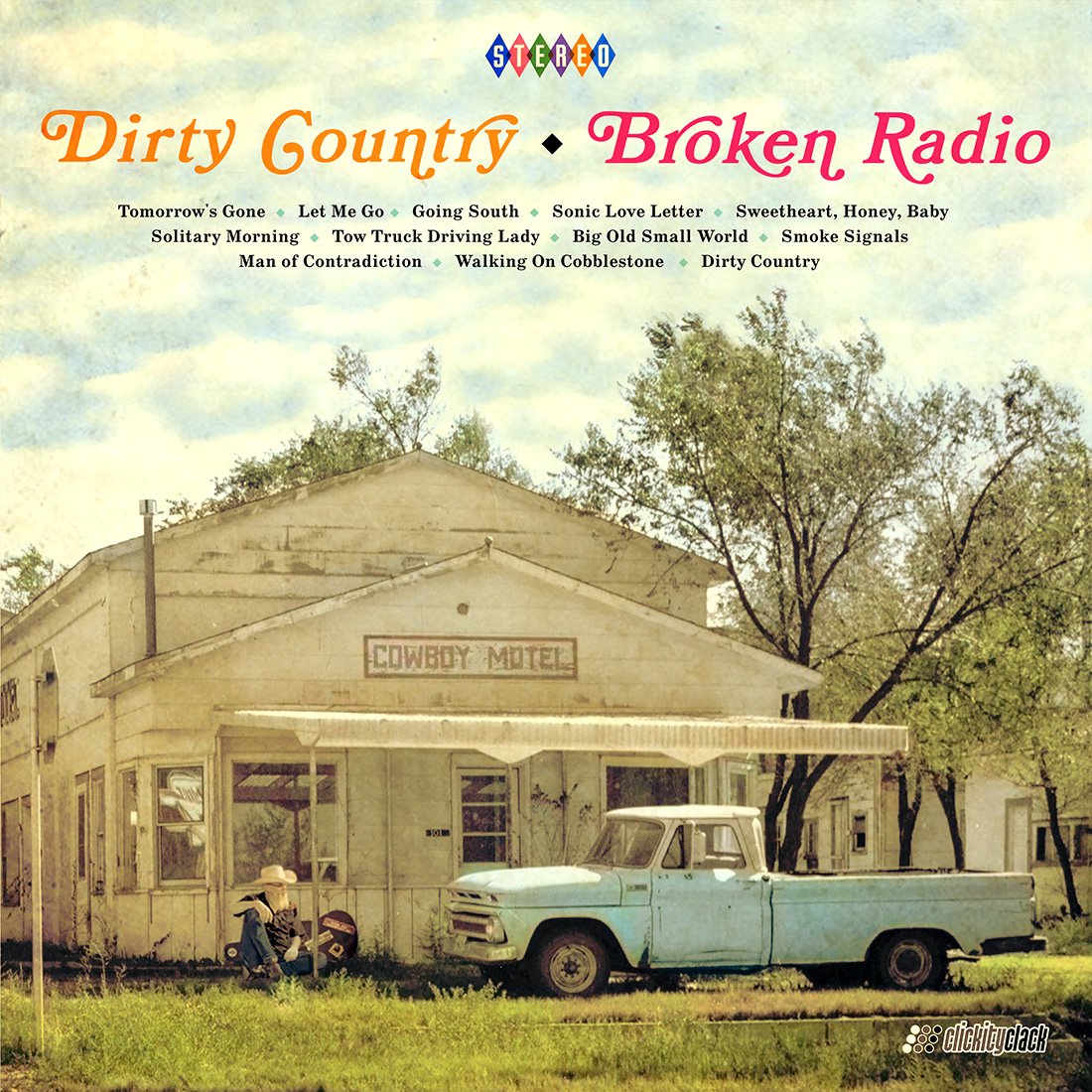
We then stumbled upon a band from Germany, called Broken Radio, and their album Dirty Country. Interestingly they make American influenced music with touches of spaghetti Western flourishes. The songs would fit well in a Quentin Tarantino film, and are cinematic on their own. The acoustic guitars, vocals, and dust bowl treatments were just sublime through the Kratos, with bass lines offered with great articulation, and acoustic guitar strings and other transients appearing in a very precise soundstage.
One of our last listening sessions with the Kratos was cycling through a bunch of Stereolab 24 bit remasters. This legendary British band fused subtle electronics, dreamy vocals, ambient flourishes, and experimental pop to create a highly original sound. Albums like Dots And Loops, Emperor Tomato Ketchup, and Cobra and Phases Group Play Voltage in the Milky Night, all digitally remastered recently, had such presence, while the sparkling rhythms were irresistible through the Kratos and rendered with all their impeccable timing and syncopation.
The amplifiers worked flawlessly during our time with them. On one particularly warm day the front display on one of the amps indicated the operating temperature was reaching close to its maximum after an extended listening session. Interestingly, that unit did not seem overly warm to the touch. We simply shut it down for a period, let it cool then had another listening session with no issues.
Conclusion:
Sonnet Audio is offering excellent value here with the Kratos mono block amplifiers, taking into consideration the harmonically rich and spacious sound. It was essentially impossible to find a flaw with these beautifully built amps, and they had plenty of power to drive 4 Ohm speakers.
If a digital library is the source, a perfect pairing would be Sonnet’s own Morpheus DAC with its balanced outputs and built in volume control. In fact, this would be the shortest and purest signal path. Hats off to Sonnet Audio and their attention to detail, and for producing products that put the music first.
There are very few excellent solid state amplifiers at this price range, and even fewer mono blocks. If the goal in the design was no frills sonic purity, it has been achieved with flying colours. Highly recommended.
Kratos mono power amplifier
50 Watt into 8 Ohms, 95 Watt into 4 Ohms
Class A/B
Distortion 0.040% THD
Output impedance 0.10 Ohms
110/115V AC 220/230V AC 60/50Hz
Output Noise 310µV RMS A weighting
Frequency Response 10 - 230.000 Hz – 3dB
Slew Rate 100V / µSec
Input Impedance RCA 15 KOhm, XLR 60 KOhm
Gain: 22dB
Max Power consumption 400 Watt
Main Voltage 110/115V AC, 220/230V, 60/50Hz
Dimensions 290 x 250 x 60 mm
Weight 3.9KG
Contact:
Sonnet Kratos Monoblocks: $5,340
Rob Fritz Audio Art Cable San Diego, CA 92115
Direct: 619-255-6451
Voice or Text: 619-417-3035
rob@audioartcable.com